
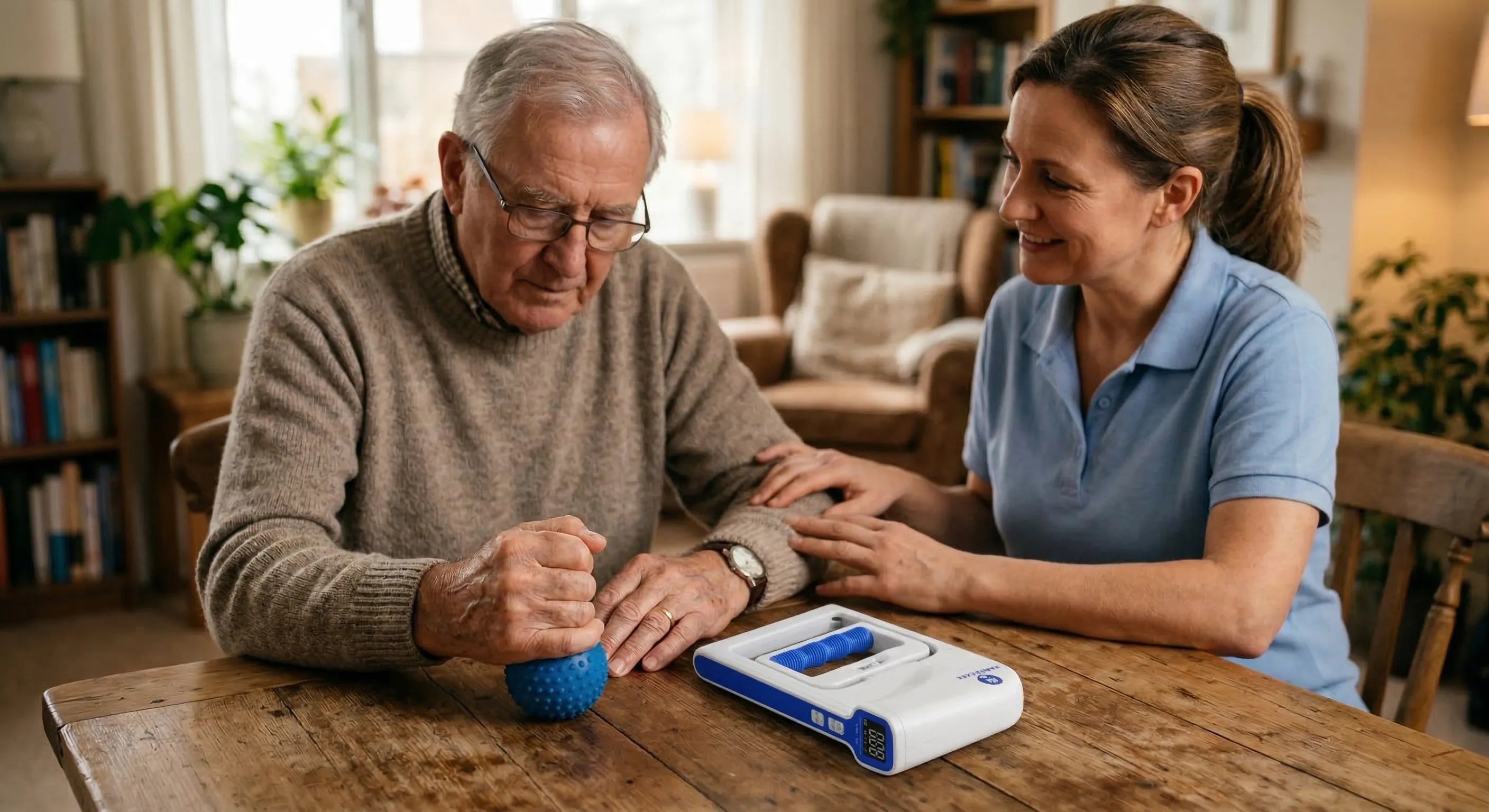
After a stroke, reduced hand strength can make everyday tasks unexpectedly difficult. Holding a cup, fastening buttons, opening a container, or picking up a small object may require far more effort than before.
However, hand recovery involves more than increasing grip strength. Coordination, sensation, muscle tone, finger extension, and the ability to release objects all influence how well the hand functions in daily life.
For stroke survivors and caregivers, an individualized rehabilitation plan can help address these challenges. Tracking both grip strength and practical hand function can also provide useful information to discuss with a rehabilitation professional.
Why Does Grip Strength Decrease After a Stroke?
A stroke can disrupt the brain pathways responsible for controlling the arm, wrist, and hand. Depending on the location and severity of the injury, a person may have difficulty producing force, coordinating movements, or controlling the affected hand.
Muscle Weakness
Reduced voluntary muscle activation can make it difficult to hold, lift, or stabilize everyday objects.
Poor Coordination
The hand may close incompletely, struggle to control pressure, or have difficulty releasing an object when needed.
Changes in Muscle Tone
Some stroke survivors develop spasticity, which involves increased muscle tone and can make controlled hand movements more difficult.
Sensory Changes
Reduced sensation can affect a person's ability to judge pressure, recognize an object's position, or maintain a secure grip.
Reduced Use of the Affected Hand
When a hand becomes difficult to control, a person may rely more heavily on the unaffected side. Over time, fewer opportunities to use the affected hand can limit functional practice.
Can Grip Strength Improve After Stroke?
Yes, improvement is possible, although the extent and pace of recovery vary from person to person.
Individualized rehabilitation can help stroke survivors work toward better strength, coordination, and participation in everyday activities. Progress may continue for months or years, including after formal rehabilitation ends.
The most useful goals depend on the person's current abilities and priorities.
Early Milestones
Initiating voluntary movement, releasing spastic clenching, and learning to safely open the fingers.
Functional Progression
Reliably holding everyday objects, grading pressure sensitivity, and integrating the hand into routine tasks.
Targeted Exercises for Hand Recovery
Consult a therapist before startingSupported Hand Opening & Closing
Rest the forearm and hand on a stable surface. Gently open the fingers and bring them together within a comfortable range. Use your unaffected hand to assist if recommended by your therapist.
Soft-Object Grasp & Release
Place a soft foam ball or sponge on the table. Grasp the object gently, pause without clenching too tightly, and practice releasing the fingers deliberately.
Towel & Lightweight Object Practice
Slide a small towel across a table, transfer light sponges between markers, or sort items into and out of containers. Maintain objects close to the torso on a sturdy desk surface.
Finger Extension & Hand Positioning
Opening prepares the hand to grasp again. Practice gently uncurling individual fingers flat against a support surface. Resistance bands should only be applied under direct clinical authorization.
Functional Daily Activities (ADLs)
Stabilize containers with the affected limb, hold a washcloth during morning washing, or handle oversized clothing fasteners. Start with larger, lighter items before scaling down to smaller objects.
How to Measure Grip Strength After a Stroke
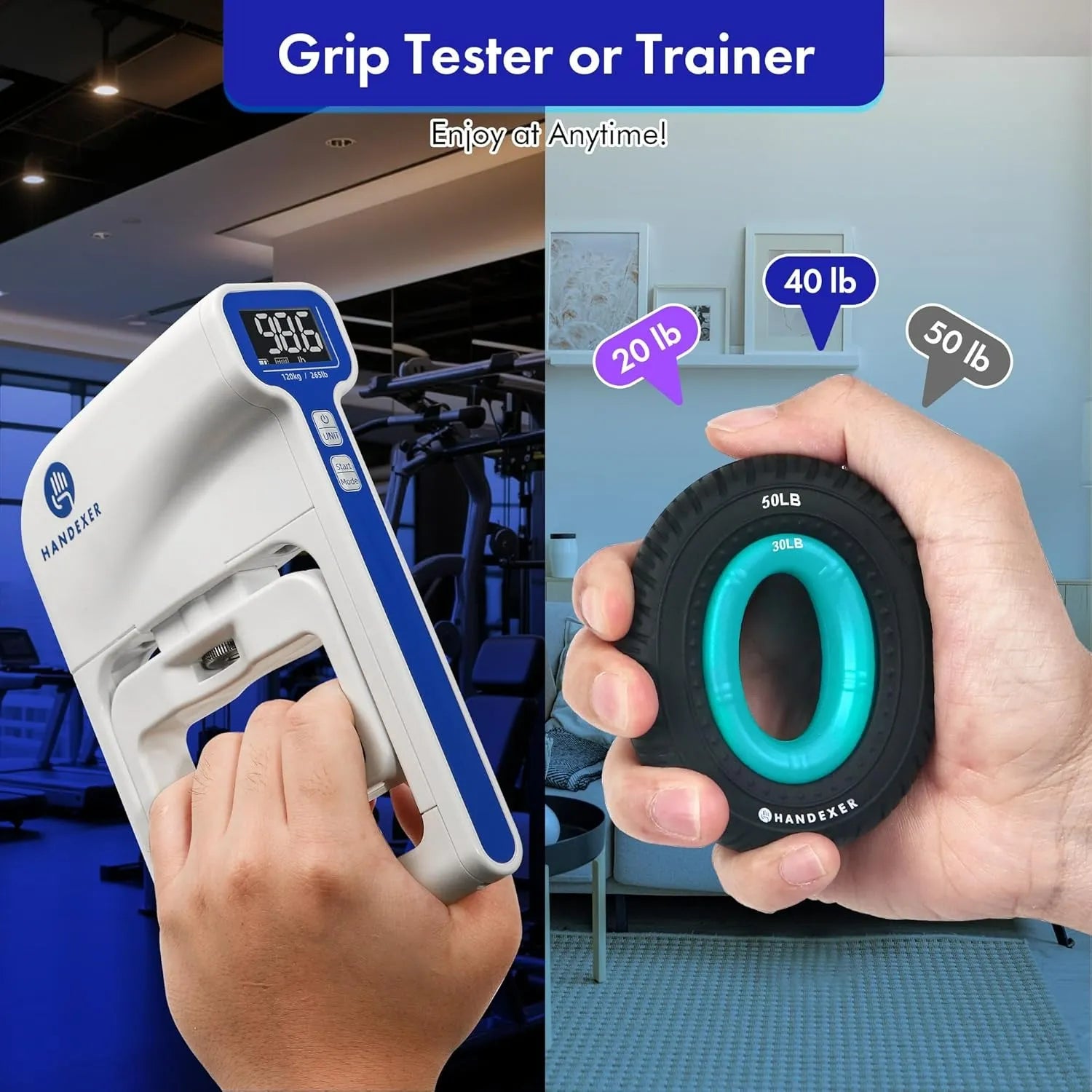
Grip-strength measurement can provide an objective numerical indicator of how much force a person can produce during a test. When performed under consistent conditions, repeated measurements may help identify changes over time.
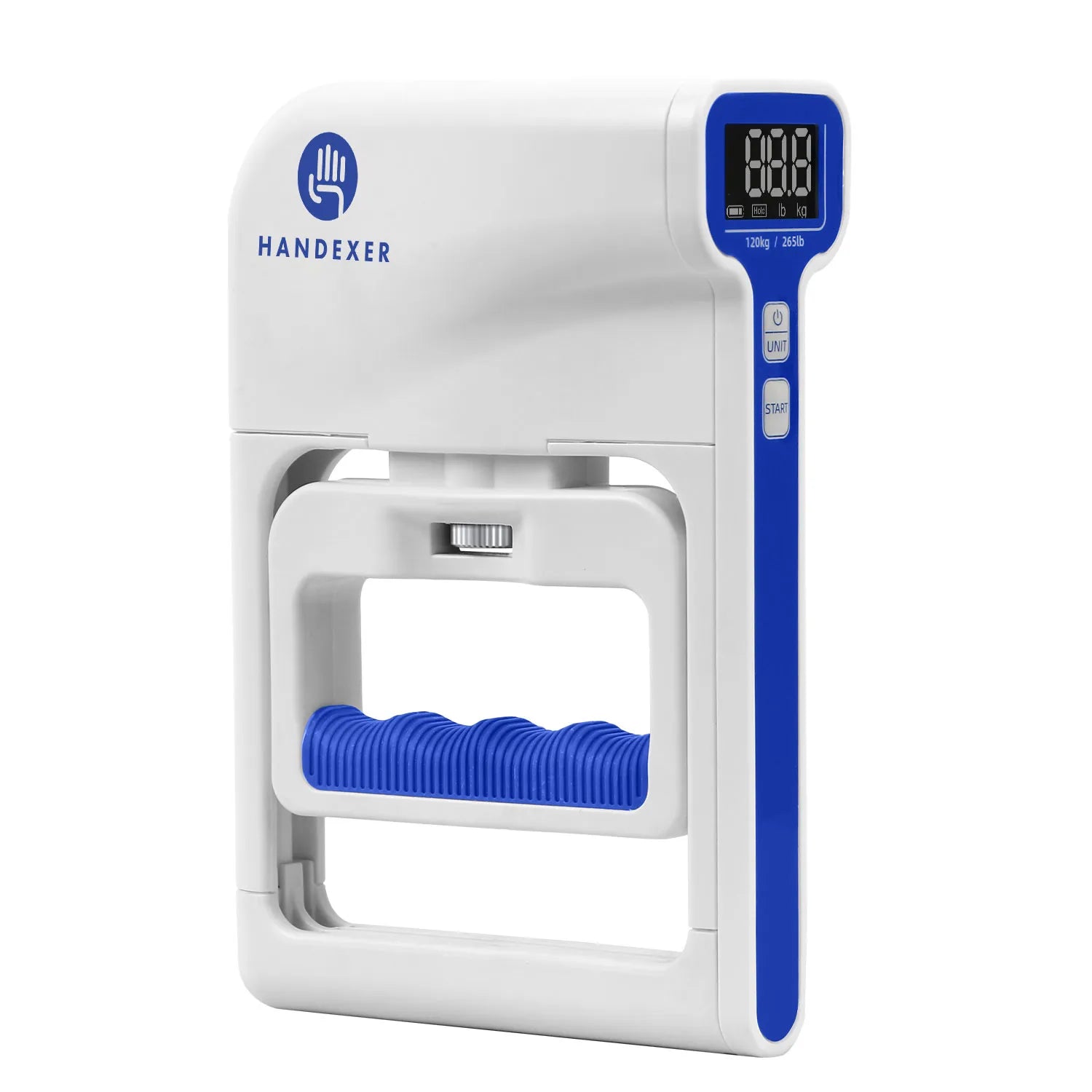
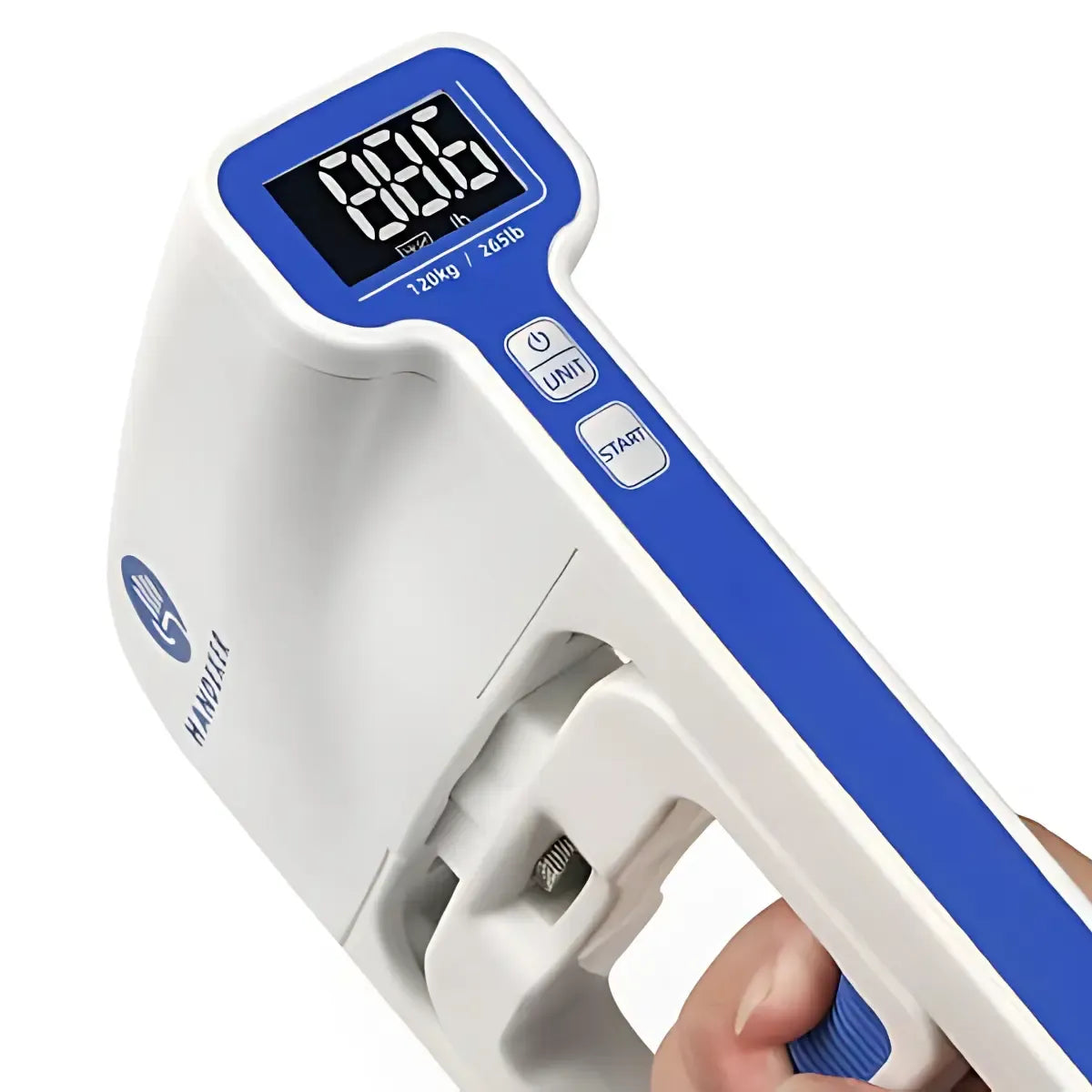
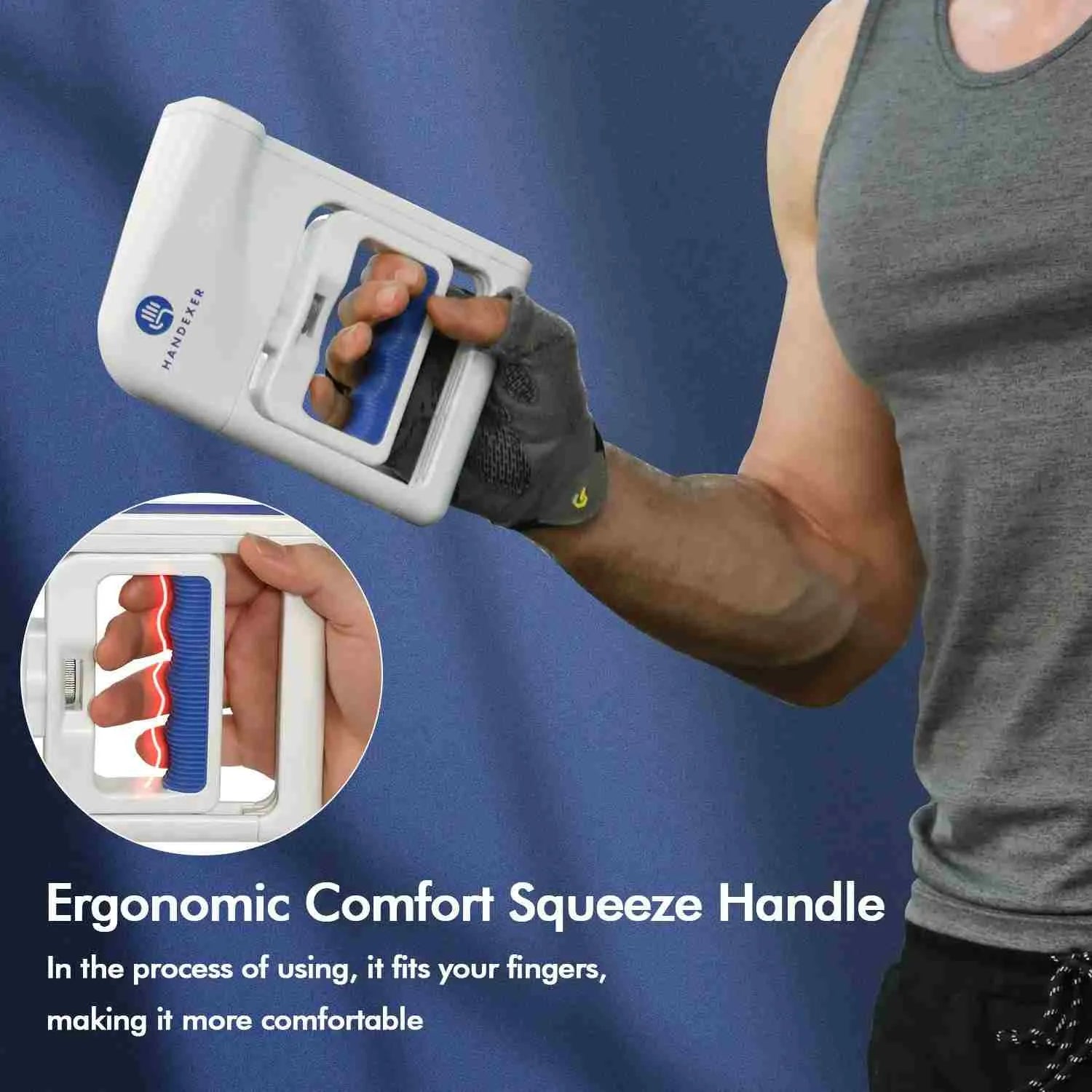
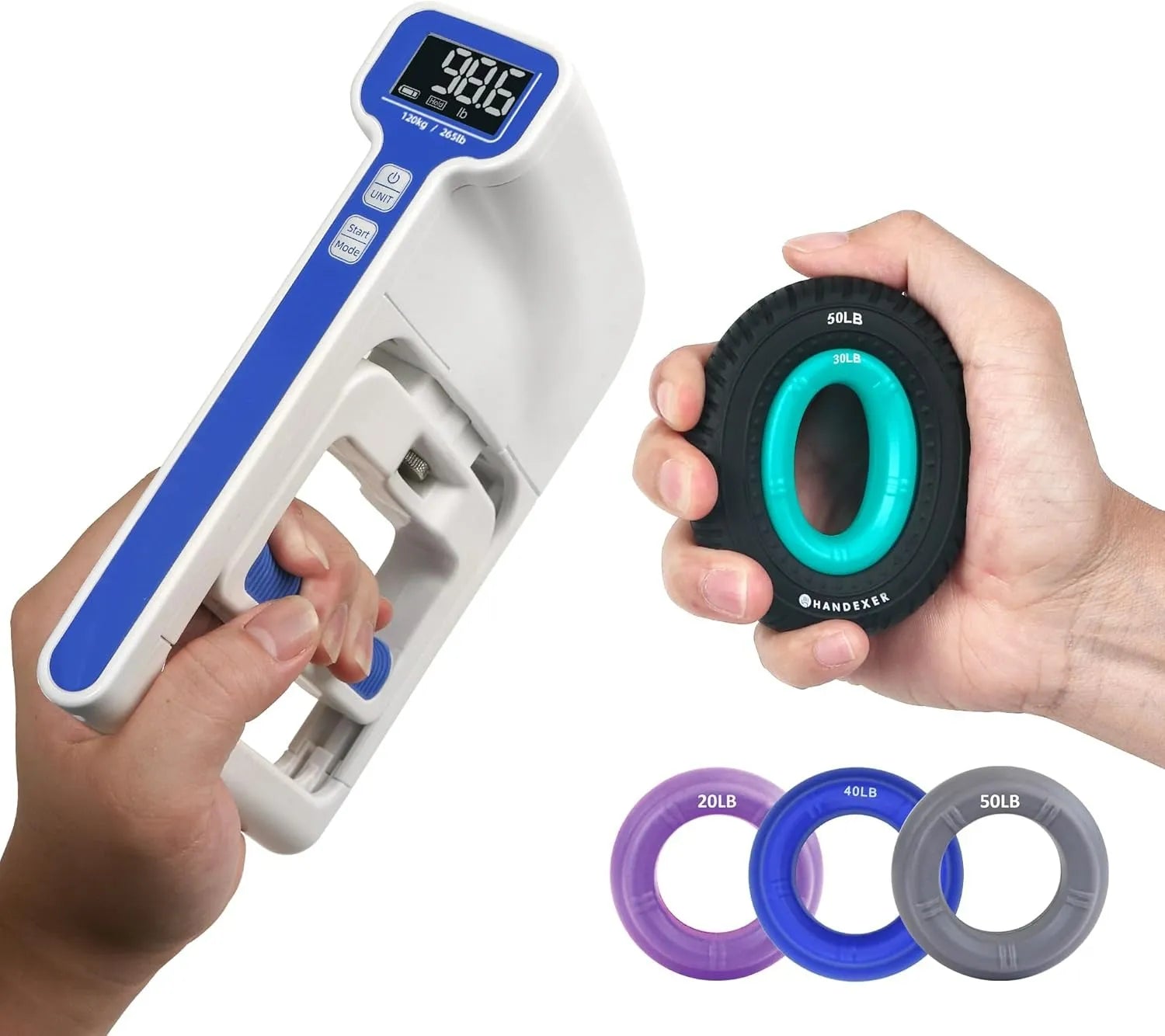
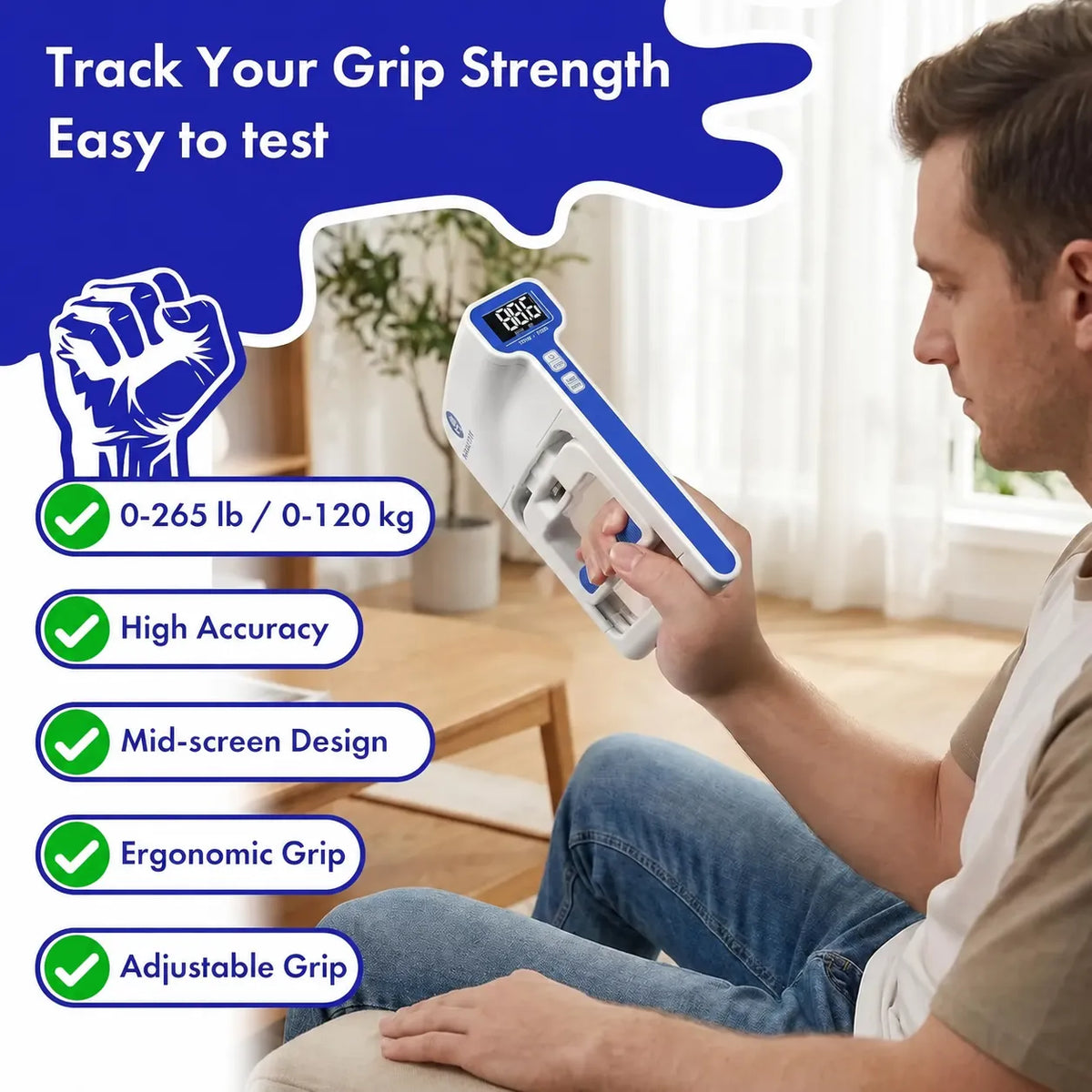
A digital hand dynamometer may be useful for stroke survivors who can safely hold and operate the device. People with severe weakness, limited grasp control, or difficulty releasing objects may need alternative assessment methods recommended by a therapist.
Confirm That Testing Is Appropriate
Ask a rehabilitation professional whether dynamometer testing is suitable for the individual's current hand function. Do not force a grip or continue if the test causes pain or uncontrolled movement.
Use a Consistent Seated Position
When appropriate for the individual and the device instructions, sit upright with the shoulder relaxed, elbow bent at approximately 90 degrees, and wrist in a comfortable, neutral position.Use the same general posture for subsequent measurements.
Adjust the Handle Comfortably
Set the handle to a position that permits a comfortable grasp without excessive finger strain. Avoid compensating by leaning the trunk, lifting the shoulder, or changing the testing position substantially.
Squeeze Within Comfortable Limits
Follow the device instructions and the testing method recommended by the therapist. Apply force only to a level that can be produced safely. Do not force a maximal squeeze through pain, marked stiffness, or difficulty controlling the hand.
Record the Conditions
Record which hand was tested, the date, the testing position, and any relevant differences in fatigue or symptoms. Consistent conditions make it easier to interpret changes across sessions.
For more guidance, read How to Test Grip Strength at Home Accurately.
Tracking Recovery: Four Areas to Monitor
1. Grip Strength Readings
Track trends over weeks rather than overreacting to single daily spikes or dips.
2. Hand Opening & Release
Observe how reliably and quickly the fingers relax away from objects.
3. Real Task Independence
Monitor whether drinking from a cup or buttoning requires less physical assistance.
4. Comfort & Movement Quality
Log signs of residual pain, muscle tightness, or shoulder elevation during tests.
| DATE | GRIP READING | FUNCTIONAL TASK | ASSISTANCE NEEDED | NOTES |
|---|---|---|---|---|
| Week 1 | Baseline | Hold lightweight cup | Moderate physical help | Initial observation |
| Week 2 | Same conditions | Hold lightweight cup | Light verbal cues | Faster release noted |
| Week 3 | Same conditions | Hold lightweight cup | Independent grip | Review with therapist |
When to Consult a Rehabilitation Professional
Identify boundary conditions that warrant clinical modification
Measure, Practice, and Review Progress
Improving grip strength after stroke is part of a broader journey to rebuild functional autonomy. Prioritize coordination, safe finger release, and comfortable daily actions alongside numerical grip scores.
Frequently Asked Questions
1. How long does it take to regain grip strength after a stroke?
Recovery varies considerably. Some people experience changes over weeks, while others need longer-term rehabilitation. The extent of impairment, overall health, therapy consistency, and individual recovery pattern all influence progress.
2. What is the best exercise for grip strength after stroke?
There is no single best exercise for everyone. Supported hand movement, grasp-and-release practice, finger extension, and functional activities may be appropriate at different stages. A therapist can help select exercises based on current abilities.
3. Can a hand dynamometer be used at home after a stroke?
Yes, for people who can safely hold and use the device. A therapist can recommend a suitable testing method and help interpret the readings. A dynamometer is not appropriate for every level of hand impairment.
4. Should stroke survivors squeeze a stress ball every day?
Not necessarily. Repetitive squeezing may suit some people, but others may have difficulty releasing the ball or may benefit more from supported movement and functional tasks. Follow an individualized rehabilitation plan.
5. Does improved grip strength mean better hand function?
Not always. Grip strength is one aspect of hand performance. Coordination, sensation, finger extension, movement control, and daily activity performance should also be considered.
6. Can grip strength be different between the two hands after a stroke?
Yes. Stroke can affect one side of the body more than the other, and a person's hands may also have differed in strength before the stroke. Compare readings in context and discuss meaningful changes with a rehabilitation professional.
7. Is it too late to improve hand strength months or years after a stroke?
No, it is not too late. While spontaneous recovery is fastest in the first few months, the brain retains neuroplasticity for years. With sustained, task-oriented practice and progressive rehabilitation, meaningful improvements in motor control and grip can still occur well into the chronic recovery stage.
8. Why does my hand curl into a tight fist, and how can it be managed?
Persistent hand curling is often caused by post-stroke spasticity—involuntary, heightened muscle tone in the flexor muscles. Forcing fingers open quickly can worsen the reflex. Gentle sustained stretching, resting splints, active finger-extension drills, and clinical interventions (such as botulinum toxin or tone-modulating therapy) can help relax muscle tightness.
9. What should I do if grip strength suddenly decreases?
Sudden decreases in grip strength warrant immediate attention. If accompanied by other neurological symptoms, seek urgent medical evaluation to rule out acute medical events. Otherwise, consult your therapist to evaluate for fatigue, spasticity flare-ups, or changes in medication.






Share:
Losing Your Grip at Work? How Strong Emotions Can Affect Your Body
Did Your Grip Strength Drop a Few Kilograms This Winter? What Exercise Physiology Actually Suggests