

Climbing harder routes requires more than refined technique. As you progress, smaller holds, steeper walls, and longer sequences place increasingly demanding loads on your fingers.
At this stage, regular climbing may not provide enough targeted stimulus to address specific strength limitations. You need to develop the ability to produce high levels of force, maintain grip tension through repeated movements, and handle progressively greater training demands.
This guide explores advanced hangboard methods, practical training schedules, and ways to measure your progress so you can make informed adjustments over time.
01 What Changes When You Move Beyond Beginner Finger Training?
Beginner climbers generally benefit most from improving movement technique, learning different grip positions, and building general strength through regular climbing. As experience increases, smaller holds and dynamic sequences demand three essential physical qualities:
Maximum Finger Strength
- Holding small edges on steep walls
- Maintaining tension in crux moves
- Power between distant holds
- Controlling body tension on overhangs
Finger Strength Endurance
- Long sustained boulder sequences
- Tension through linked movements
- Repeating demanding moves
- Preserving grip quality near route tops
Finger Load Tolerance
Finger flexor tendons and A2/A4 pulleys adapt significantly slower than contractile muscle tissue. Load tolerance requires balanced volume progression to avoid cumulative soft tissue failure.

02 Three Advanced Finger Strength Training Methods

2.1 Max Hangs: Develop Maximum Finger Strength
Max Hangs expose the finger flexors to near-maximal isometric loading with sufficient rest intervals to allow high motor unit recruitment in every single repetition.
2.2 Repeaters: Build Finger Strength Endurance
Aerobic / Anaerobic CapacityRepeaters challenge the forearm musculature under accumulating systemic and local fatigue, replicating crux route endurance.

2.3 Low-Intensity Loading: Build Consistent Capacity
AbrahangsResearch by Gilmore et al. (Sports Medicine Open, 2024) investigated low-intensity hangboard stimulus over 4-16 weeks with climbers keeping their feet on the floor:
| TRAINING METHOD | MAIN FOCUS | LOADING CHARACTERISTICS |
|---|---|---|
| ●Max Hangs | Maximum finger strength | High resistance, short holds (7-10s), long rest (2-3m) |
| ●Repeaters | Strength endurance | Repeated holds with short recovery intervals (7s on / 3s off) |
| ●Low-Intensity | Controlled connective loading | Lower resistance, feet-on-ground, longer duration work |
03 How to Build an Effective Hangboard Training Program
Establish Starting Point
Record edge size, exact grip geometry, added weight/assistance, and baseline fatigue. Establish objective metrics instead of perceptual "readiness".
Match Intensity to Goal
Never mix all modalities into one block. Focus on pure strength (Max Hangs) OR power-endurance (Repeaters) to allow targeted neurological adaptation.
Gradual Overload
Change only one variable at once: weight OR duration OR edge size. Never progress when technical form fails before the planned completion timer.
04 A Practical Weekly Finger Strength Training Schedule
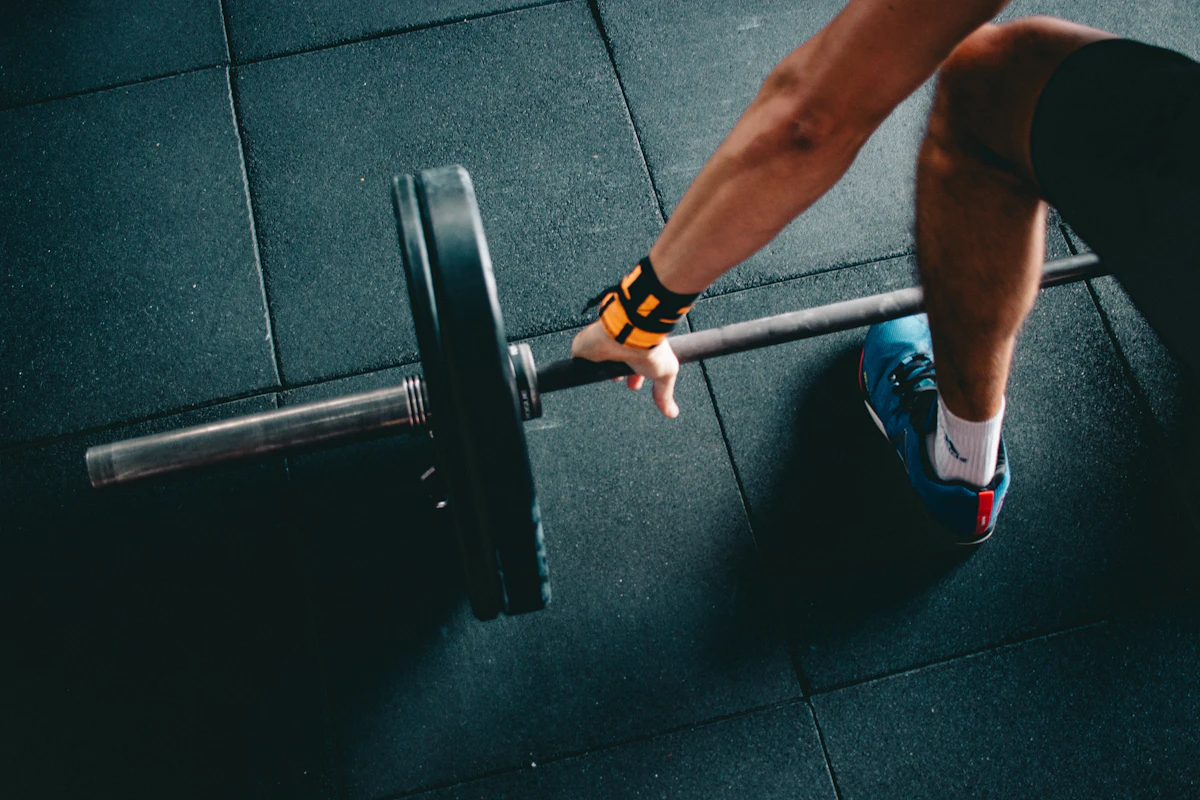
Advanced finger training must complement climbing volume rather than compete with it.
05 Recovery and Finger Injury Prevention
- Increasing hangboard resistance too quickly without baseline history
- Stacking high-intensity board sessions without deload weeks
- Aggressive full-crimp loading while in an already fatigued state
- Ignoring localized tenderness around the A2/A4 pulley ring
- Sharp pain on morning waking flexion
- Point tenderness directly on the flexor sheath
- Sudden, unexplained drop in hold tolerance
- Persistent inflammation extending beyond 48 hours

06 How to Measure and Track Your Climbing Strength Progress
Hangboard Force Protocol
Measures isolated finger shear and friction against standardized 20mm test edges. Test every 6-8 weeks under identical rested conditions.
Hand Dynamometer Tracking
Measures general central nervous system readiness and whole-hand isometric capability. Serves as an objective readiness and recovery monitor.
Track Your Grip Strength Beyond the Hangboard
Climbing-specific finger tests tell you how your fingers perform on the holds you train for. Overall grip measurements provide a complementary view of your hand strength and central fatigue.
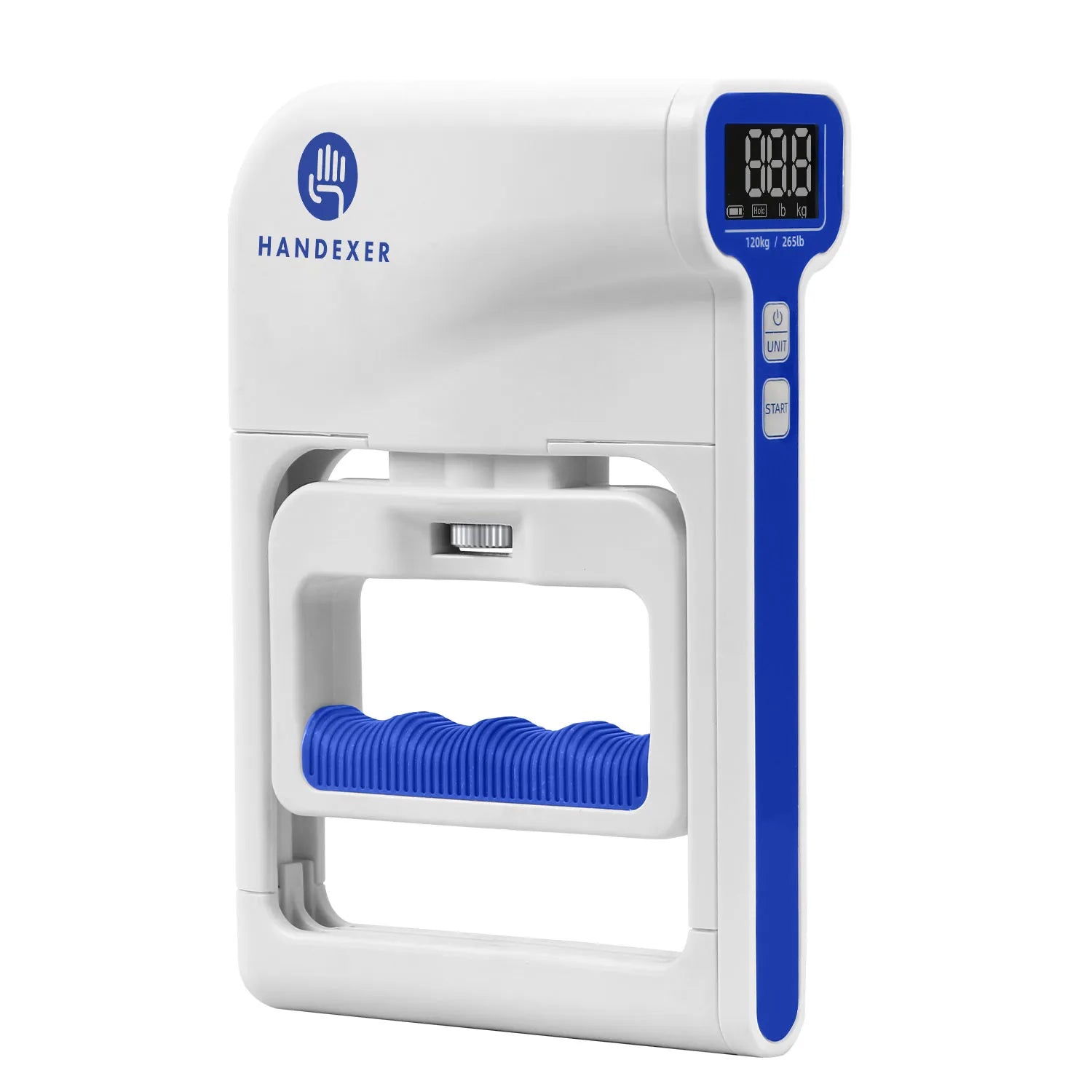
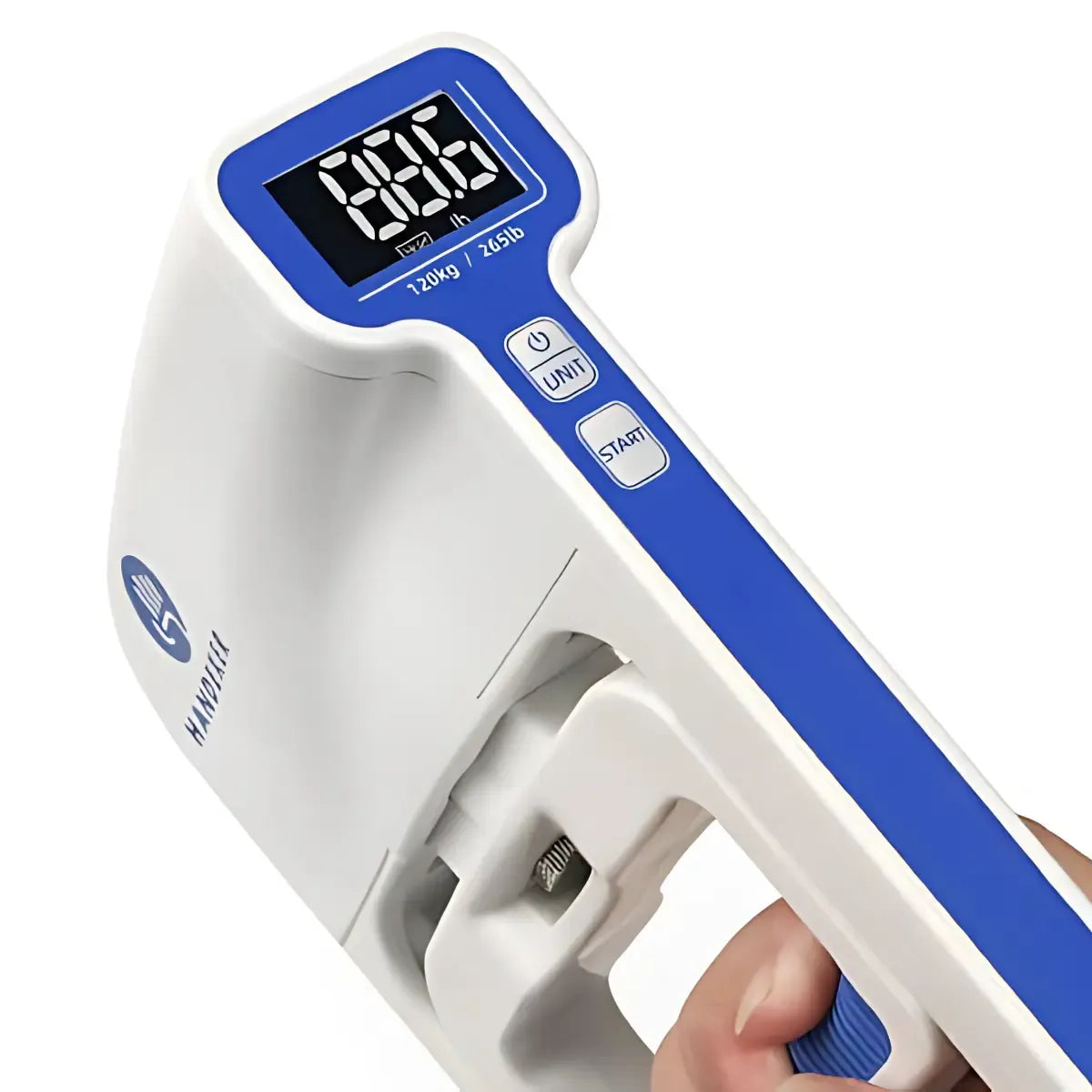
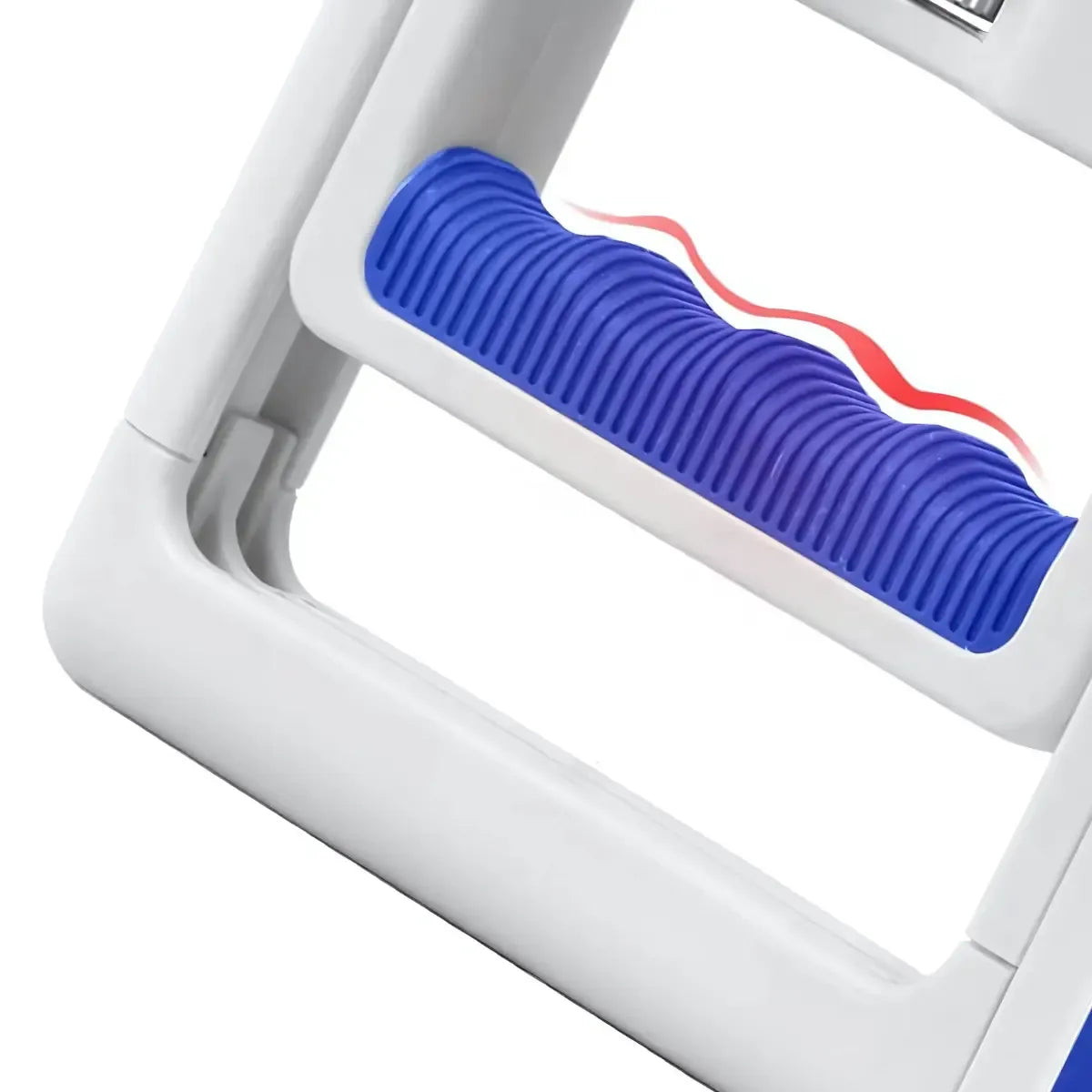
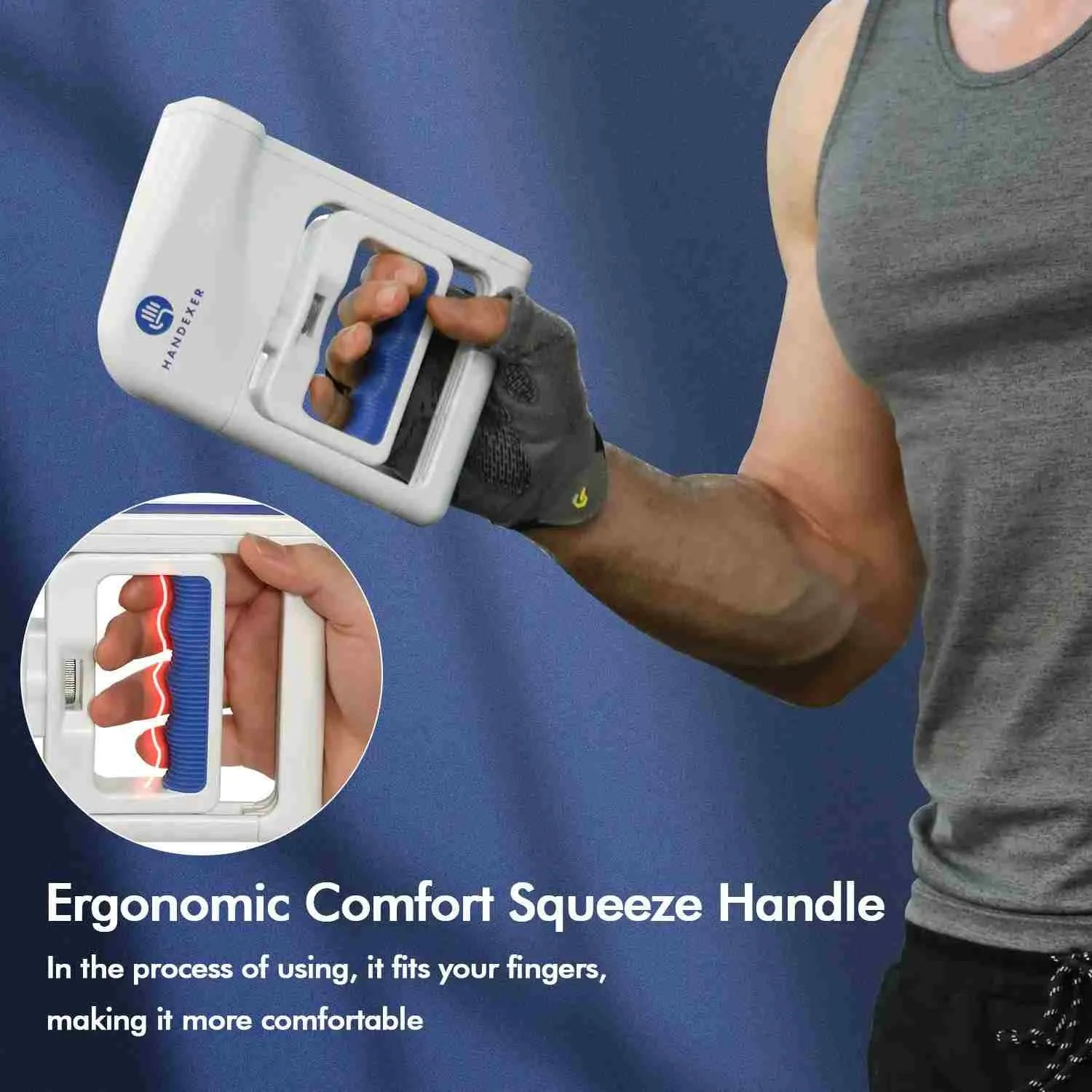
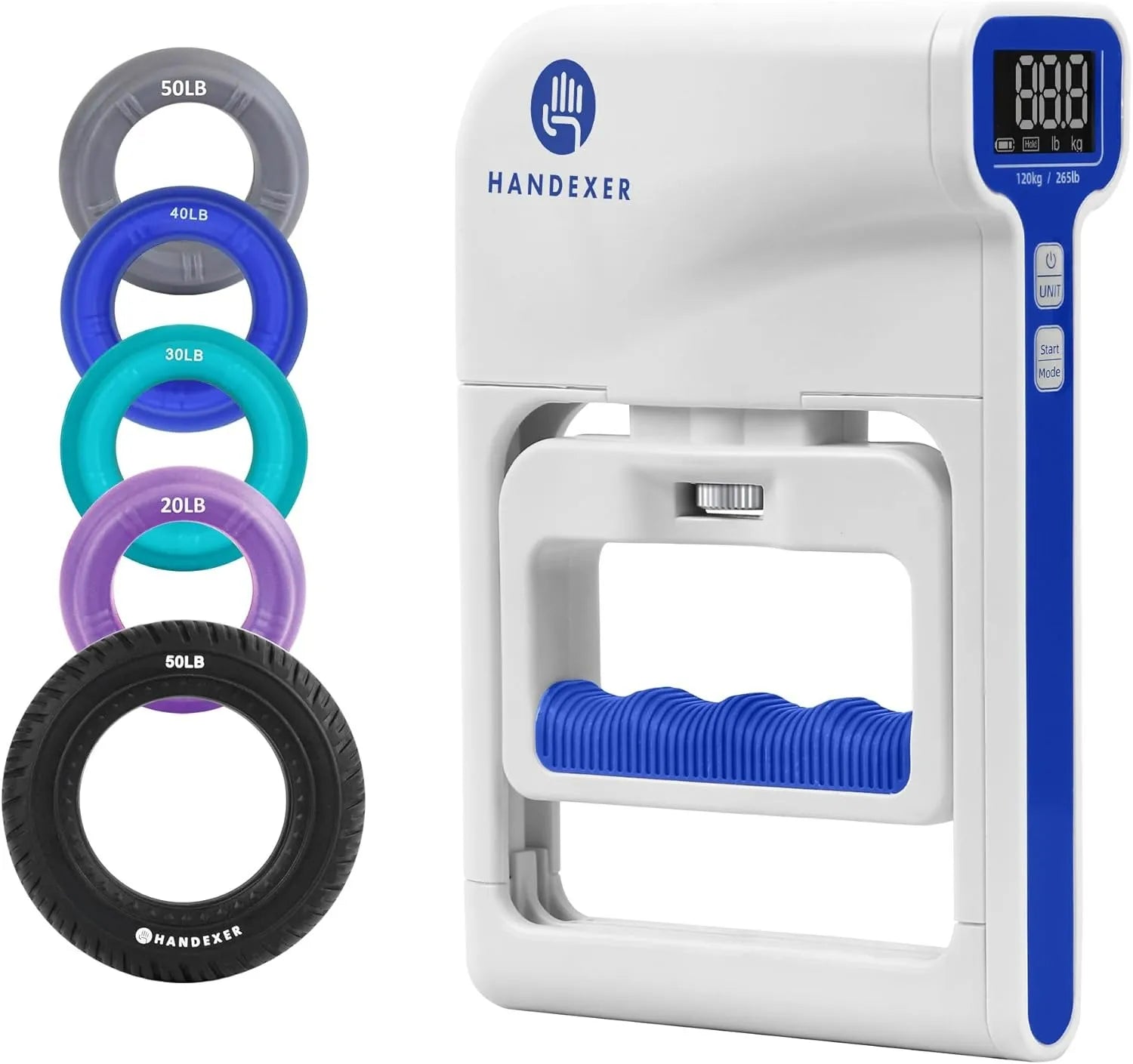
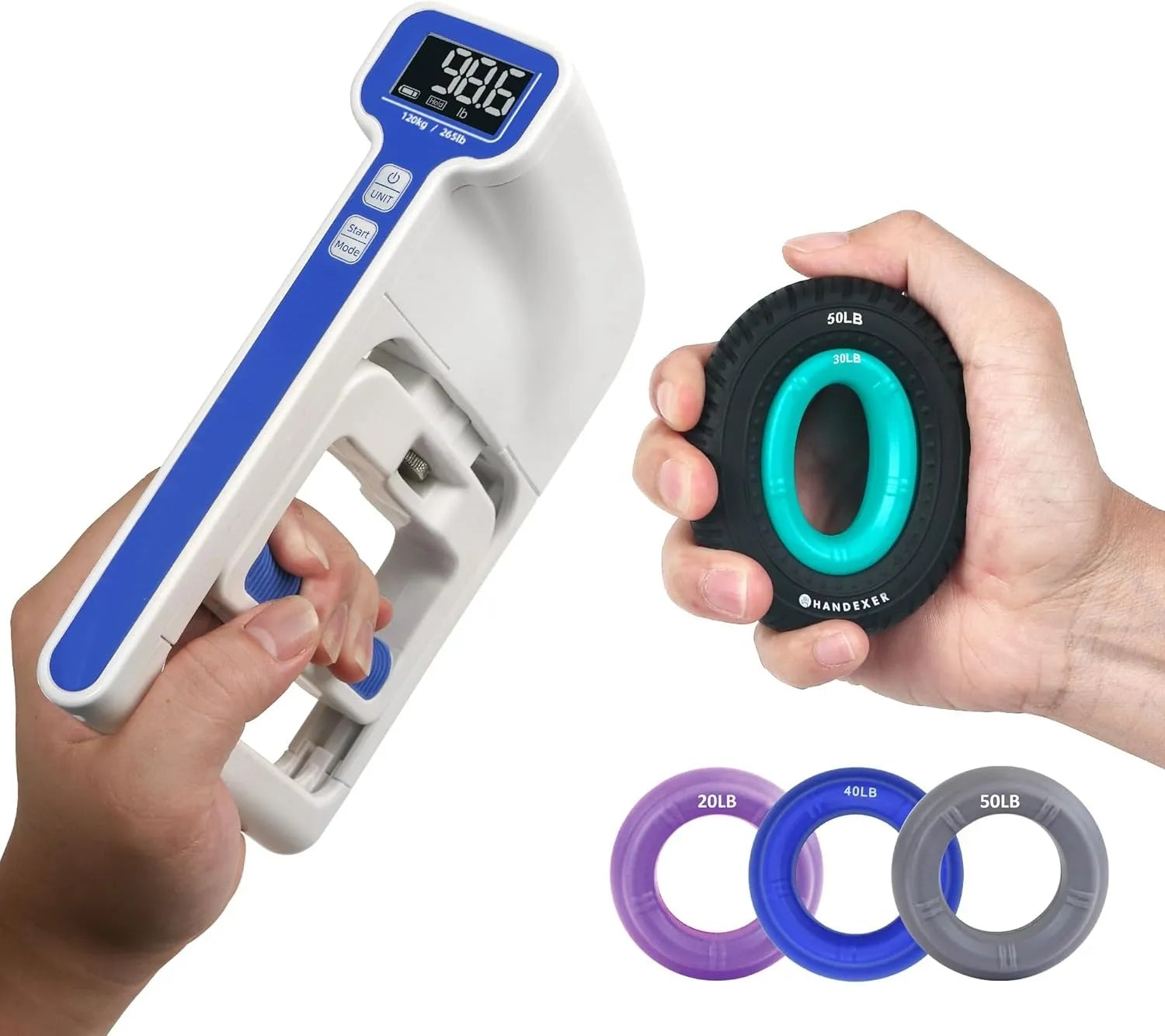
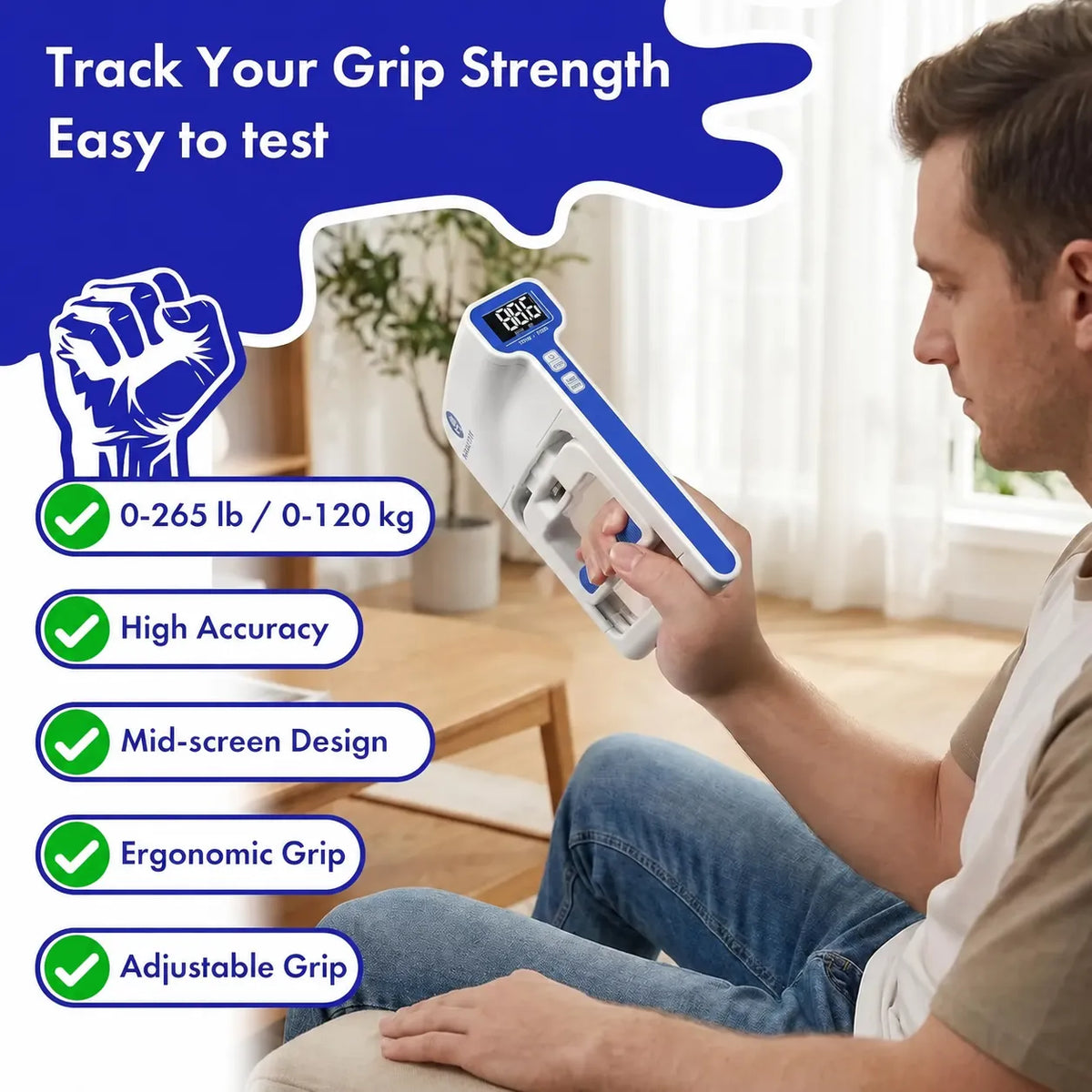
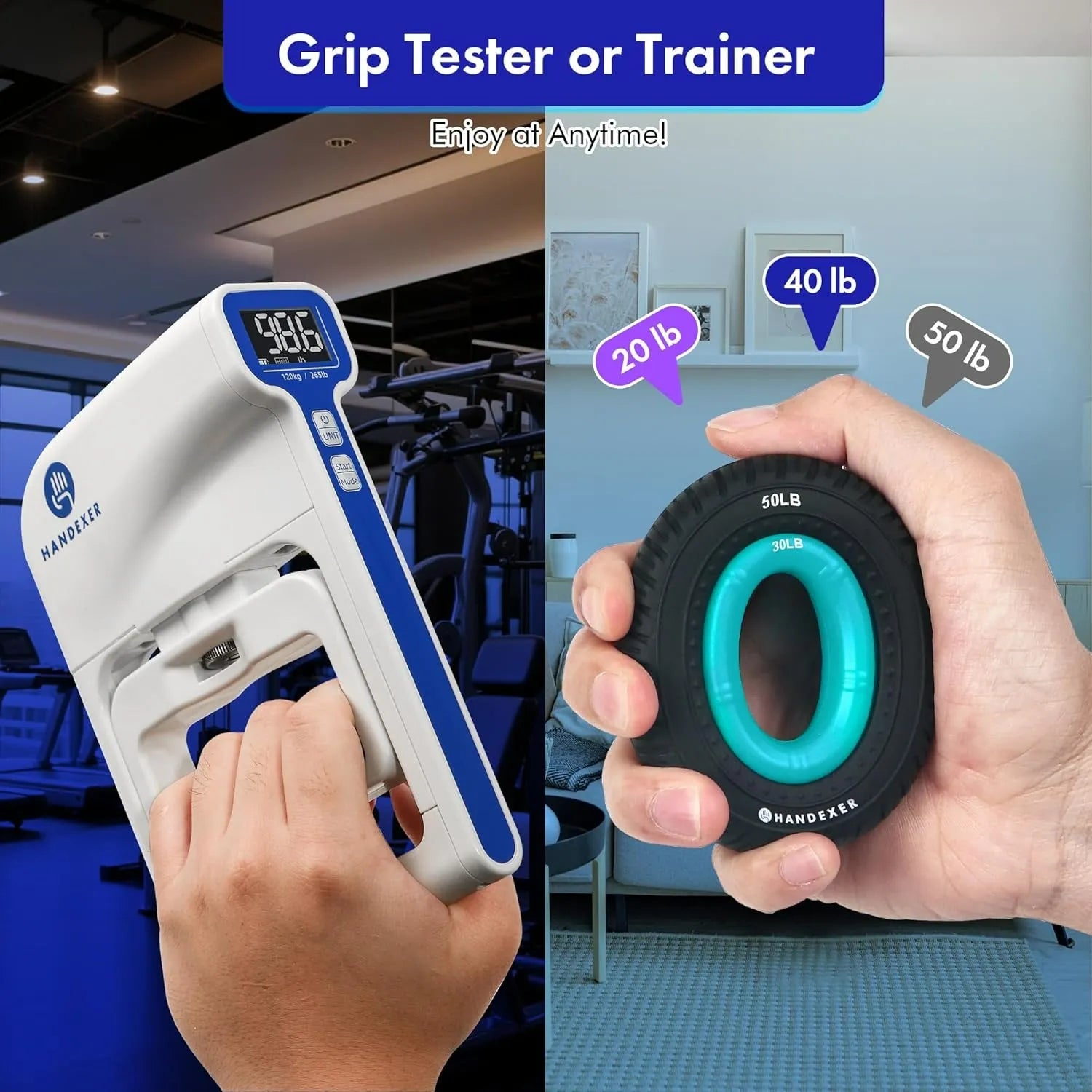
With the Handexer Digital Hand Dynamometer, record grip force, compare left- and right-hand balances, and identify under-recovery before injury occurs.
Explore Handexer Digital Hand Dynamometer
| MEASUREMENT | WHAT TO RECORD |
|---|---|
| Training Method | Max Hangs, Repeaters, or On-Wall |
| Grip Position | Strict Half-crimp, Open-hand, 3-finger drag |
| Resistance | Added load (+kg) or pulley assistance (-kg) |
| Volume & Duration | Total sets, reps, and work duration (s) |
| Dynamometer Metric | Morning baseline vs post-session reading (kg/lbs) |
07 Common Mistakes in Advanced Finger Strength Training
Max Intensity Too Often
Maximal hangboard sets daily fry the CNS and weaken structural tendons without adaptation.
Changing Too Many Variables
Altering edge depth and adding weights concurrently masks which factor caused plateau or progress.
Ignoring Climbing Volume
A session on a steep board is finger training. Hangboarding must balance climbing, not multiply it blindly.
Subjective Guesswork
Relying solely on "feeling good" often leads climbers directly into overuse tendonitis.
08 Frequently Asked Questions
How often should advanced climbers train finger strength?
Many structured programs use one or two dedicated fingerboard sessions per week. The appropriate frequency depends on climbing volume, session intensity, training experience, and individual recovery capacity.
If your regular climbing already includes demanding small-hold work, you may need fewer additional hangboard sessions.
What is the difference between Max Hangs and Repeaters?
Max Hangs emphasize maximum force production through relatively high-intensity, short-duration holds with longer rest periods.
Repeaters involve repeated hanging and resting intervals, placing greater emphasis on sustained and repeated force production.
Both methods can support climbing performance, but they target different physical qualities.
How long does it take to improve climbing finger strength?
Some performance changes may become noticeable after several weeks of consistent training. Longer-term adaptations involving tendons and other connective tissues can take months.
Progress depends on training consistency, loading strategy, experience, and recovery.
Should I train fingers before or after climbing?
High-intensity fingerboard training is generally best performed when your fingers are relatively fresh, usually after a thorough warm-up and before demanding climbing work.
If you combine both activities in one session, prioritize the training goal that matters most and manage the total workload accordingly.
Can a hand dynamometer measure climbing finger strength?
A hand dynamometer measures overall grip strength rather than isolated climbing-specific finger strength.
It is useful as a complementary tool for monitoring general hand strength, comparing left- and right-hand performance, and observing changes over time.
For climbing-specific finger strength, use a consistent hangboard or finger force testing protocol.
Should I continue hangboard training if my fingers hurt?
Do not push through sharp or persistent finger pain.
Stop the aggravating exercise and allow the situation to be assessed. If discomfort persists or you suspect a pulley injury, seek professional evaluation before returning to demanding loading.




Share:
Stronger Grip, Longer Life? Can Squeezing a Ball Really Help You Live Longer?
Grip Strength and Aging: What Your Grip Can Reveal About Biological Age