
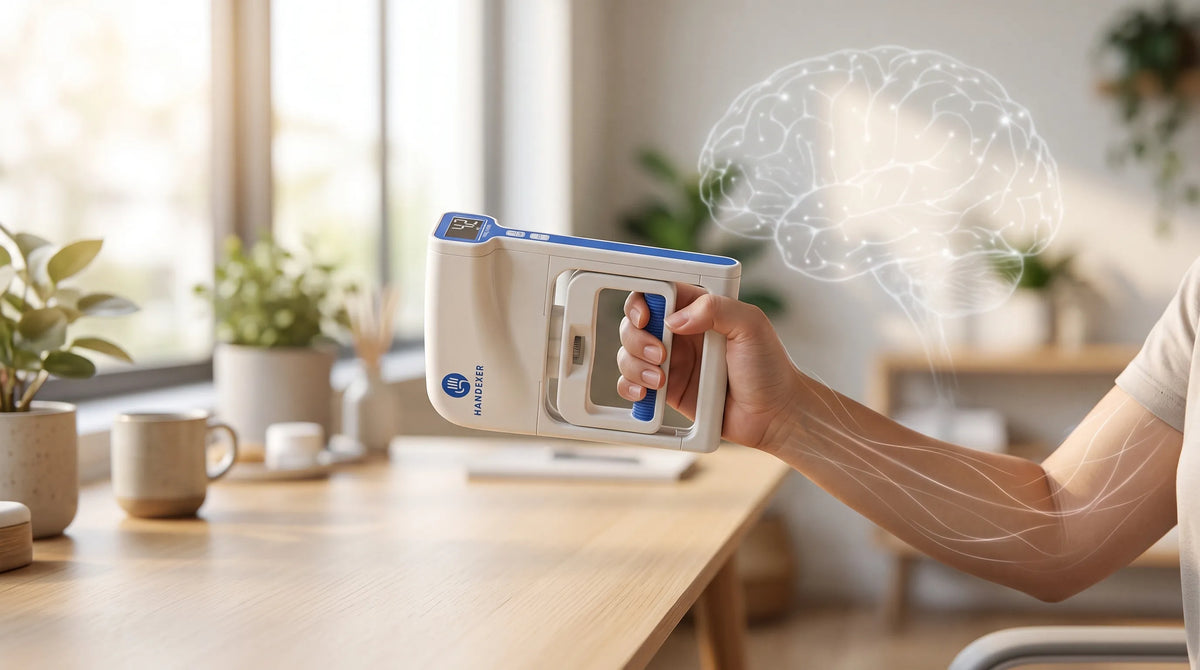
Quick Summary
Research suggests that lower grip strength is associated with poorer cognitive outcomes and a higher observed risk of dementia in some aging populations. Grip strength is not a cognitive test and cannot diagnose dementia. Its practical value is different: it provides a simple, repeatable way to measure physical strength, establish a personal baseline, and track how that strength changes over time.
When people think about healthy brain aging, they usually think about memory, sleep, nutrition, exercise, and staying mentally active.
Researchers are also studying something much simpler: grip strength.
Grip strength reflects the combined performance of muscles and the nervous system and is closely related to overall physical function. Because it is relatively simple to measure, researchers have examined whether lower grip strength is associated with cognitive decline and dementia.
So, is grip strength related to brain health?
The answer is more nuanced than "stronger hands mean a healthier brain."
Research has found associations between lower grip strength and poorer cognitive outcomes in several populations. But a grip-strength reading does not tell you whether your brain is healthy or whether you will develop dementia.
What makes grip strength interesting is something more practical: It is a simple physical measurement that can be repeated under similar conditions and tracked over time.
That makes it useful not as a brain test, but as a way to understand your own physical-strength trajectory.
Why Is Grip Strength Connected to Brain Aging?
A strong grip requires complex coordination between the brain, nervous system, and muscles. When you squeeze a dynamometer, your brain initiates the movement, nerve signals activate the hand and forearm muscles, and sensory feedback helps control the amount of force produced.
As people age, changes in physical and cognitive function can occur alongside one another. Rather than representing the health of one isolated system, grip strength provides a measurable snapshot of overall physical and neuromuscular function. That broader relationship may help explain why lower grip strength and poorer cognitive outcomes are often observed together.
What Does Research Say About Grip Strength & Cognitive Health?
Research has reported clear associations between lower grip strength, cognitive impairment, and dementia in several aging populations. However, these findings should not be interpreted as proof that low grip strength directly causes cognitive decline.
Lower Grip Strength & Dementia Risk
Followed 5,916 adults aged 50+ for a median of 9.2 years. Participants with lower handgrip strength had a significantly higher observed risk of developing dementia.
Lower Grip Strength & Cognitive Impairment
Analyzed Americans aged 50 and older, discovering a dose-response relationship between lower physical strength and reduced cognitive test scores.
Shared Contributing Factors: Researchers propose that shared factors such as physical inactivity, muscle loss (sarcopenia), vascular health, chronic disease, and frailty contribute to both lower physical strength and poorer cognitive outcomes simultaneously.
What Can—and Can't—Grip Strength Tell You?
- Track physical strength reliably over time.
- Establish a personal baseline under controlled conditions.
- Monitor changes in broader physical function.
- Add an objective measurement to your healthy-aging routine.
- Diagnose dementia or any neurological condition.
- Measure memory or cognitive ability.
- Determine whether your brain is isolatedly "healthy."
- Predict individual dementia risk on its own.
"How is my physical strength changing over time?"
This is the actionable question you can measure, track, and directly address through targeted interventions.
Why Your Personal Grip-Strength Baseline Matters
A single grip-strength reading tells you relatively little about long-term change. Your result can vary day to day because of fatigue, recent exercise, soreness, sleep quality, testing position, handle setting, or simple normal fluctuations.
| MONTH | GRIP STRENGTH | NOTES |
|---|---|---|
| January | 45.2 kg | Normal conditions |
| March | 44.8 kg | Normal conditions |
| June | 44.9 kg | Normal conditions |
| MONTH | GRIP STRENGTH | NOTES |
|---|---|---|
| January | 45.2 kg | Normal conditions |
| March | 43.7 kg | Normal conditions |
| June | 41.8 kg | Normal conditions |
Want to see where your grip strength stands today?
Compare your reading with demographic reference ranges using our online tool.
Try Free Online Grip Assessment ToolWhat About Grip Strength Cutoffs?
When researching muscle strength, you may encounter clinical cutoffs established by medical research groups. For instance, the European Working Group on Sarcopenia in Older People 2 (EWGSOP2) uses the following threshold indicators:
These cutoff values are clinical indicators for low muscle strength within a sarcopenia assessment framework—they are not universal definitions of "normal" grip strength and are not thresholds for cognitive health.
Rather than asking only "Am I above or below one cutoff?", combine demographic population context with your personal long-term trends to get the full picture.
How to Measure Grip Strength Consistently
Consistency matters more than laboratory perfection. Follow these 4 guidelines for reliable tracking:
Use the Same Dynamometer
Different devices feature varying sensor calibrations, handle geometries, and electronics. Using one specific device ensures repeated comparisons remain accurate over time.
Keep Your Body Position Consistent
Sit upright with feet flat on the floor, shoulders relaxed near the body, and elbow bent at a 90-degree angle. Changing position changes muscle leverage.
Keep the Handle Setting Fixed
Handle position alters hand mechanics and output force. Find a comfortable handle position during your baseline test and keep it unchanged for future sessions.
Take Multiple Trials with Rest
Perform 3 maximal squeezes per hand with roughly 60 seconds of rest between attempts. Record the highest score achieved.
A Simple Approach: Assess → Measure → Track → Train
Assess — Where Do You Stand?
Use age- and sex-based demographic reference ranges to contextualize your initial numbers against broader populations.
Check reference rangesMeasure — What Is Your Baseline?
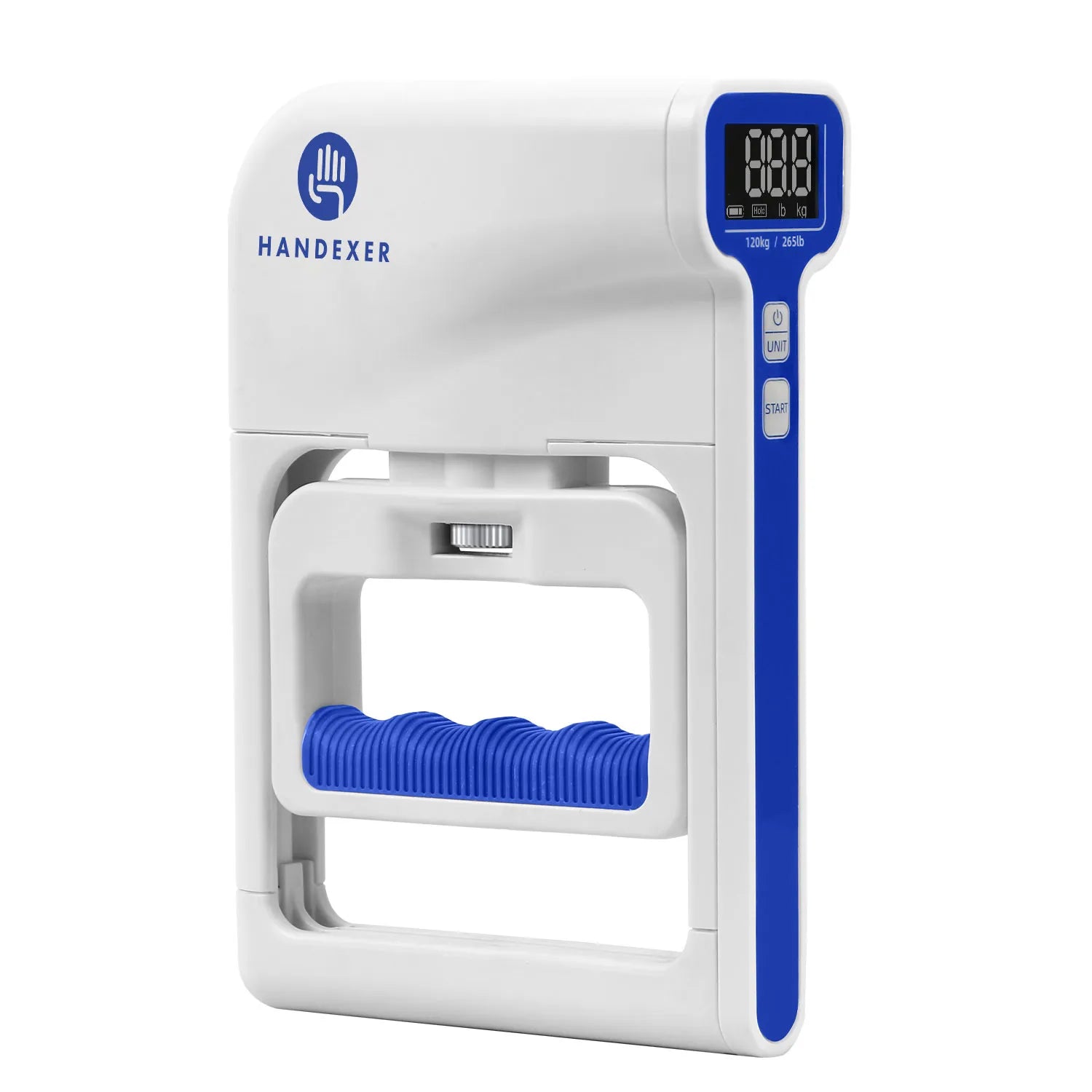
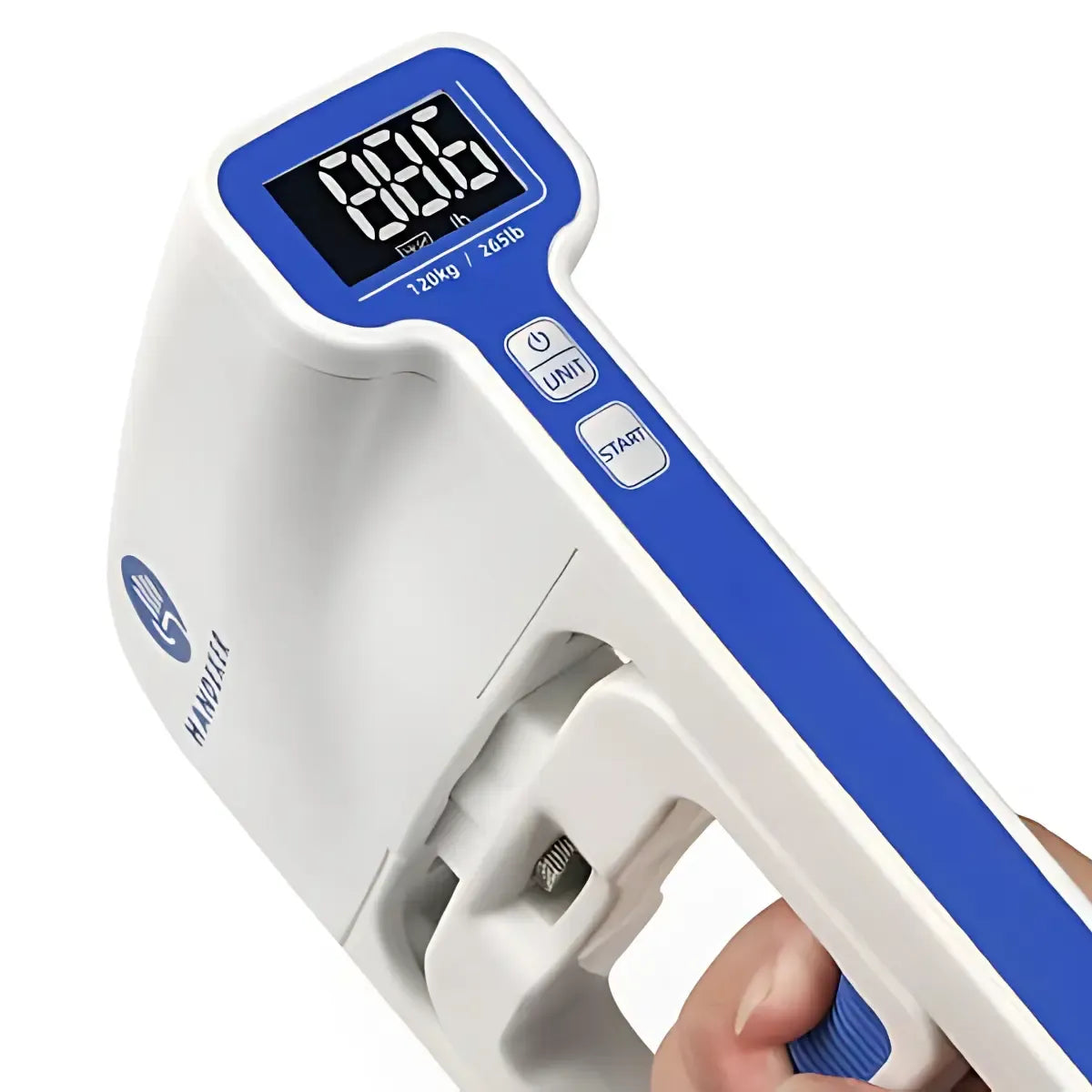
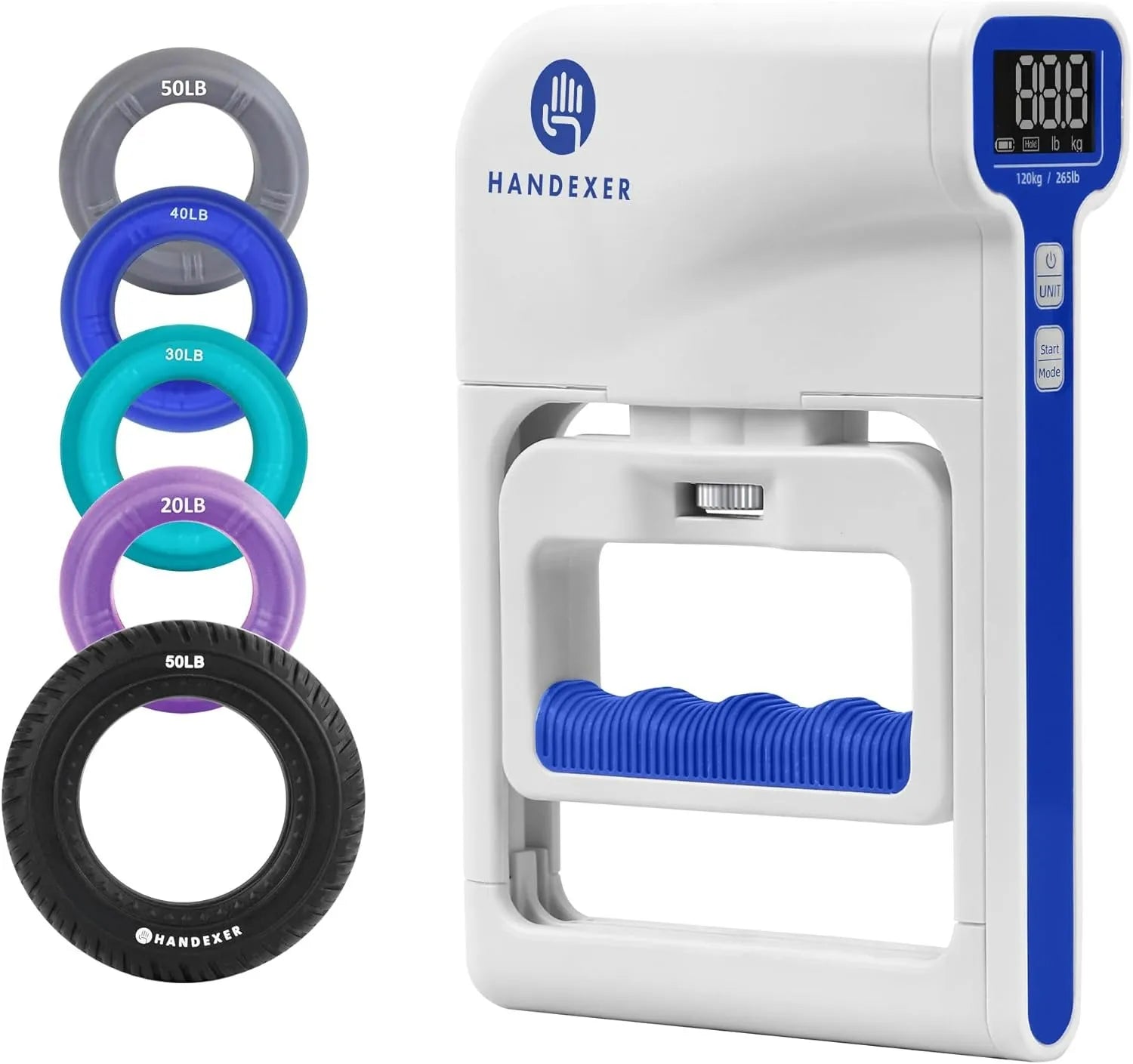
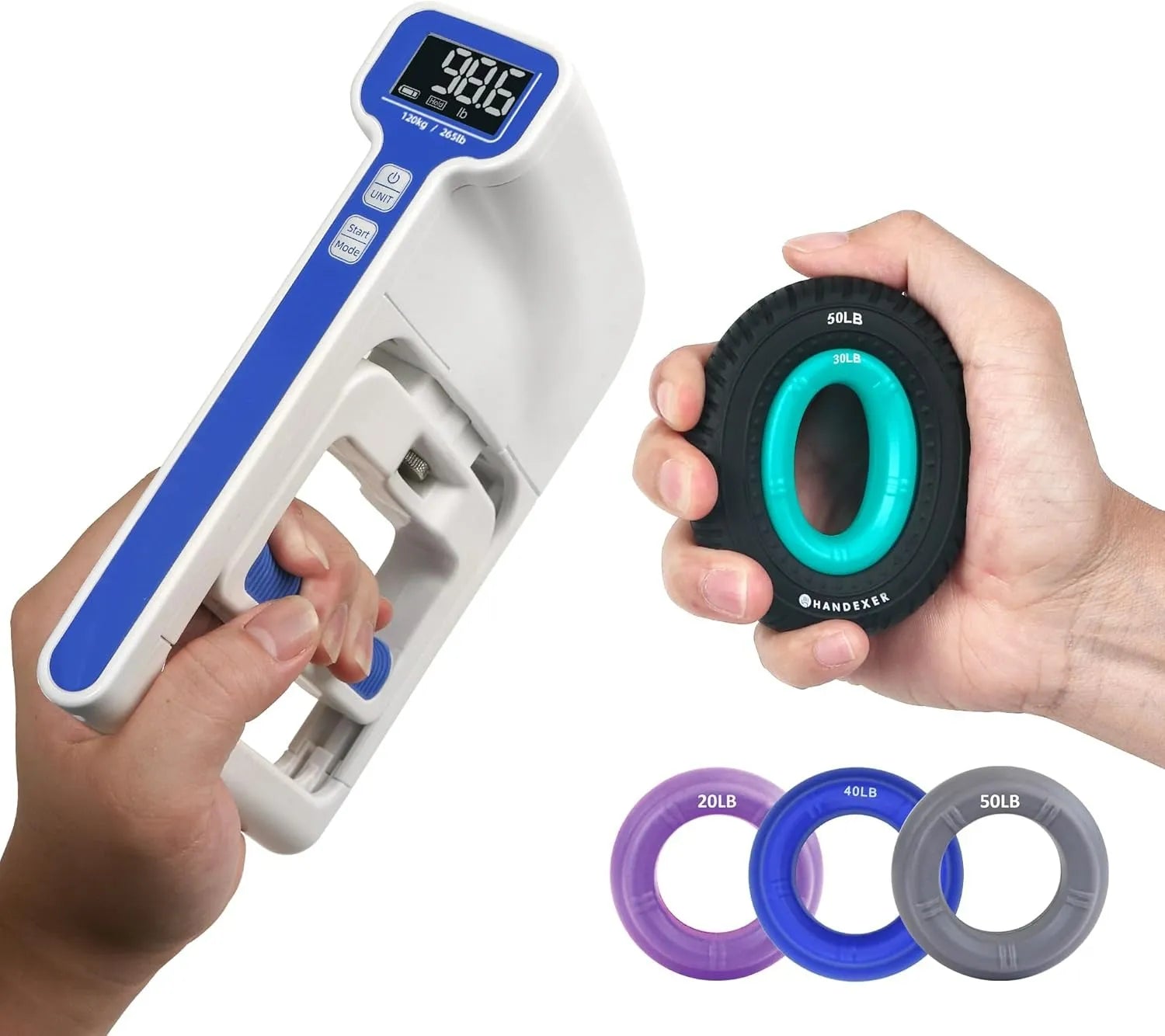
Record your initial score using a calibrated digital dynamometer to replace subjective feelings with concrete data.
Establish your true starting pointTrack — Is It Changing?
Re-test every few weeks or monthly. Look for overall trend patterns (Stable, Improving, Fluctuating, or Declining).
Focus on multi-month trendsTrain — What Can You Do About It?
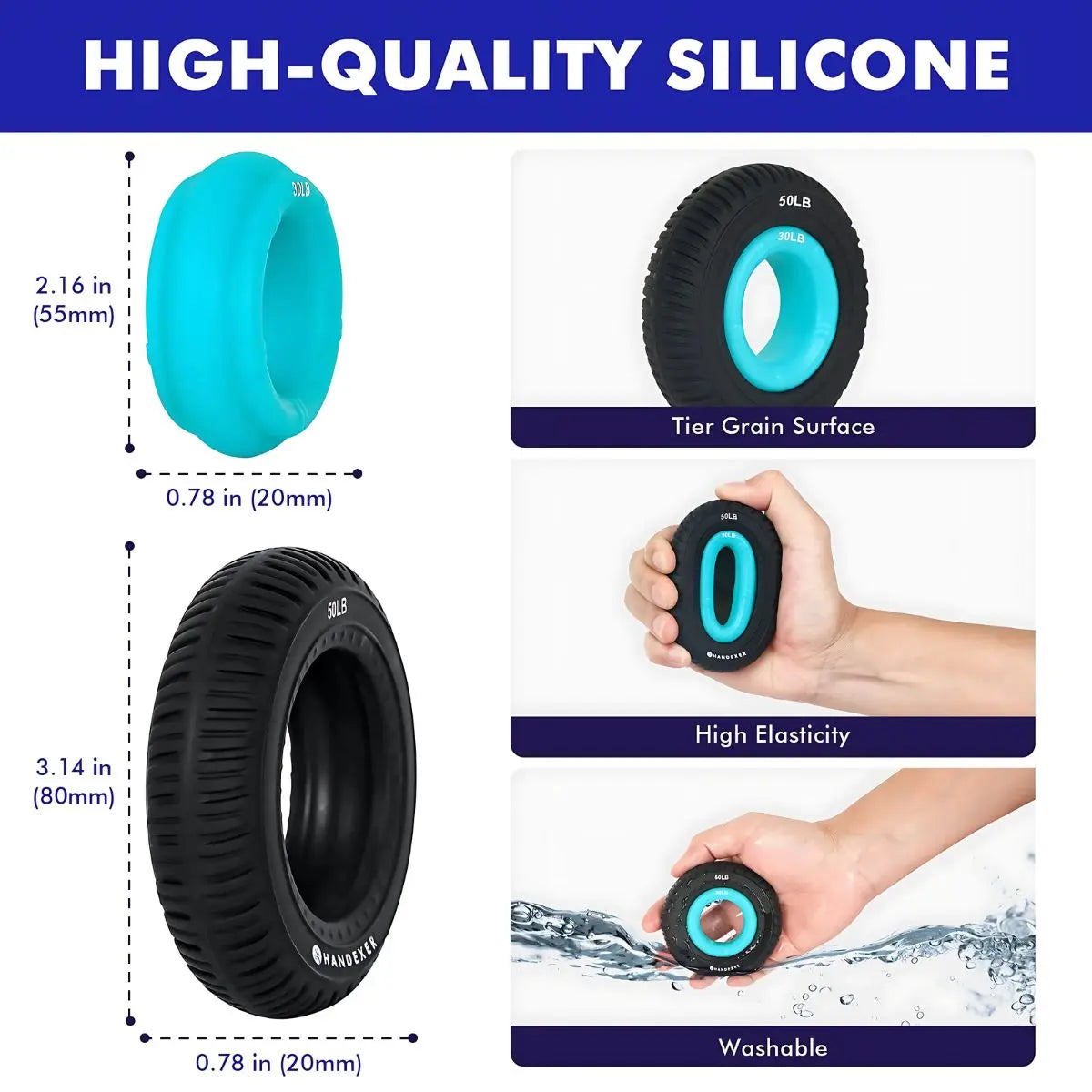
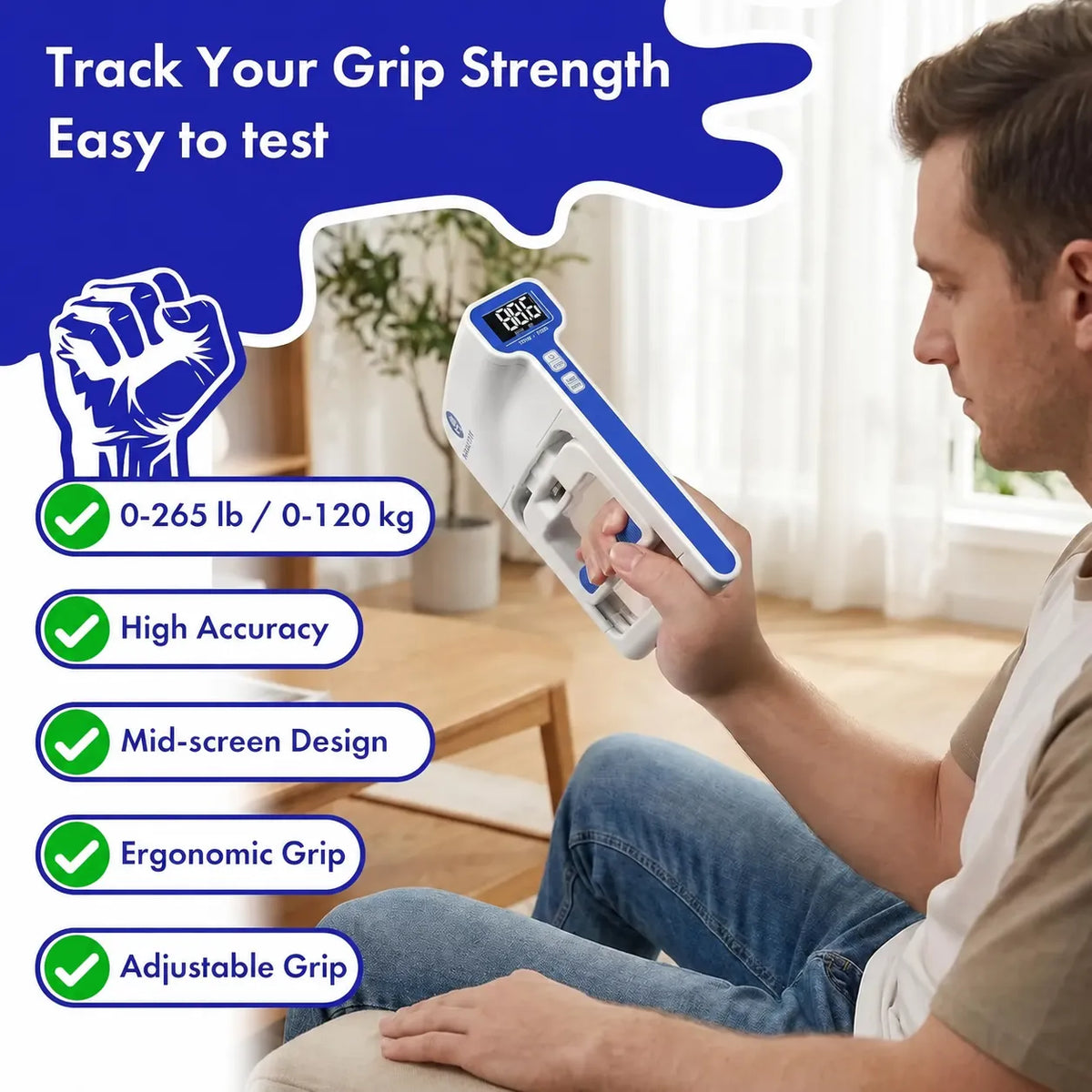
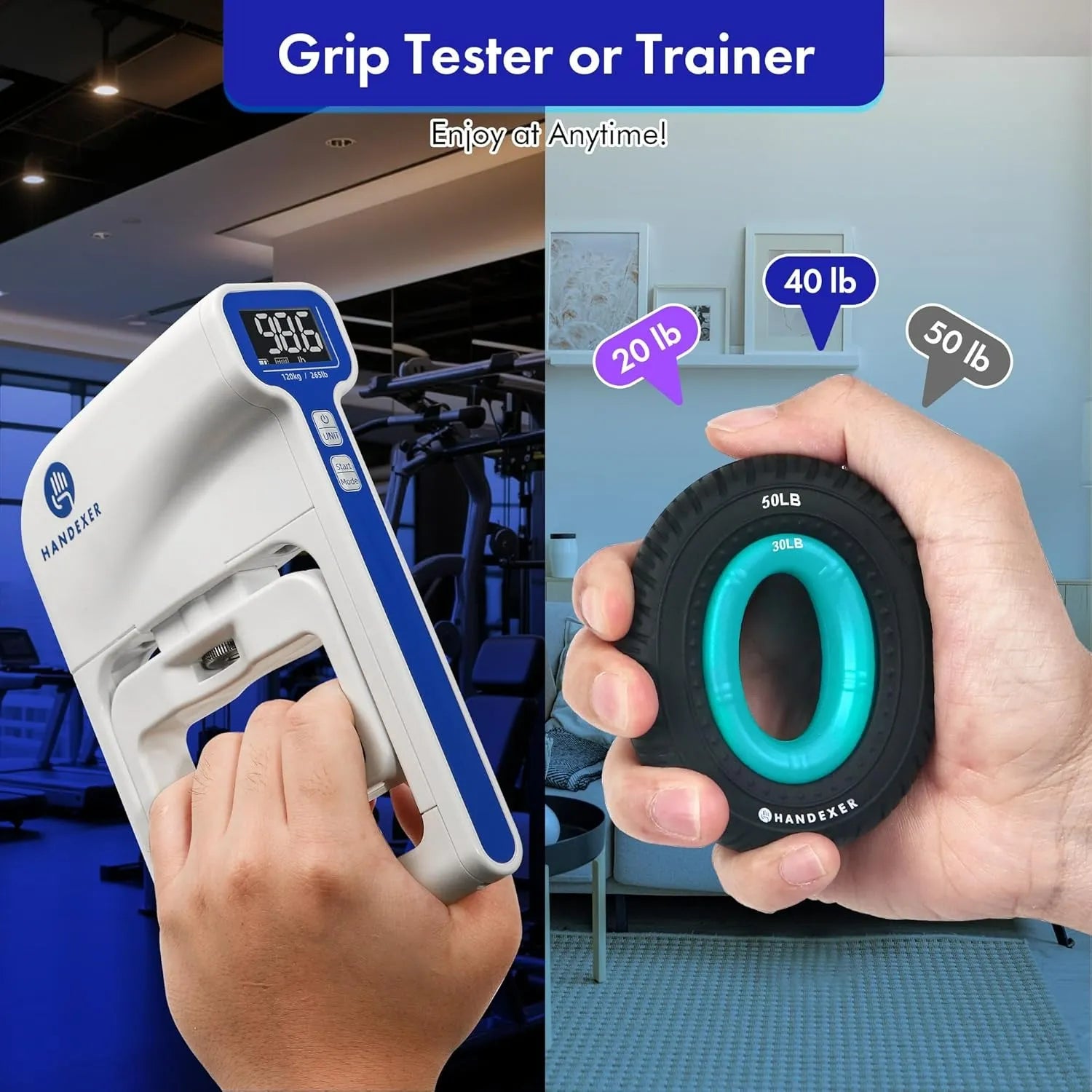
Incorporate progressive resistance training and hand grip conditioning tools like the Handexer Ring Set or Tester & Training Set.
Explore training setsFrequently Asked Questions
Can grip strength tell me if my brain is healthy?
No. Grip strength is a physical measurement, not a cognitive assessment. While research shows associations between grip strength and cognitive outcomes across populations, it cannot diagnose brain health or cognitive impairment in an individual.
Does stronger grip strength mean better cognitive health?
Not necessarily. Higher grip strength correlates with favorable outcomes in population studies, but these associations do not prove that higher strength directly causes better cognition. Grip strength measures physical function, not intelligence or memory.
Can grip exercises prevent dementia?
No evidence supports this. There is currently no scientific proof that doing grip exercises prevents dementia or Alzheimer's. You should train your grip to improve hand function, muscle capacity, and physical independence—not to treat neurological conditions.
How often should I test my grip strength?
For personal health tracking, testing once every few weeks or once a month is sufficient. Consistency in test conditions (time of day, position, dynamometer) is much more important than daily testing.
Is one grip-strength reading useful?
It gives you an initial benchmark compared to demographic averages, but its utility is limited. A series of repeated measurements provides much greater value by revealing your true personal strength trajectory.
- Jin W, Liu S, Huang L, et al. Association between muscle strength and dementia in middle-aged and older adults: A nationwide longitudinal study. Journal of Psychiatric Research. 2025.
- McGrath R, et al. Handgrip Strength Is Associated with Poorer Cognitive Functioning in Aging Americans. Journal of Alzheimer's Disease. 2019.
- Cruz-Jentoft AJ, Bahat G, Bauer J, et al. Sarcopenia: Revised European Consensus on Definition and Diagnosis. Age and Ageing. 2019.
- Boyle PA, Buchman AS, Wilson RS, et al. Association of Muscle Strength With the Risk of Alzheimer Disease and the Rate of Cognitive Decline in Community-Dwelling Older Persons. Archives of Neurology. 2009.
Medical Disclaimer: This article is for informational purposes only and does not constitute medical advice, diagnosis, or treatment. Grip strength is not a diagnostic test for dementia or cognitive decline. If you have health concerns or notice a persistent unexplained decline in physical function, consult a qualified healthcare professional.





Share:
Grip Strength and Cardiovascular Health
4-Week Grip Strength Plan: How to Safely Build Hand Strength at Home