

You can improve grip strength at home by training three main grip patterns—crush, support, and pinch grip—along with finger extension work. A practical starting point is 3 non-consecutive training days per week.
What Do You Need for Grip Training at Home?
You can build an effective grip routine with minimal household items or dedicated compact tools. Start with what you currently have:
Dumbbells or Loaded Bags
Kettlebells, grocery bags, or luggage for static holds.
Books or Weight Plates
Flat objects held strictly between thumb and fingers.
Finger Resistance Bands
Extension work to maintain joint health and balance.
Pull-Up Bar
For sustained dead hangs and shoulder/grip stability.
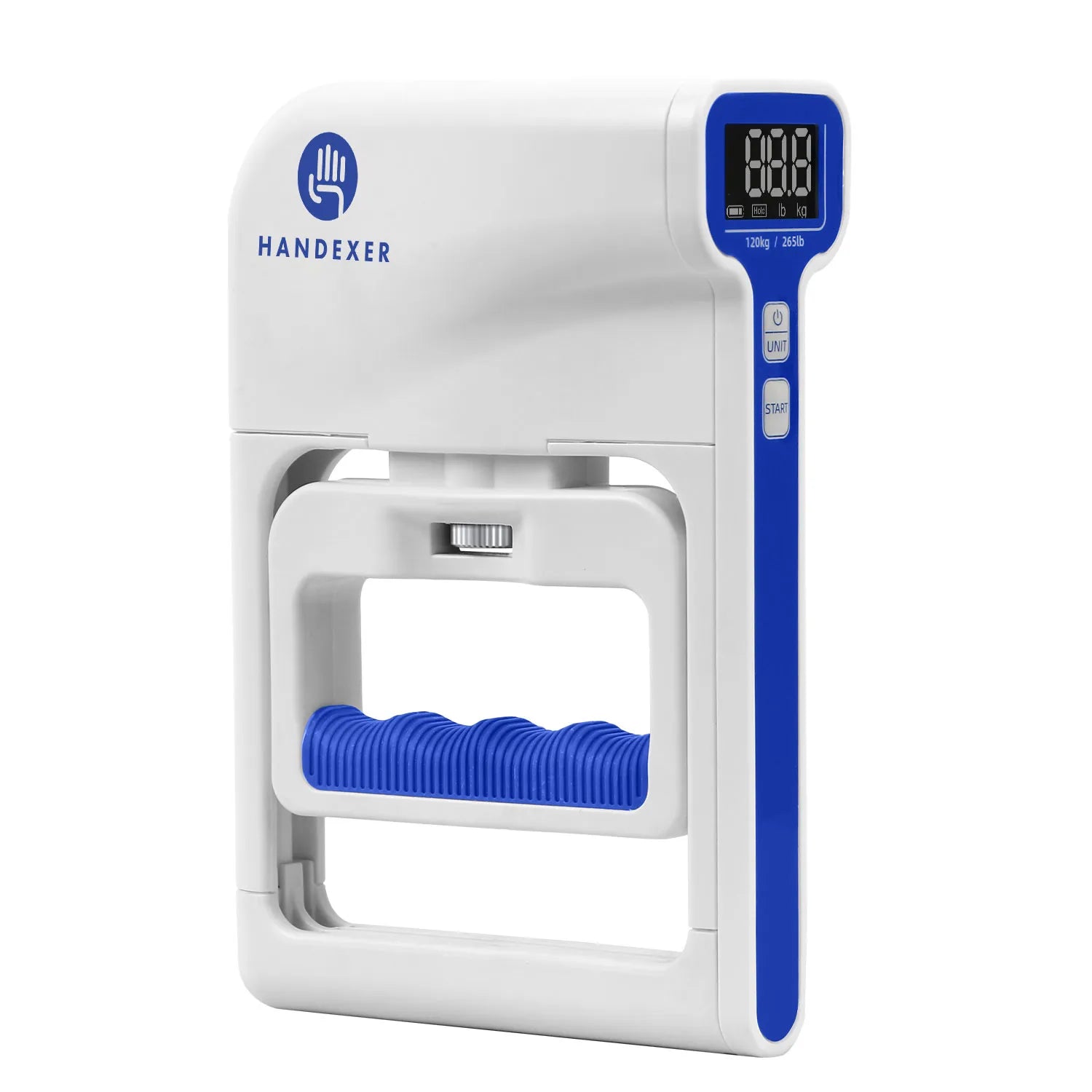
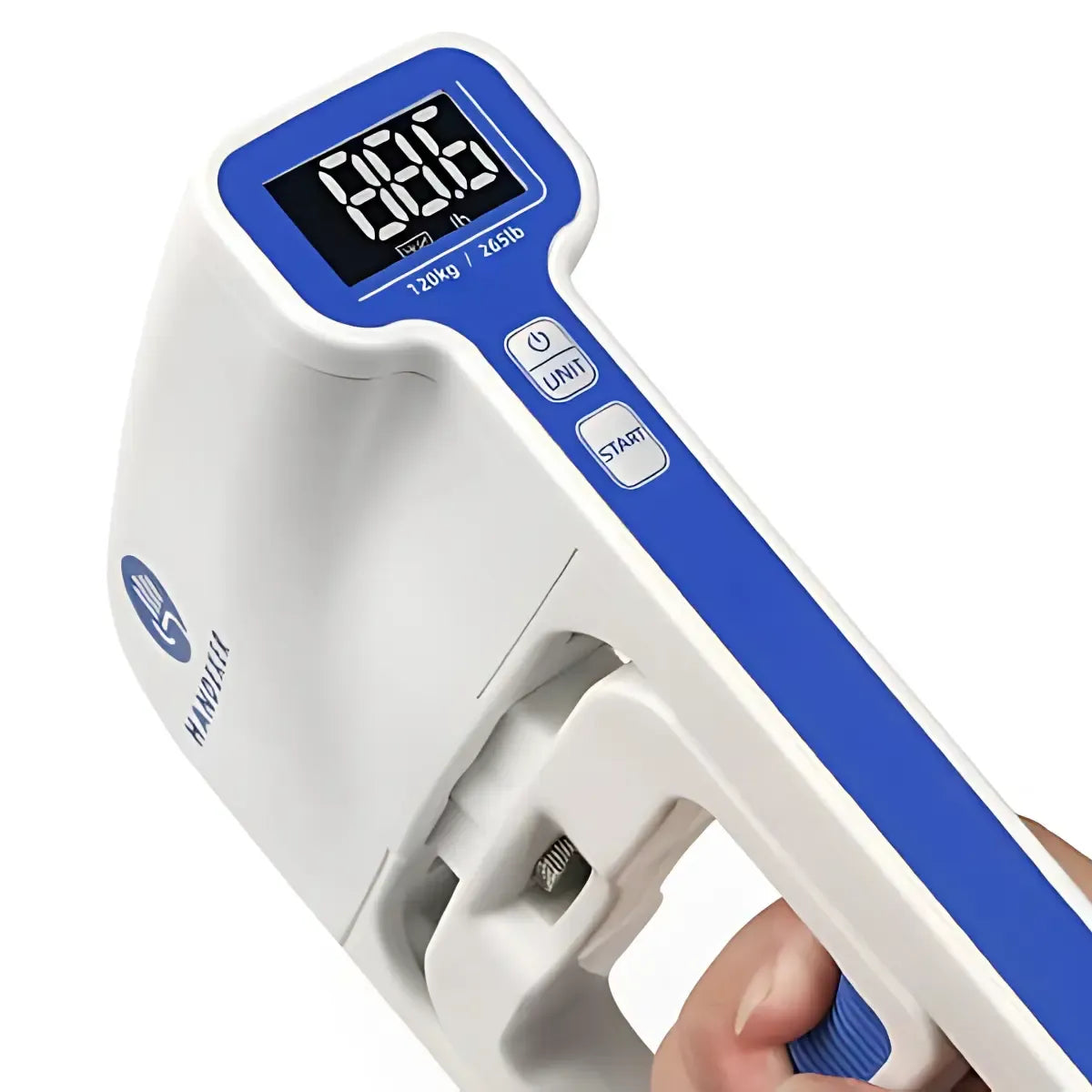
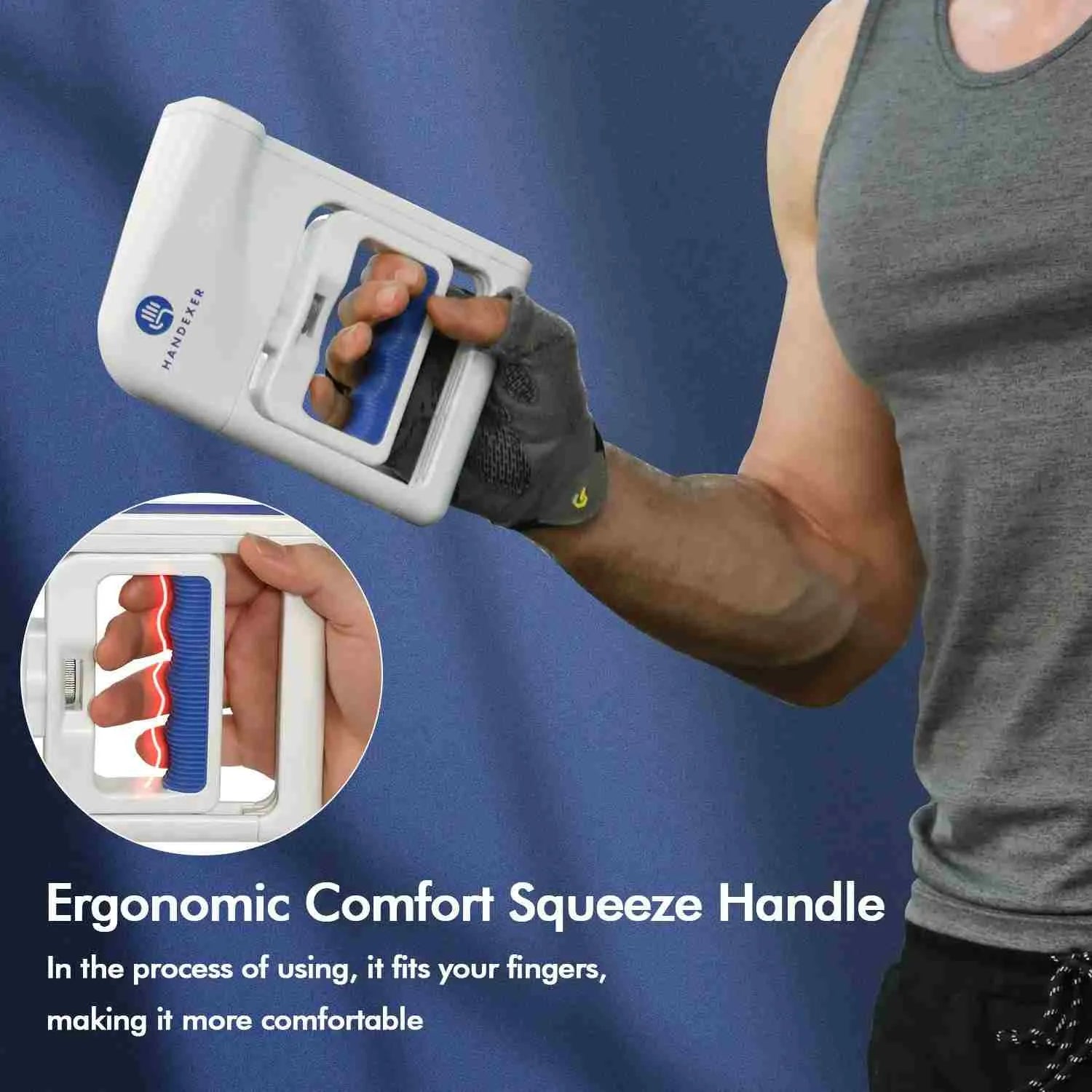
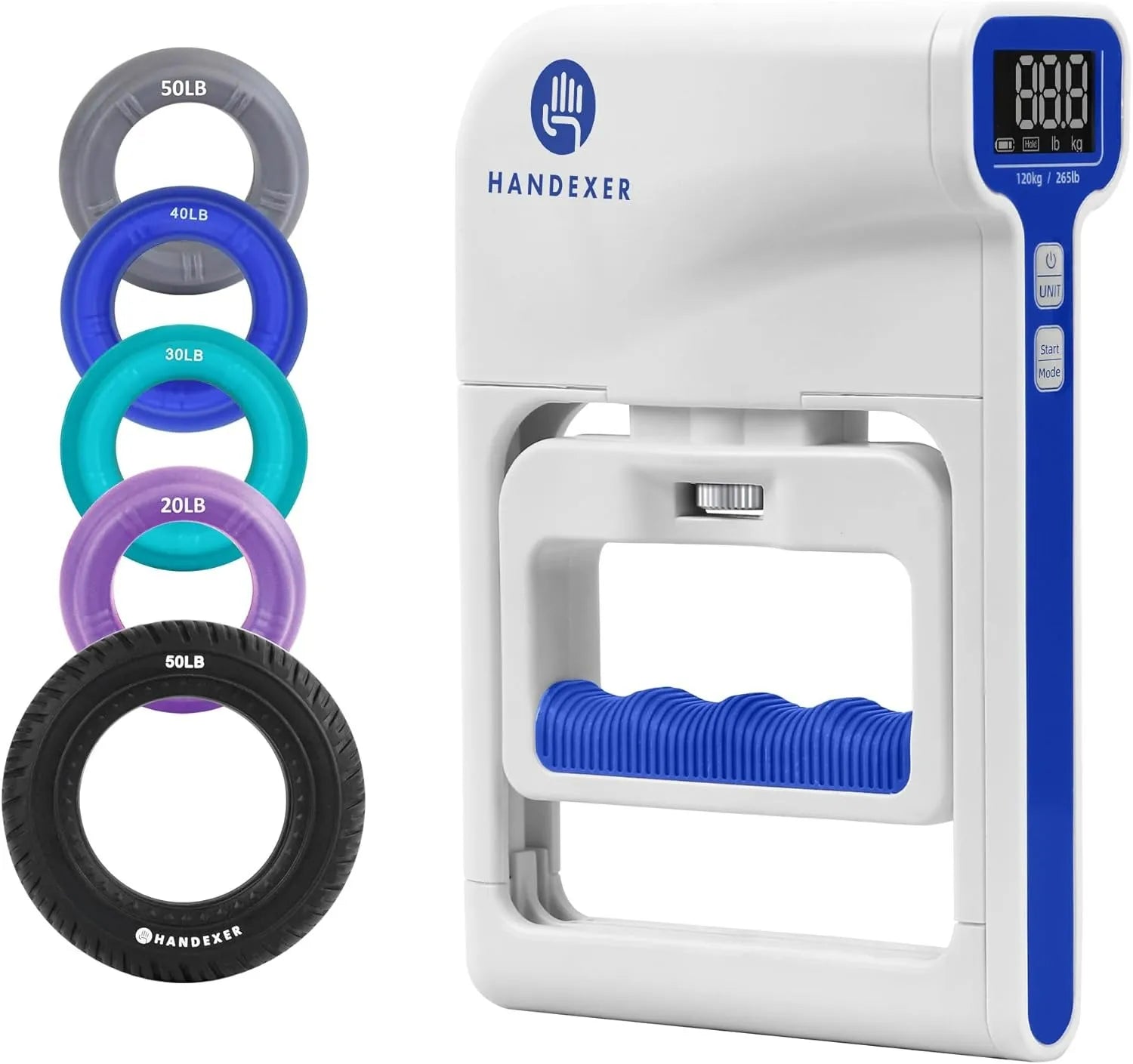
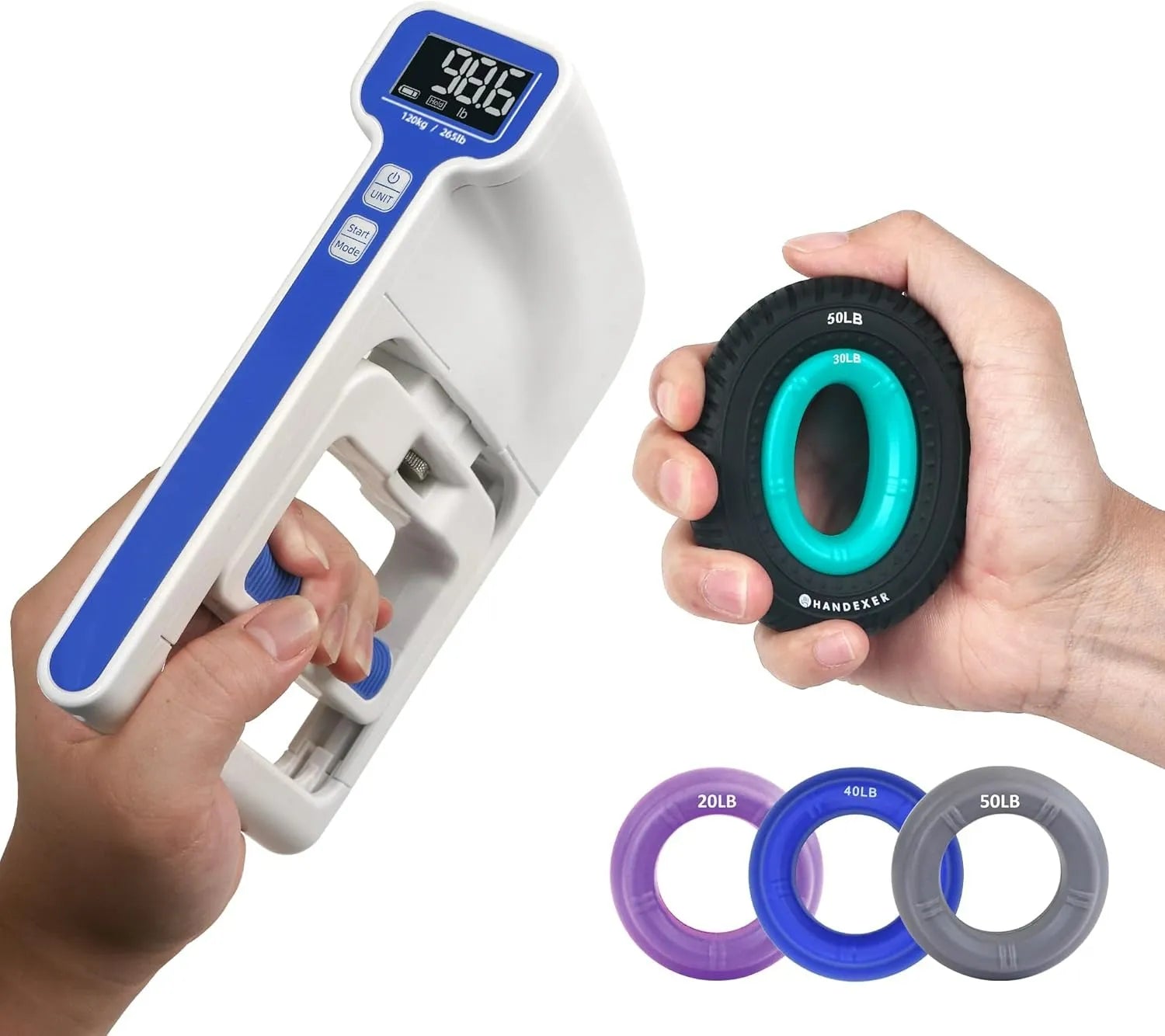
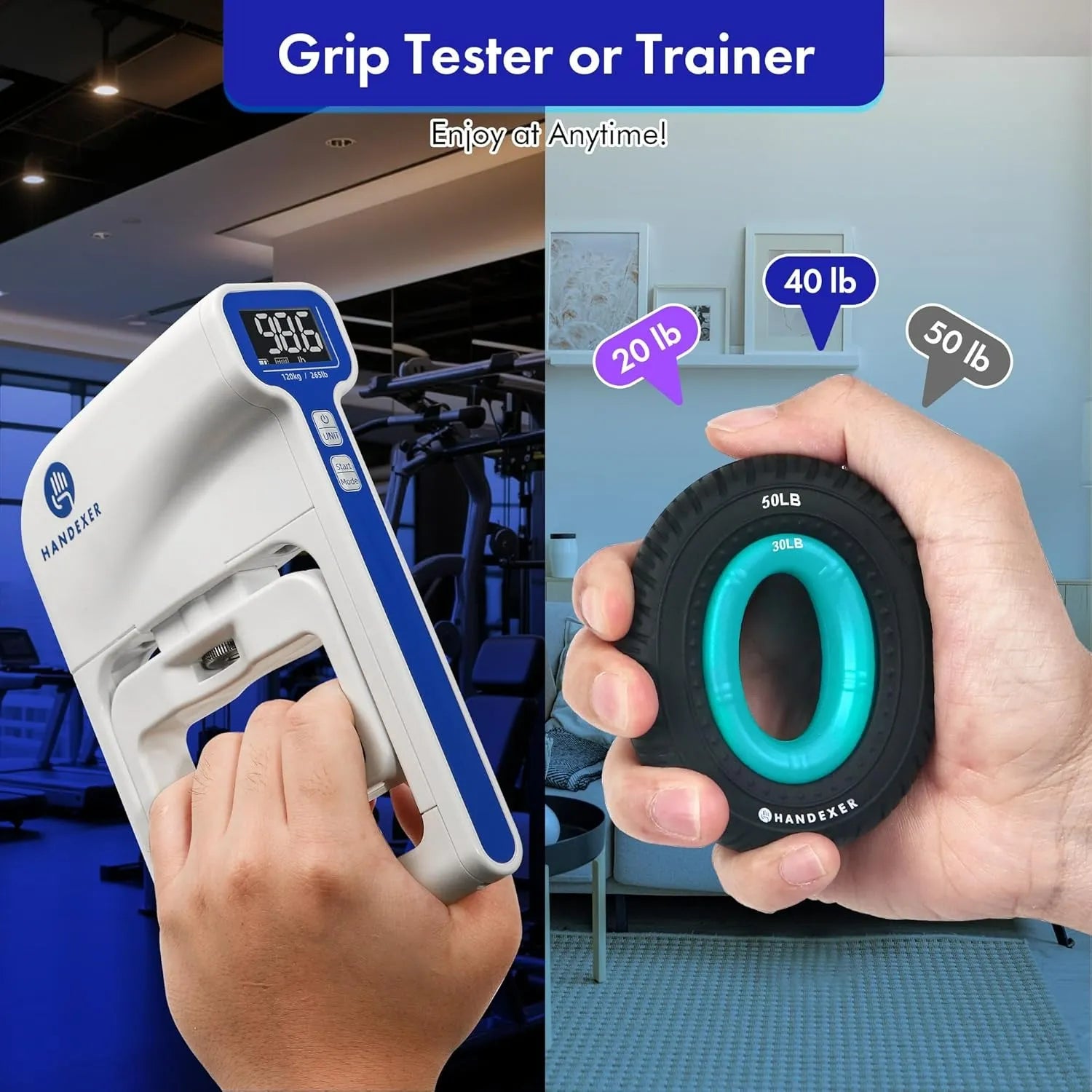
Digital Hand Dynamometer
To establish baseline, quantify metrics, and verify progression.
What Types of Grip Strength Should You Train?
A complete grip routine should include more than squeezing. Functional strength requires a balance of three distinct mechanical patterns:
Crush Grip
Your ability to close your fingers toward your palm against external resistance. Key for tool operation and firm handshakes.
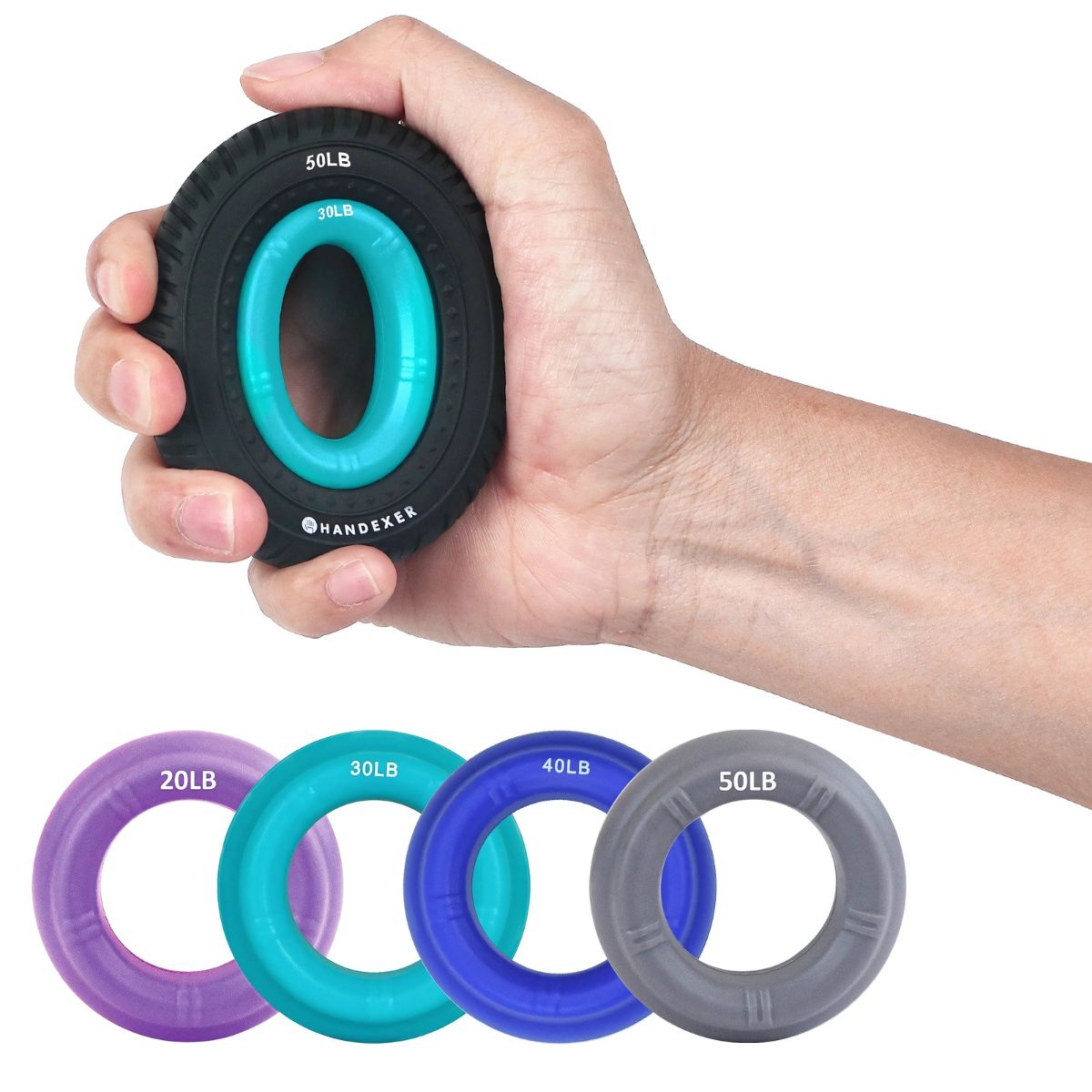
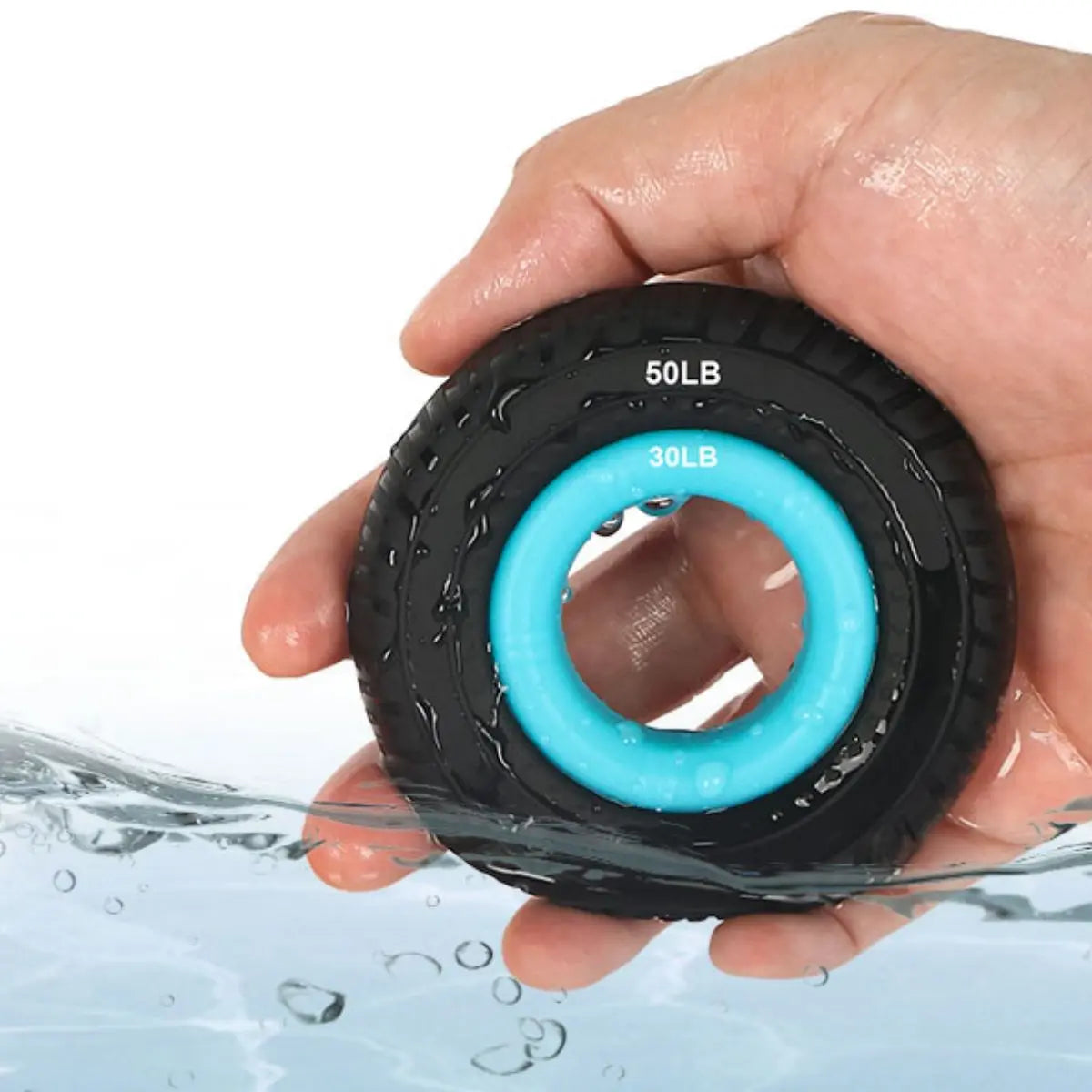
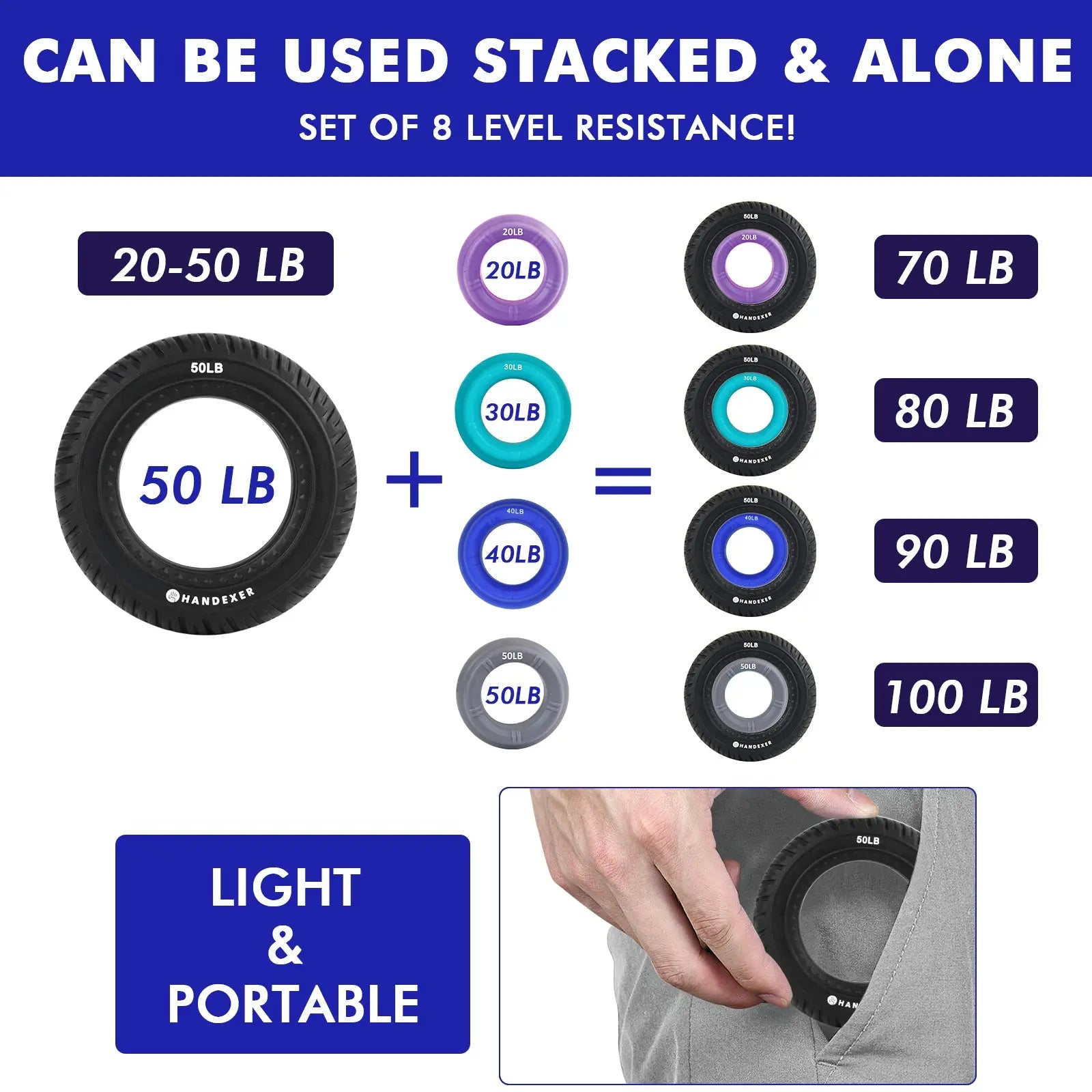
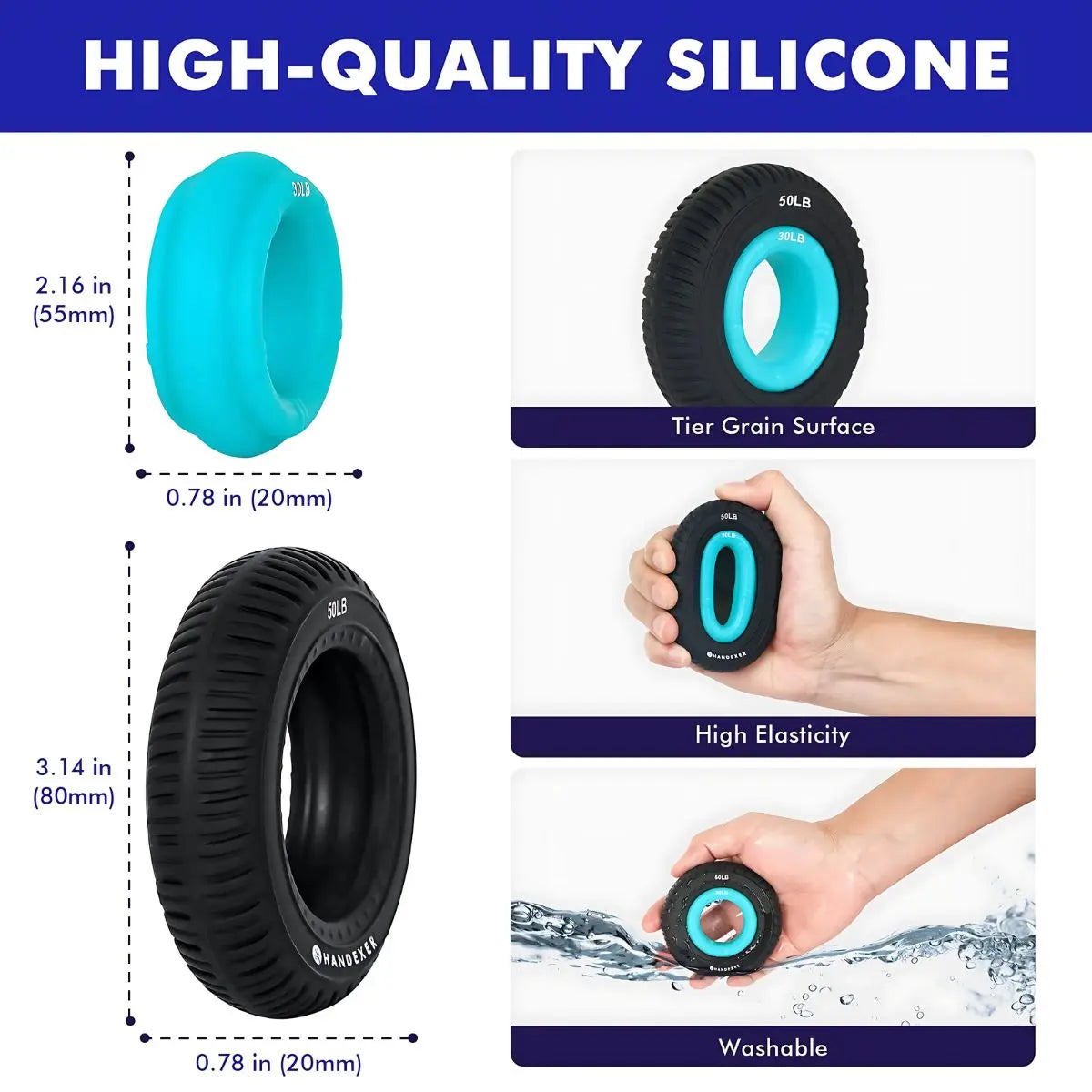
- Grip rings & Hand grippers
- Resistance balls
- Controlled towel squeezes
Support Grip
The isometric capability to hold an object over time without fingers opening up. Essential for carrying bags, luggage, and pull-ups.
- Dead hangs from a bar
- Farmer's carries & suitcase holds
- Loaded-bag / Dumbbell holds
Pinch Grip
Engages the thumb (thenar muscles) against the fingertips to hold objects without palmar contact. Vital for fine dexterity and joint health.
- Plate / Weight pinches
- Thick hardcover book pinches
- Wooden block or brick pinch holds
How to Progress Your Grip Training
You do not need to make every workout harder. When an exercise becomes consistently manageable, increase only one variable at a time: Resistance, Repetitions, Hold time, or Sets.
| TRAINING SITUATION | RECOMMENDED ACTION | STATUS |
|---|---|---|
| The exercise is still challenging | Keep the same level | Consolidating |
| You can complete it comfortably | Increase one variable (+wt, +reps, or +time) | Ready to Progress |
| Your form starts to break down | Reduce the difficulty | Form Guard |
| You experience significant pain | Stop the exercise immediately | Halt |
4-Week Grip Strength Training Plan
Build Your Foundation
Learn movement mechanics and establish baseline consistency.
- Grip ring squeezes: 2 × 8–10 reps
- Static holds: 2 × 20 sec
- Pinch holds: 2 × 15 sec
- Finger extensions: 2 × 12–15 reps
Increase Training Volume
Do slightly more work while maintaining crisp repetition quality.
- Grip ring squeezes: 3 × 8–10 reps (+1 set)
- Static holds: 2 × 25 sec (+5s)
- Pinch holds: 3 × 15 sec (+1 set)
- Finger extensions: 2 × 15 reps
Increase the Challenge
Select only one variable per exercise to advance.
Cycle Retest
Maintain routine for 2 days, then conduct the post-cycle retest.
✓ Same dynamometer & handle setting
✓ Same posture (standing/seated, 90° elbow)
✓ Similar time of day & rest state
4 Common Grip Training Mistakes
Avoid these classic pitfalls to protect finger tendons and maximize rate of force development:
Max Effort Every Day
Tendons and forearms take longer to recover than large prime movers. High-frequency daily maxing invites overuse tendinitis.
Always Training Stronger Hand First
Leading with your dominant side widens bilateral deficits. Always start with the non-dominant hand and match the sets.
Only Training Squeezing Movements
Crush is only 1/3 of the grip puzzle. Ignoring support hangs, pinch holds, and band extensions leads to muscle imbalance.
Inconsistent Testing Protocol
Adjusting the dynamometer gear or testing seated on Day 1 and standing on Day 28 invalidates comparative progress.
Frequently Asked Questions
What Should I Do If One Hand Is Much Stronger Than the Other? ▲
Should I Train My Weaker Hand More Than My Stronger Hand? ▲
Why Is My Grip Strength Lower After Training? ▲
When Should I Increase the Resistance? ▲
Should I Train Grip Strength Every Day? ▲
What Should I Do If Grip Exercises Cause Hand or Wrist Pain? ▲
Start Improving Your Grip Strength at Home
Establish your baseline today. Follow the four-week plan, log your reps, and retest under identical conditions. Turn random squeezing into measurable longevity.
This article is intended for general education, fitness, and hand-strength tracking purposes. It is not a substitute for medical diagnosis, physical therapy, or individualized professional medical advice. If an exercise causes persistent pain, numbness, tingling, or sudden weakness, consult a qualified healthcare professional.






Share:
Changes in Gut Microbiota Associated with Decreased Grip Strength in Older Adults
When Is Clumsiness a Concern? 4 Signs of Muscle Weakness in Children