QUICK ANSWER 5-Minute Home Self-Check

No grip tester? You can estimate your hand strength in under 5 minutes using 4 practical home methods:

1
Grip Strength Test With A Bathroom Scale
Squeeze a pull-up bar while standing on a scale to calculate lost weight.
2
Subjective hand squeeze
A doctor-backed method to rate your grip through a structured handshake.
3
Timed Dead Hang
Test your grip endurance by hanging from a pull-up bar.
4
Pinch Hold Test
Measure finger and thumb pinch strength using a water jug or heavy book.
i
Note: While these methods offer a functional baseline, a calibrated digital dynamometer remains the gold standard for tracking precise gains and rehab progress.

Why Measure Grip Strength?

Hand grip strength is a recognized biomarker for muscle quality, biological age, and cardiovascular health. While physical therapists use calibrated strain-gauge dynamometers to measure exact squeezing force, you can get a reliable functional estimate using everyday items at home.


4 Easy Ways to Test Your Grip Strength

METHOD 1 Calculated Estimate

Grip Strength Test With A Bathroom Scale

Originally presented in Heather Sagar's classic training guide, Climbing Your Best, and featured across athletic resources like Complete Strength Training, this method uses a bathroom scale and a pull-up bar to estimate your pulling grip contribution.

🔧 EQUIPMENT NEEDED: A bathroom scale, a high pull-up bar (or hangboard), and a stopwatch.
Athlete performing the scale unweighting grip test on a pull-up bar based on Heather Sagar's climbing protocol
TESTING STEPS:
  • 1
    Weigh Yourself First: Place the scale directly under the bar. Stand flat on the scale to measure and record your starting body weight.
  • 2
    Grip the Bar: Reach up and grab the pull-up bar or hangboard.
  • 3
    The 5-Second Squeeze: Without bending your elbows, wrists, or knees (using only your hands and no other body parts to generate momentum), squeeze the bar with maximal effort and pull yourself upward for 5 seconds.
  • 4
    Record the Reading: Have a friend record the lowest weight reading displayed on the scale during those 5 seconds of maximal tension.
  • 5
    Average Your Score: Perform 3 trials with rest in between and average the results.
CALCULATION FORMULA
Grip Strength (lbs/kg) = Body Weight − Lowest Scale Reading
Example: If body weight is 180 lbs and scale drops to 80 lbs, estimated grip strength = 100 lbs.
METHOD 2 Clinical Screening

Subjective hand squeeze

A clinical study published in The Journal of Frailty & Aging (2024) showed that a structured hand squeeze can serve as a reliable screening tool when testing equipment is unavailable.

Equipment & Partner Setup:
All you need is a training partner. To protect their hand from injury, your partner creates a "shielded grip" by overlapping their index and pinky fingers over their middle and ring fingers, keeping their thumb facing you. Stand or sit side-by-side, hold the same hand (right to right, or left to left), and line up your knuckles just above their fingers.
Execution, Scoring & Safety:
Sit upright with your elbow bent at 90 degrees. Squeeze your partner’s hand as hard as you can for 3 to 5 seconds. Your partner then rates your grip strength as Weak, Solid, or Crushing.
Safety Note: Do not perform this test if either person has hand pain, a recent wrist injury, or reduced hand feeling.
Two people performing the clinical subjective hand squeeze test for home grip screening
METHOD 3 Grip Endurance

The Timed Dead Hang

Measures how long your forearm flexors can support your full body weight against gravity.

Person performing a finger pinch hold test using a water jug at home

Equipment: Sturdy pull-up bar or power rack.

Execution: Overhand grip, shoulder-width apart. Lift feet, start timer, and hang motionless until grip fails.

Quick Benchmark:
<30s (Low)
30-60s (Avg)
>90s (Advanced)
METHOD 4 Finger & Thumb

The Object Pinch Test

Evaluates thumb and fingertip strength—essential for turning keys, opening jars, or using hand tools.

Handexer pinch grip training equipment demonstration, comparing round and rectangular wooden pinch blocks with weighted load for finger and thumb strength workout.

Equipment: Full 1-gallon water jug (8.3 lbs / 3.8 kg) or heavy textbook.

Execution: Lift using only pads of thumb & index finger. Hold at side for 15-30s.

Quick Benchmark:
<15s (Low)
15-35s (Avg)
>45s (Advanced)

Performance Benchmark Comparison

Evaluate your scores against active adult & athletic standards

TEST METHOD NEEDS IMPROVEMENT AVERAGE / ACTIVE ADULT ADVANCED / ATHLETIC
Grip Strength Test With A Bathroom Scale < 40 lbs / 18 kg 40 - 75 lbs / 18 - 34 kg > 90 lbs / 41 kg
Subjective hand squeeze Noticeably weak Firm, solid compression Crushing force
Timed Dead Hang < 30 seconds 30 - 60 seconds > 90 seconds
Pinch Hold Test < 15 seconds 15 - 35 seconds > 45 seconds

Home Methods vs. Digital Hand Dynamometers

While zero-cost tests provide great practical feedback, dedicated clinical tools offer key advantages:

🏠

Home Tests

Scale, Hang, Pinch


  • ⏱️ Setup Time: 3 to 5 minutes
  • ⚠️ Accuracy: Rough estimate (affected by body weight/grip width)
  • 💪 Muscle Isolation: Recruits shoulders, back, and chest
  • 📉 Progress Tracking: Hard to measure minor weekly gains
GOLD STANDARD

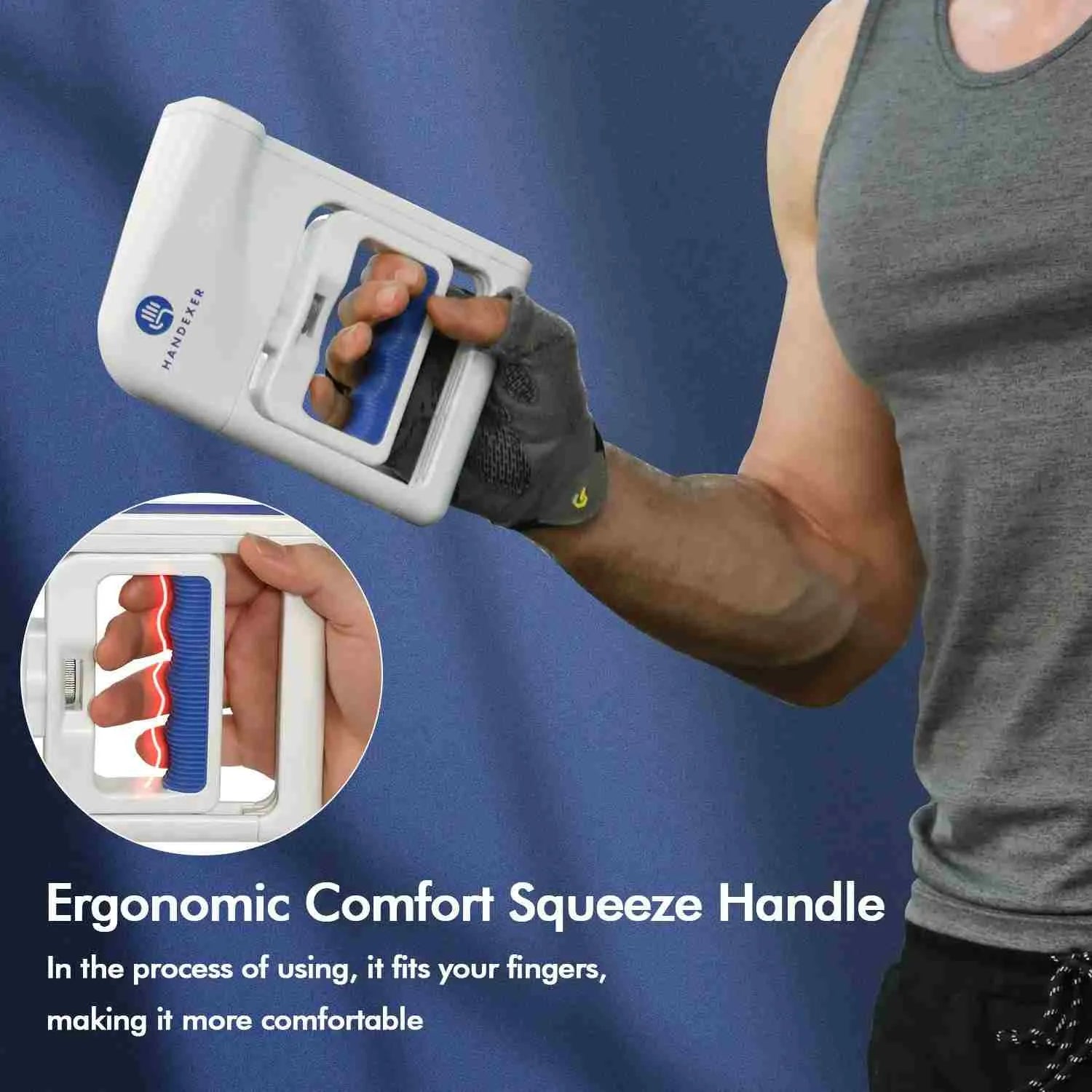
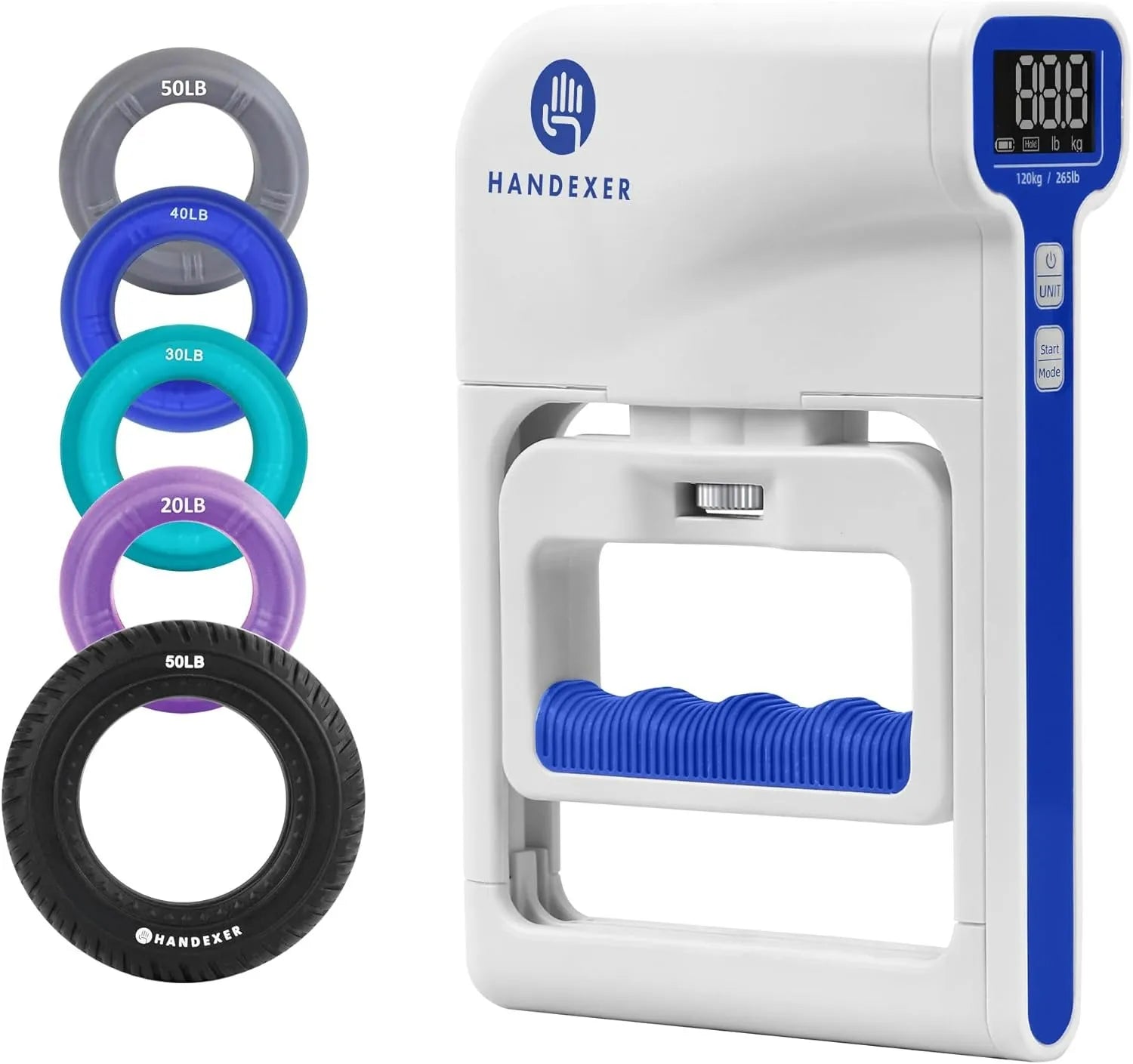
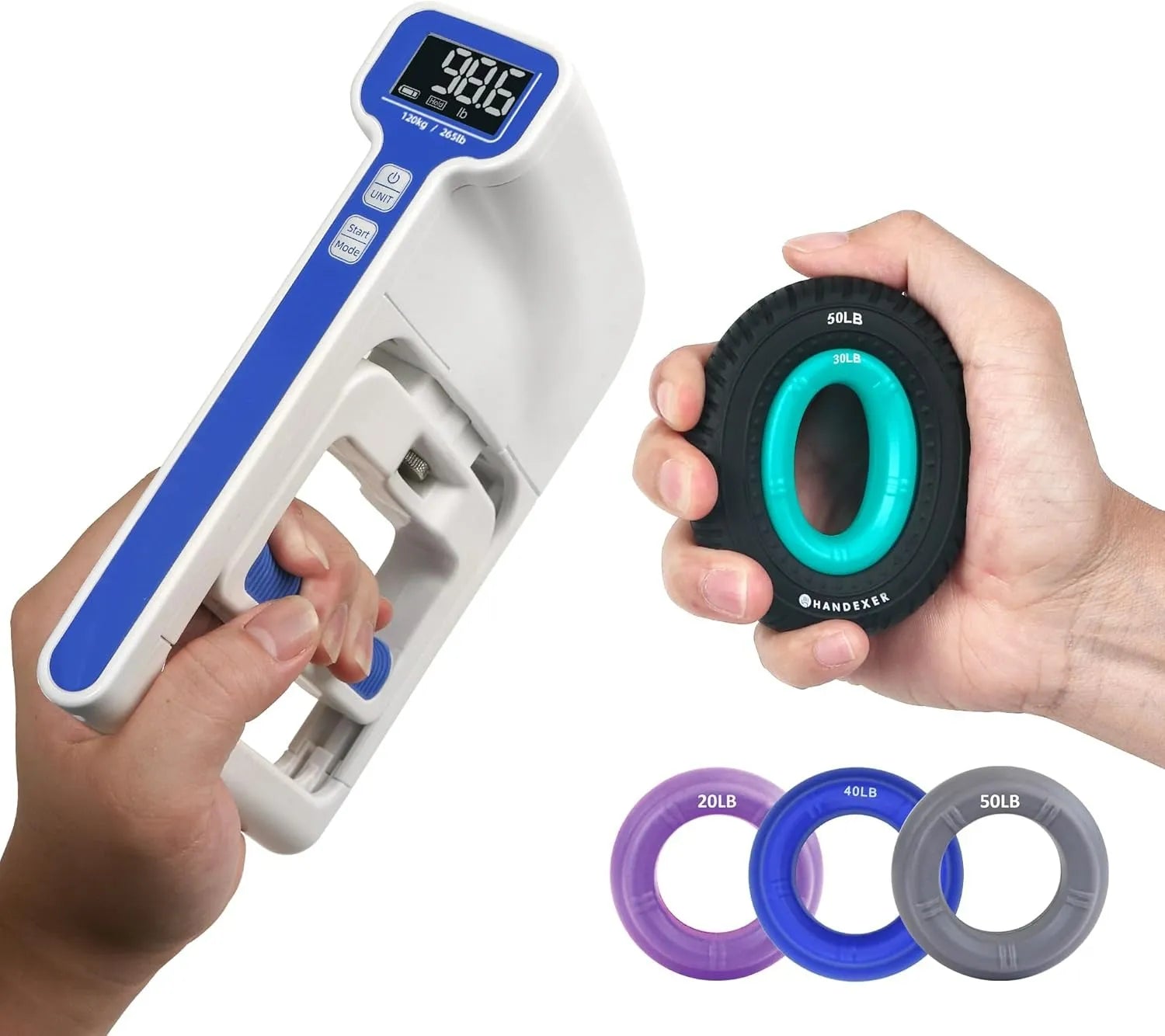
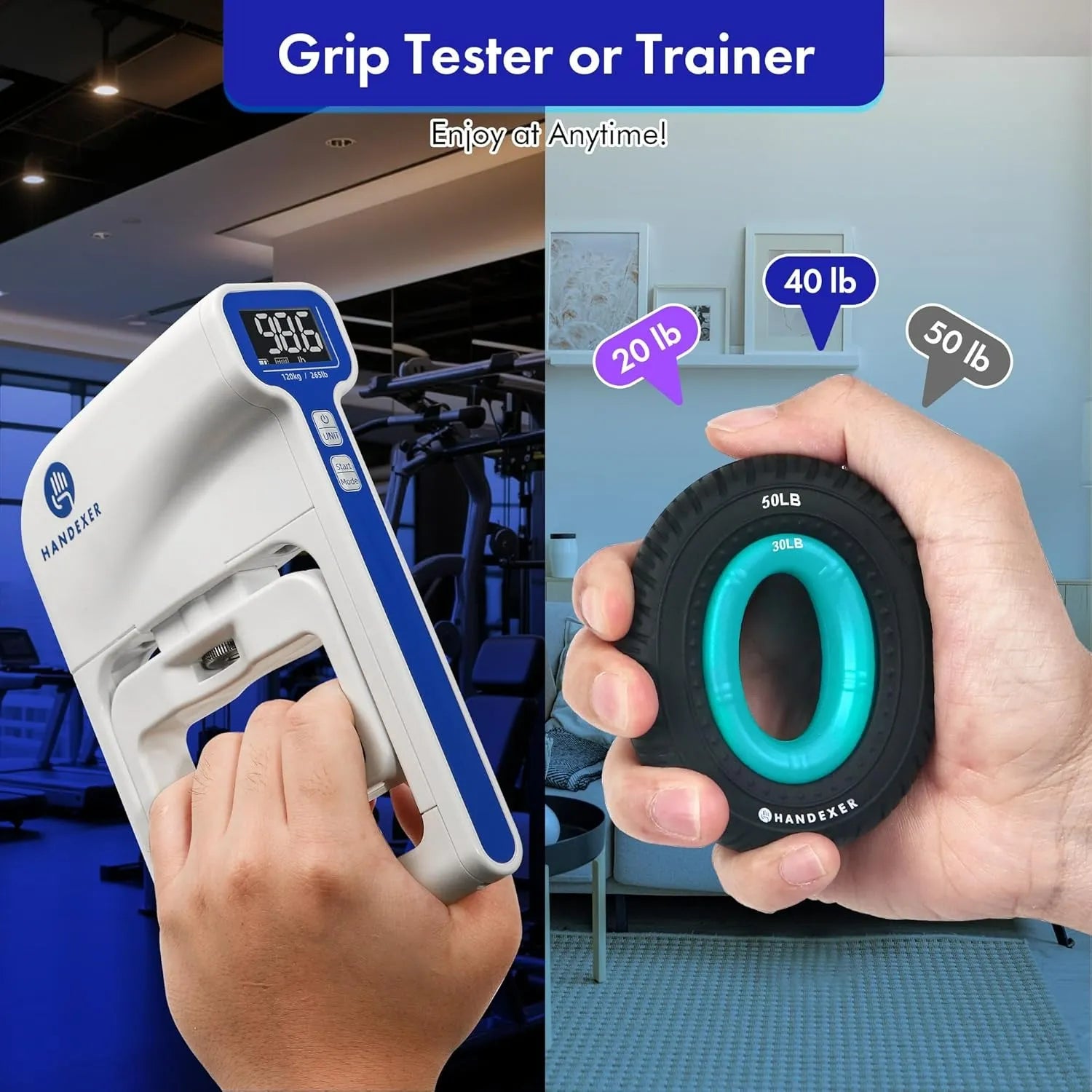
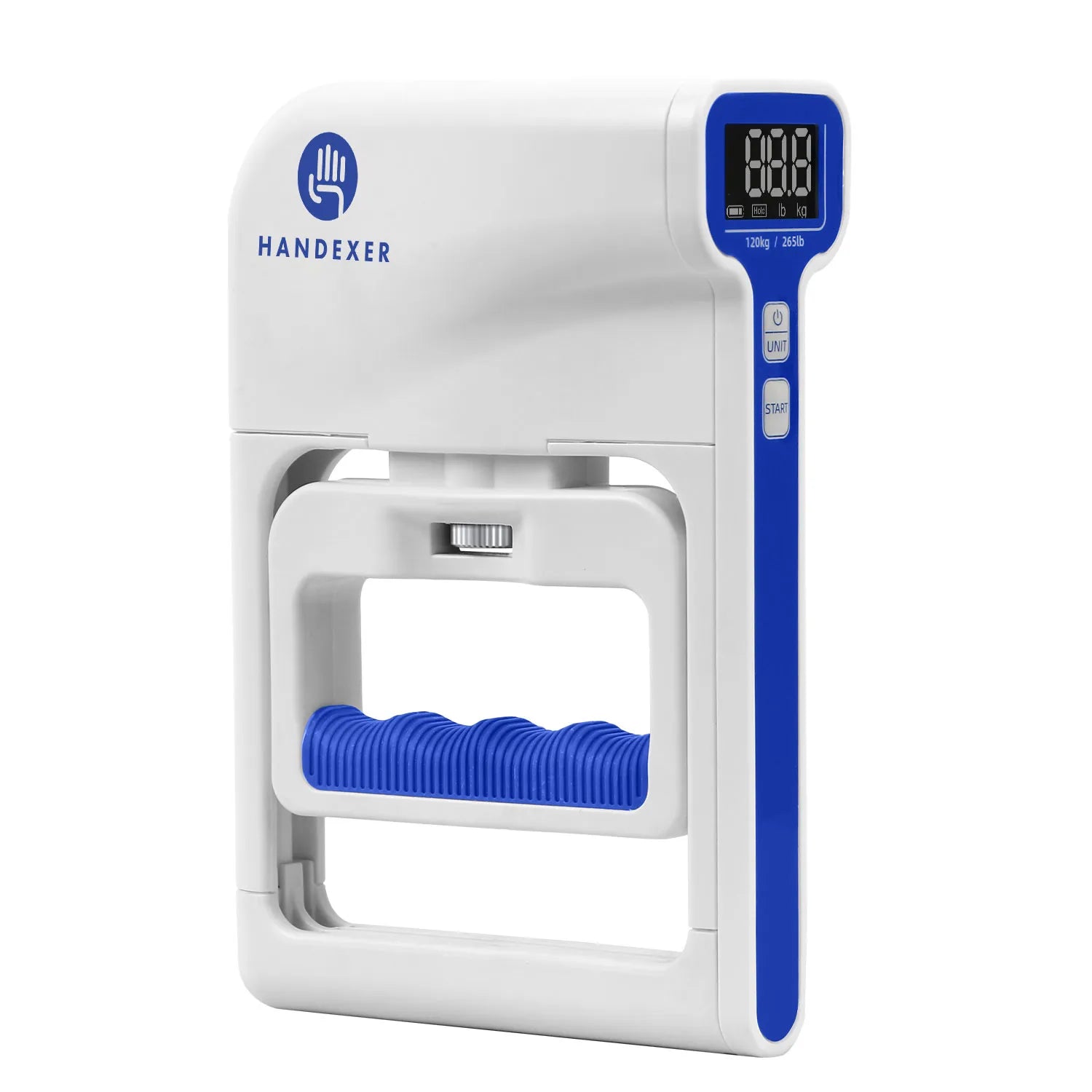
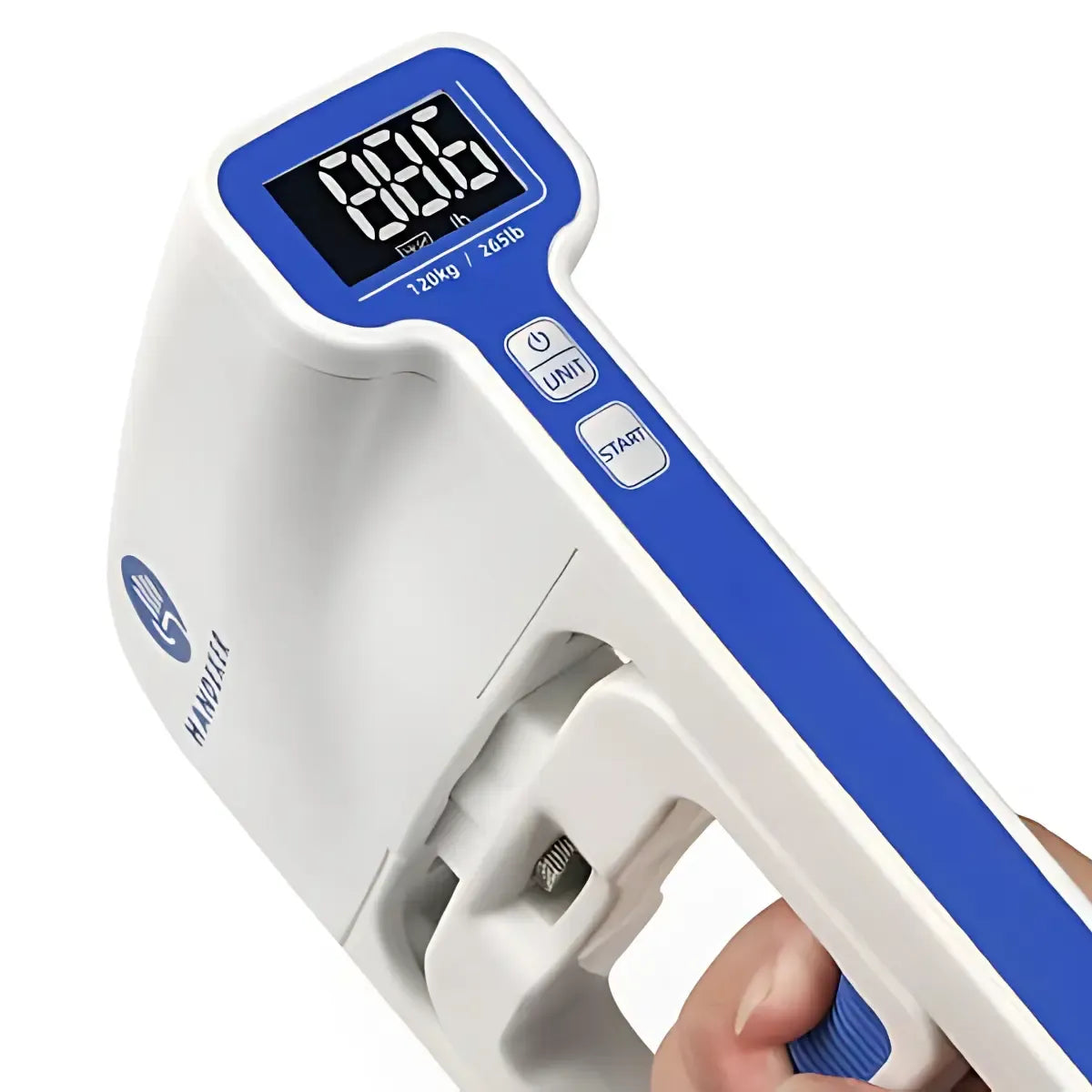
Handexer™ Digital Dynamometer

High-Precision Digital Measurement


  • Setup Time: 5 seconds
  • 🎯 Accuracy: Clinical Precision (± 0.1 kg / 0.2 lbs)
  • 🎯 Muscle Isolation: 100% isolated finger flexors
  • 📊 Progress Tracking: Saves past grip scores for easy manual tracking

When to Upgrade to a Digital Dynamometer

Rehabilitating an Injury
Managing tennis elbow, wrist sprains, or carpal tunnel requires exact metrics to avoid overloading joint tissues during recovery.
💙
Monitoring Biological Health
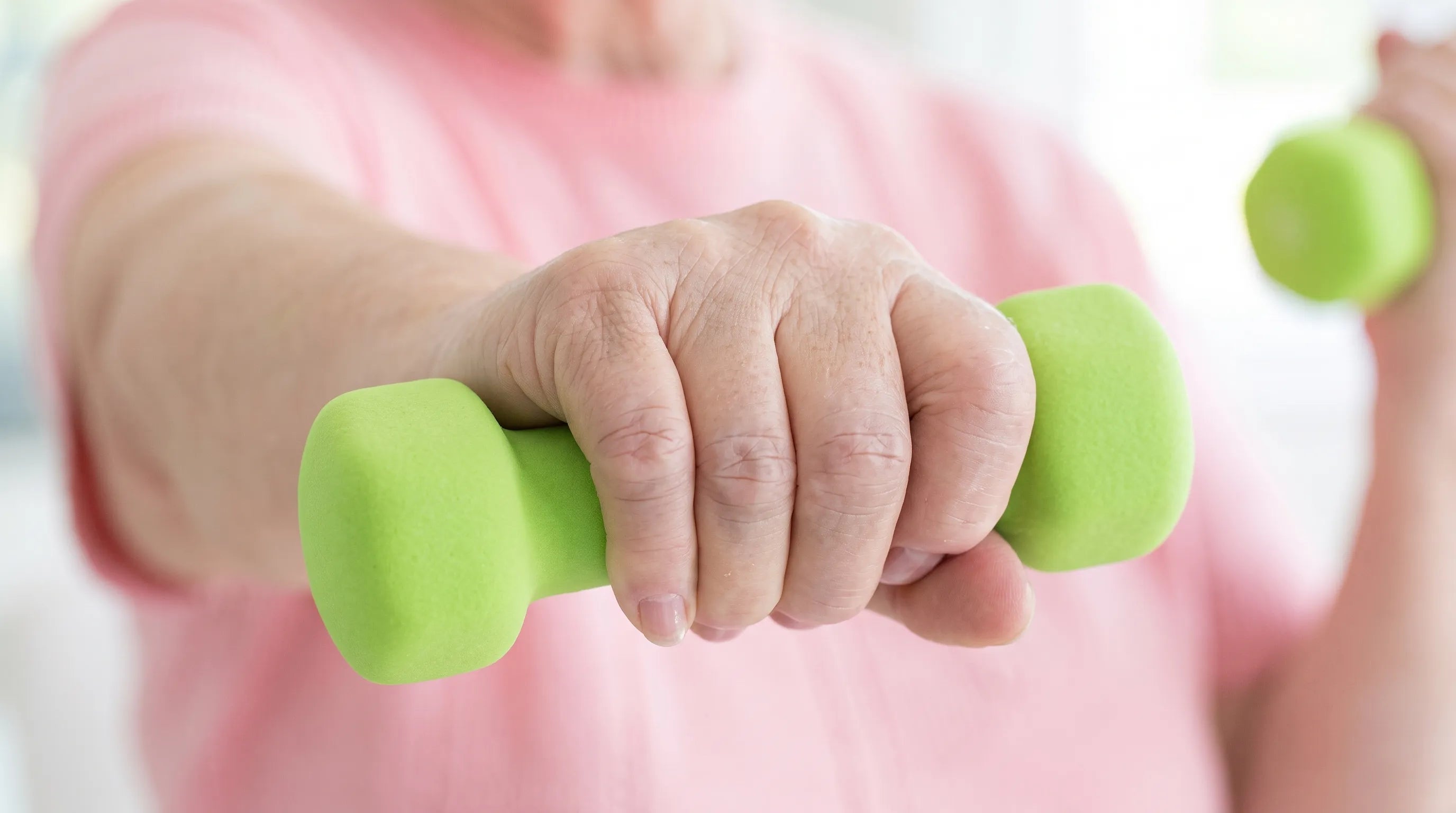
Early tracking of subtle strength loss helps prevent sarcopenia and preserve long-term independence as you age.
🏆
Training for Sport Performance
Tracking subtle 1–2 lb weekly strength gains in rock climbing, BJJ, or deadlifting requires digital precision.

📖 Companion Reading: If you already own a device or want to check your exact age-matched normative score using standardized clinical protocols, read our complete guide: How to Test Grip Strength at Home Accurately: Step-by-Step Guide & Norms.

Frequently Asked Questions (FAQ)

Q1: What are normal grip strength standards by age and gender?
According to EWGSOP2 guidelines, grip strength below 27 kg (60 lbs) for men or 16 kg (35 lbs) for women indicates low muscle strength. You can compare your score directly against demographic norms using our Online Grip Strength Calculator.
Q2: Why is grip strength a key health indicator?
Studies published in The Lancet show that grip strength correlates strongly with total body muscle quality, biological aging, and long-term vitality, making it a simple overall health snapshot.
Q3: How can I improve my grip strength at home?
If your score was lower than expected, isometric training (holding tension without joint movement) is the safest way to build tendon resilience. For a structured workout plan, read our companion guide: Top 3 Isometric Exercises to Improve Hand Grip Strength.
Q4: Do dead hangs build maximum squeezing power?
Dead hangs excel at building isometric grip endurance (how long you can hold weight), but they do not maximize peak crushing force. Combining hangs with dynamic squeezing exercises yields the best balanced results.
Q5: Is it normal for my dominant hand to be stronger?
Yes. About 90% of people test roughly 10% stronger in their dominant hand (the "10% Rule"). If the strength deficit in your non-dominant hand exceeds 20–25%, consult a healthcare professional to rule out nerve compression or joint strain.
PRECISE MEASUREMENT AT HOME

Ready to Benchmark Your Real Grip Power?

Don't leave your hand health to guesswork. Experience high-precision digital readings, multi-user memory tracking, and effortless progress monitoring.

Explore Handexer™ Digital Dynamometers →
Medical Disclaimer: This article is for informational and educational purposes only and is not intended as medical advice, diagnosis, or treatment. Always consult a qualified healthcare professional or physical therapist before starting a new fitness routine or if you are recovering from a hand or wrist injury.

Leave a comment

Please note, comments need to be approved before they are published.

This site is protected by hCaptcha and the hCaptcha Privacy Policy and Terms of Service apply.