

A toothbrush, a kitchen tap, a warm mug of tea, or a stubborn jar lid—almost every small comfort of daily life depends on your hands. Many people do not think about grip strength until everyday tasks start feeling harder, fingers feel stiff in the morning, or grocery bags become more difficult to carry.
As we age, maintaining muscle strength and hand function becomes increasingly important. Changes in muscle strength, joint mobility, and coordination can make familiar daily activities more challenging.
The good news? You can work on your hand strength at any age. You do not need heavy gym weights, complicated equipment, or painful squeezing. A few minutes of gentle, consistent exercises at home can help maintain hand movement and build the strength needed for everyday activities.
This guide covers six simple, joint-friendly hand exercises, a manageable weekly routine, and an easy way to track your grip strength over time.
Why Strong Hands Matter for Everyday Independence
Your hands help you manage dozens of everyday tasks. Maintaining hand strength and flexibility can make daily activities easier and help you stay independent.
- Everyday Confidence: Better hand function can make buttoning shirts, turning keys, holding utensils, and carrying groceries easier.
- Daily Function: Your hands help you hold stair railings, support yourself when getting up from a chair, and handle everyday objects securely.
- Overall Muscle Health: Grip strength is also used as a practical indicator of overall muscle strength. Research and clinical guidelines recognize low grip strength as an important sign that may warrant further assessment.
What Is a Healthy Grip Strength for Seniors?
Grip strength varies with age, sex, hand dominance, body size, and health status. Rather than treating one number as a universal target, it is important to understand how clinical screening values are used.
The European Working Group on Sarcopenia in Older People (EWGSOP2) identifies the following grip strength values as indicators of low muscle strength:
| Group | Low Grip Strength Cutoff |
|---|---|
| Men | Below 27 kg (59.5 lbs) |
| Women | Below 16 kg (35.3 lbs) |
If you want to understand how grip strength varies across different age groups, see our Grip Strength Norms Guide.
6 Easy, Joint-Friendly Hand Exercises to Do at Home
You do not need to perform every exercise with maximum effort. Start with comfortable movements, breathe naturally, and allow your hands to relax between repetitions.
If your hands feel stiff in the morning, try warming them with comfortably warm water before exercising.
1. Tendon Glides
Best for: Improving finger mobility, easing stiffness, and keeping your hands moving comfortably.
Tendon glides guide your fingers through five simple positions, helping the tendons move smoothly as your fingers bend and straighten. This exercise has been used in hand therapy for decades. A 1987 paper published in the American Journal of Occupational Therapy described this sequence as a way to help finger tendons glide through their range of motion.
How to do it:
Move through these five positions slowly, returning to a straight hand between each one.
- Straight Hand: Extend your fingers and keep them together.
- Hook Fist: Bend the middle and fingertip joints while keeping your large knuckles straight.
- Straight Fist (Tabletop): Bend at the large knuckles while keeping the other finger joints straight.
- Full Fist: Gently curl your fingers toward your palm, with your thumb resting outside your fingers.
- Flat Fist: Bend your fingers toward the base of your palm while keeping the fingertip joints relatively straight.
How much: Repeat the full sequence 5 times per hand.

2. Soft Ball or Grip Ring Squeeze
Best for: Practicing the closing motion used when holding mugs, handles, and other everyday objects.
How to do it:
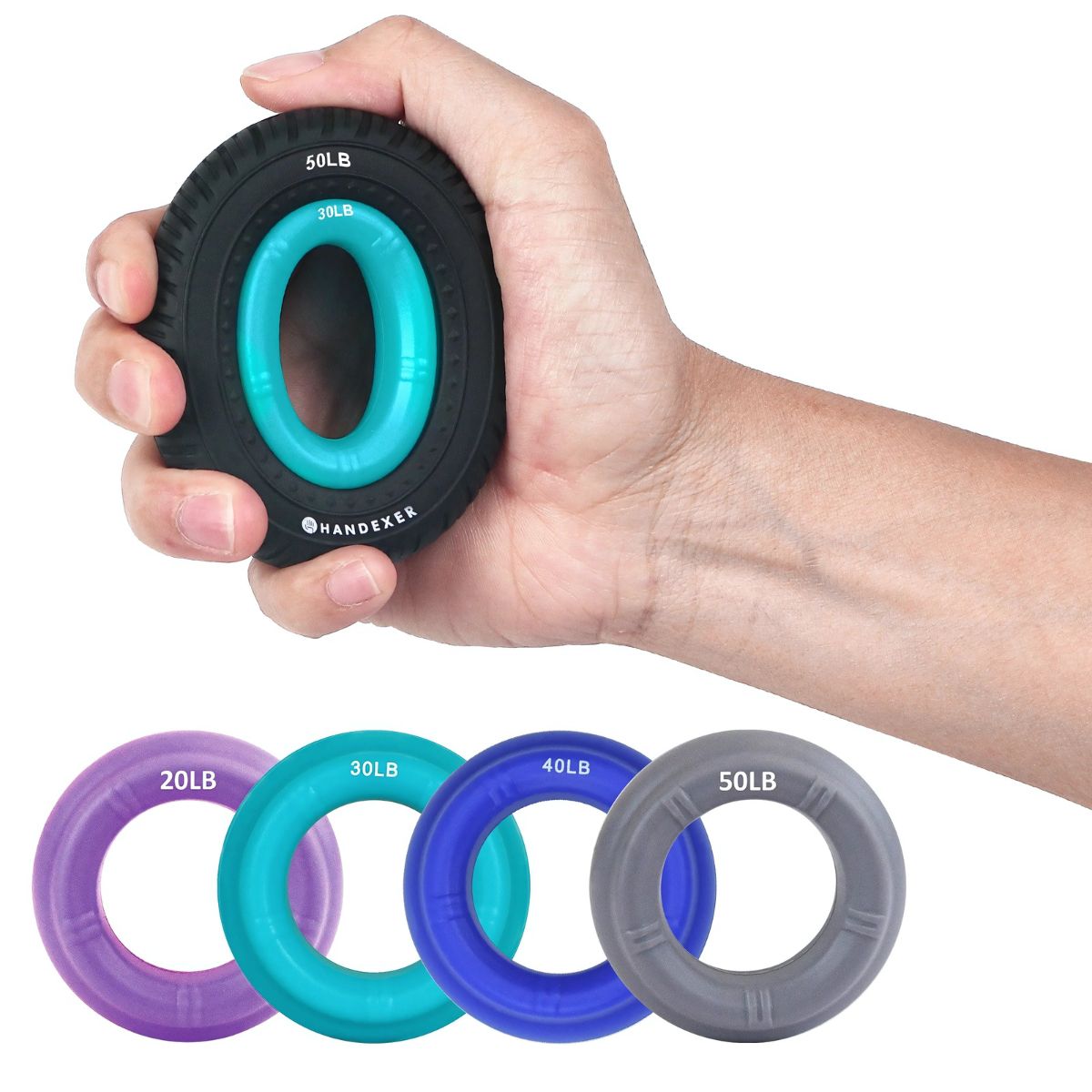
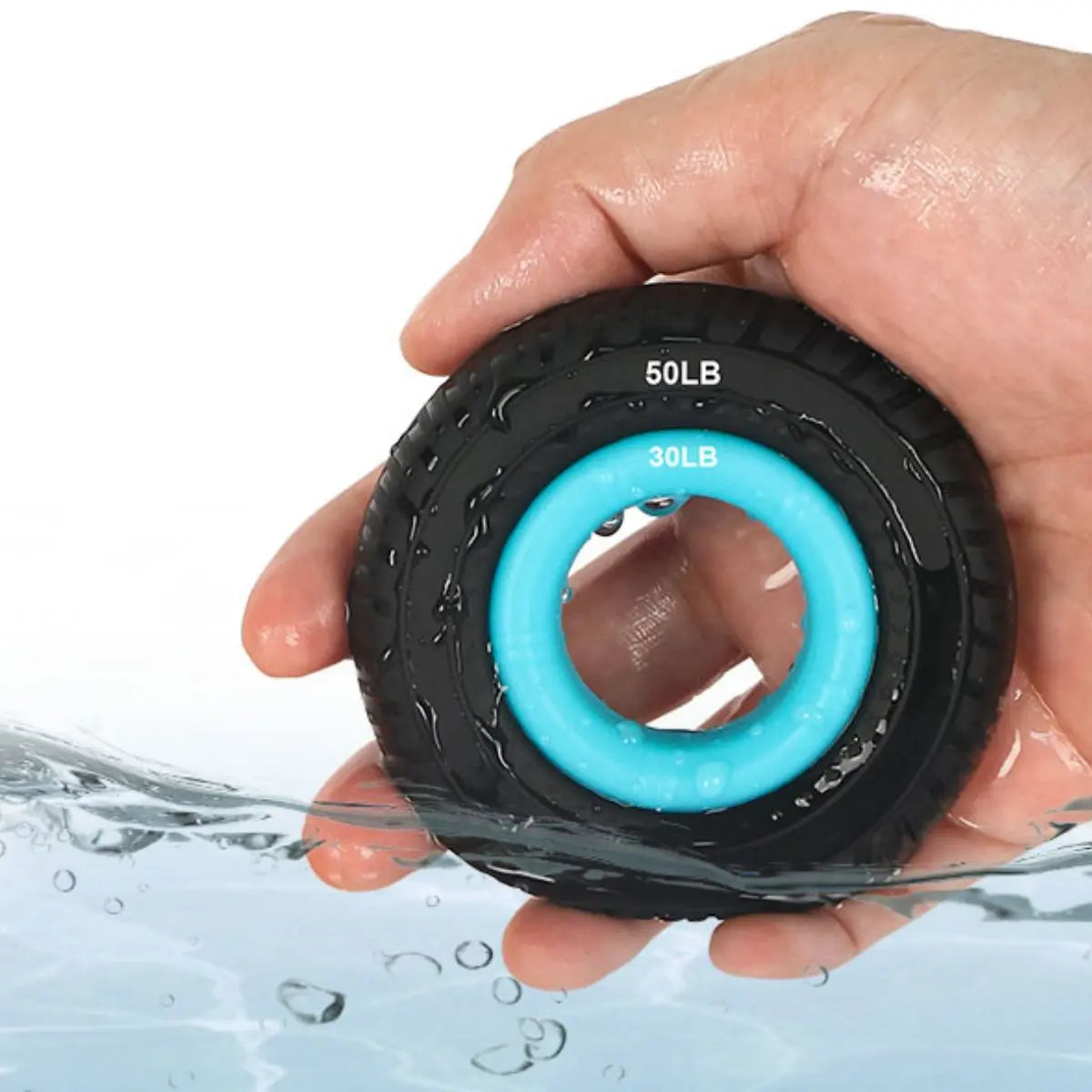
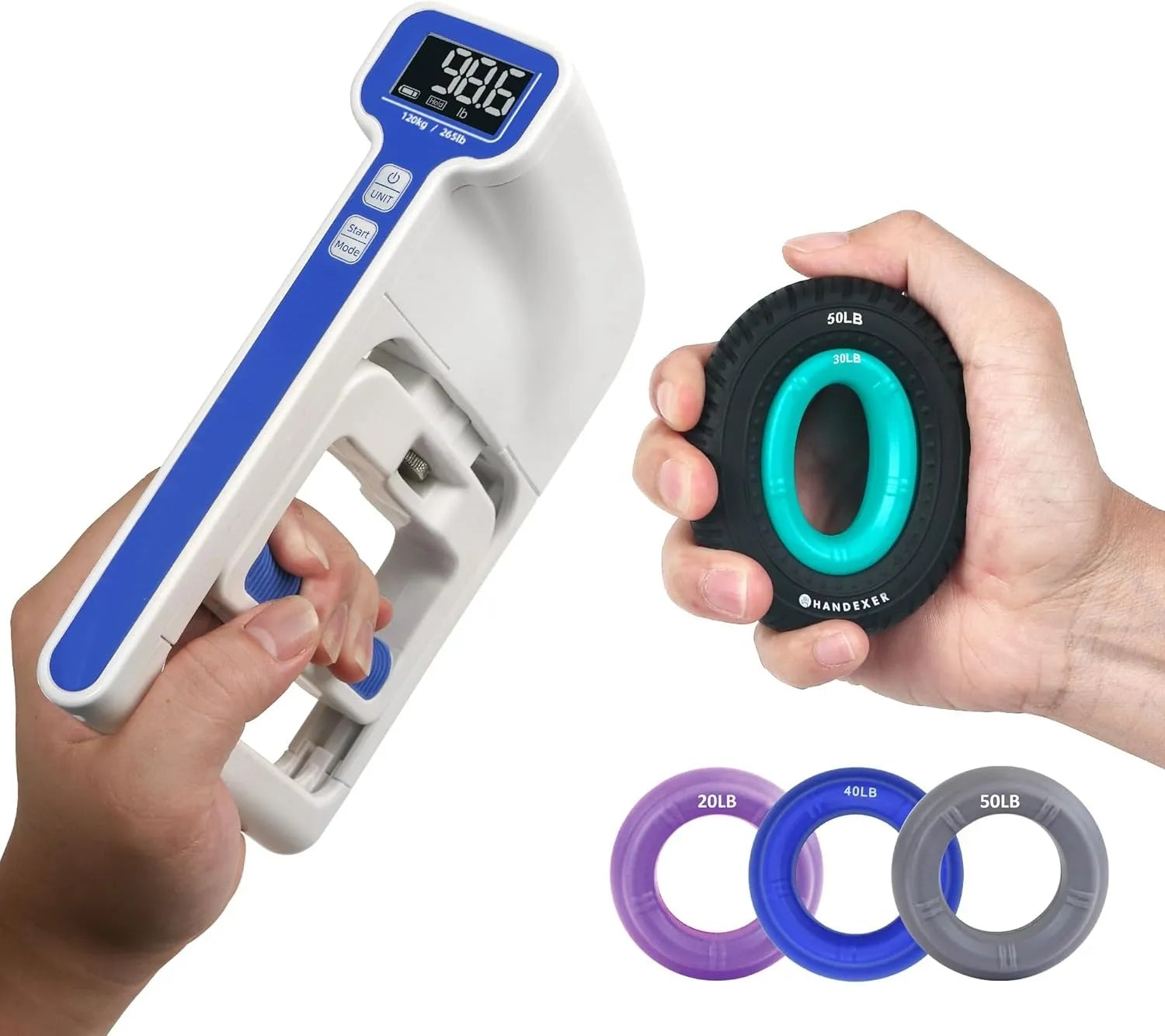
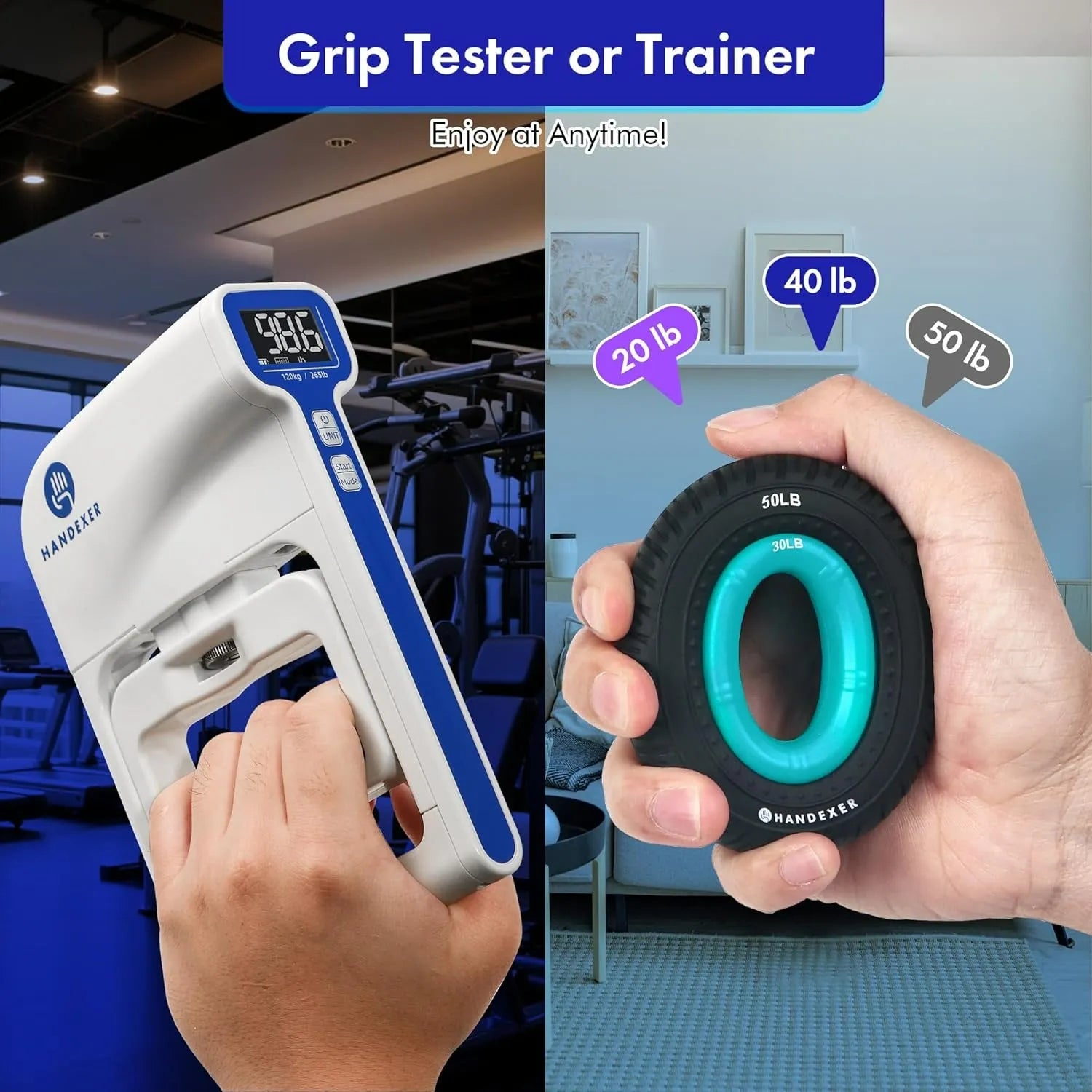
- Place a soft stress ball, rolled-up washcloth, or light-resistance silicone grip ring in the center of your palm.
- Slowly squeeze until you feel gentle resistance.
- Hold for 2–3 seconds without straining.
- Slowly release and open your hand.
How much: 5–10 squeezes per hand.

3. Thumb-to-Finger Pinches
Best for: Practicing the fine motor movements used when turning keys, fastening buttons, and handling small objects.
How to do it:
- Rest your forearm comfortably on a table with your palm facing upward.
- Bring your thumb and index fingertip together to form an O shape.
- Apply gentle pressure for 1–2 seconds.
- Repeat with your middle, ring, and little fingers.
- Slowly return your thumb to the starting position.
How much: 2 rounds per hand.

4. Gentle Rubber Band Finger Spreads
Best for: Working the muscles that help open and spread your fingers.
How to do it:
- Place a very light rubber band around the outside of your fingers and thumb.
- Slowly spread your fingers apart against the gentle resistance.
- Hold for 1 second.
- Slowly bring your fingers together again.
How much: 5–10 spreads per hand.

5. Two-Way Towel Twist
Best for: Practicing the turning and twisting movements involved in handling towels, faucets, and jar lids.
How to do it:
- Roll a small, dry hand towel into a comfortable tube.
- Hold it with both hands, keeping them comfortably apart.
- Gently twist the towel in opposite directions, as if wringing out water.
- Hold for 2 seconds, then relax.
- Reverse the direction and repeat.
How much: 5 gentle twists in each direction.

6. Light Grocery Bag Hold
Best for: Practicing the grip endurance needed to hold shopping bags and other light household items.
How to do it:
- Choose a very light reusable bag containing one or two small items.
- Stand beside a sturdy countertop or stable chair for support.
- Hold the bag with your arm relaxed at your side.
- Maintain a comfortable grip for 5–10 seconds.
- Put the bag down gently and rest before repeating.
How much: 2–3 short holds per hand.

Safety Reminder: Stop an exercise if you experience sharp pain, new numbness, tingling, or swelling. Mild muscle fatigue can occur, but joint pain is not something to push through. If you have severe arthritis, a recent hand injury, or recent surgery, ask your doctor or physical therapist which movements are appropriate.
A Simple Weekly Routine & Progress Check
Consistency matters more than intensity. You do not need to perform all six exercises every day.
Your Weekly Hand Exercise Schedule
| Day | Routine |
|---|---|
| Monday | All 6 exercises |
| Tuesday | Gentle finger glides |
| Wednesday | All 6 exercises |
| Thursday | Rest or gentle finger glides |
| Friday | All 6 exercises |
| Saturday | Rest or gentle finger glides |
| Sunday | Rest and check progress |
Start with one comfortable set of each exercise. Allow your hands to recover between training sessions. If your hands remain sore or tired, take an additional rest day.
How to Measure and Track Your Grip Strength

Exercise helps you practice hand movements, but measuring your grip strength gives you another way to understand how your strength changes over time.
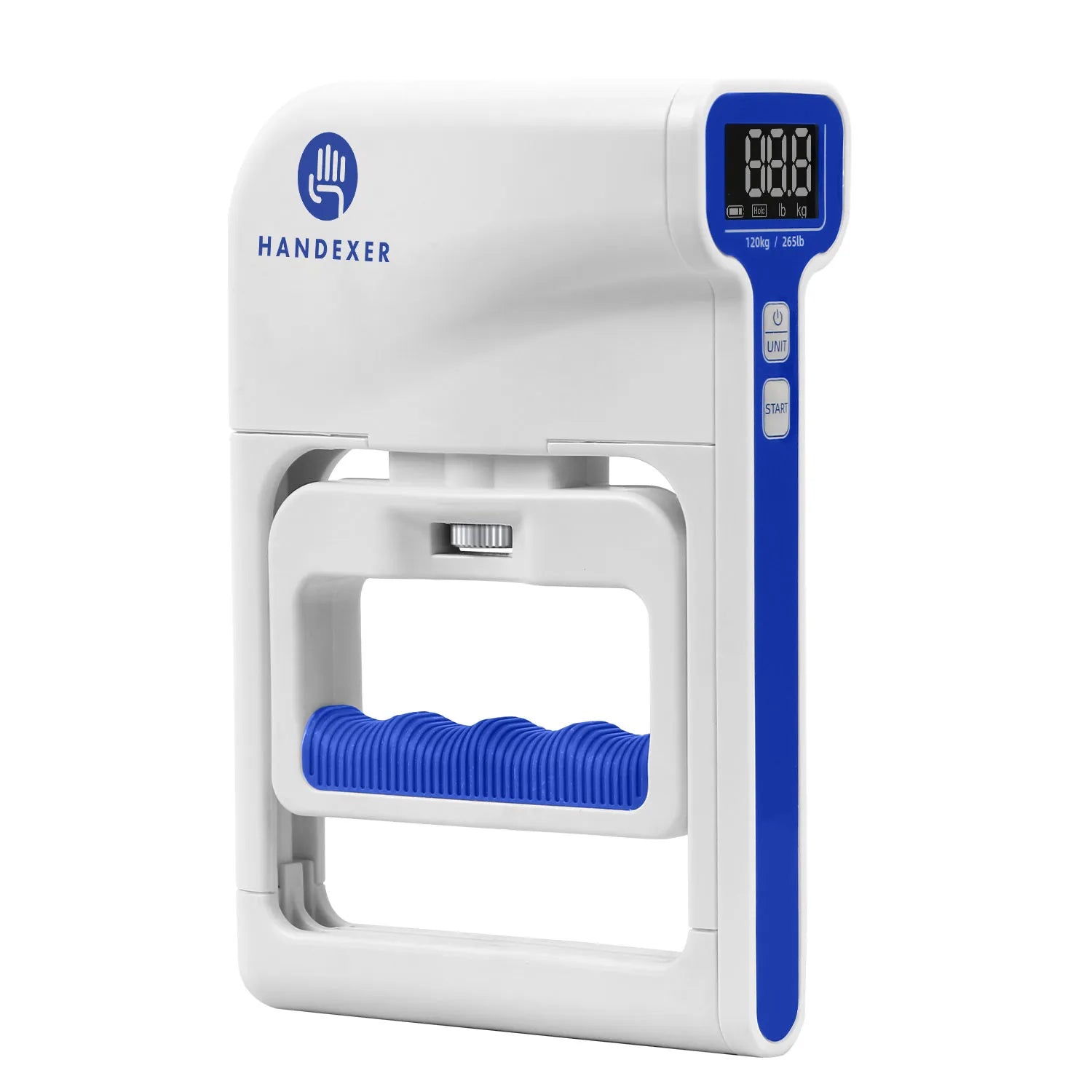
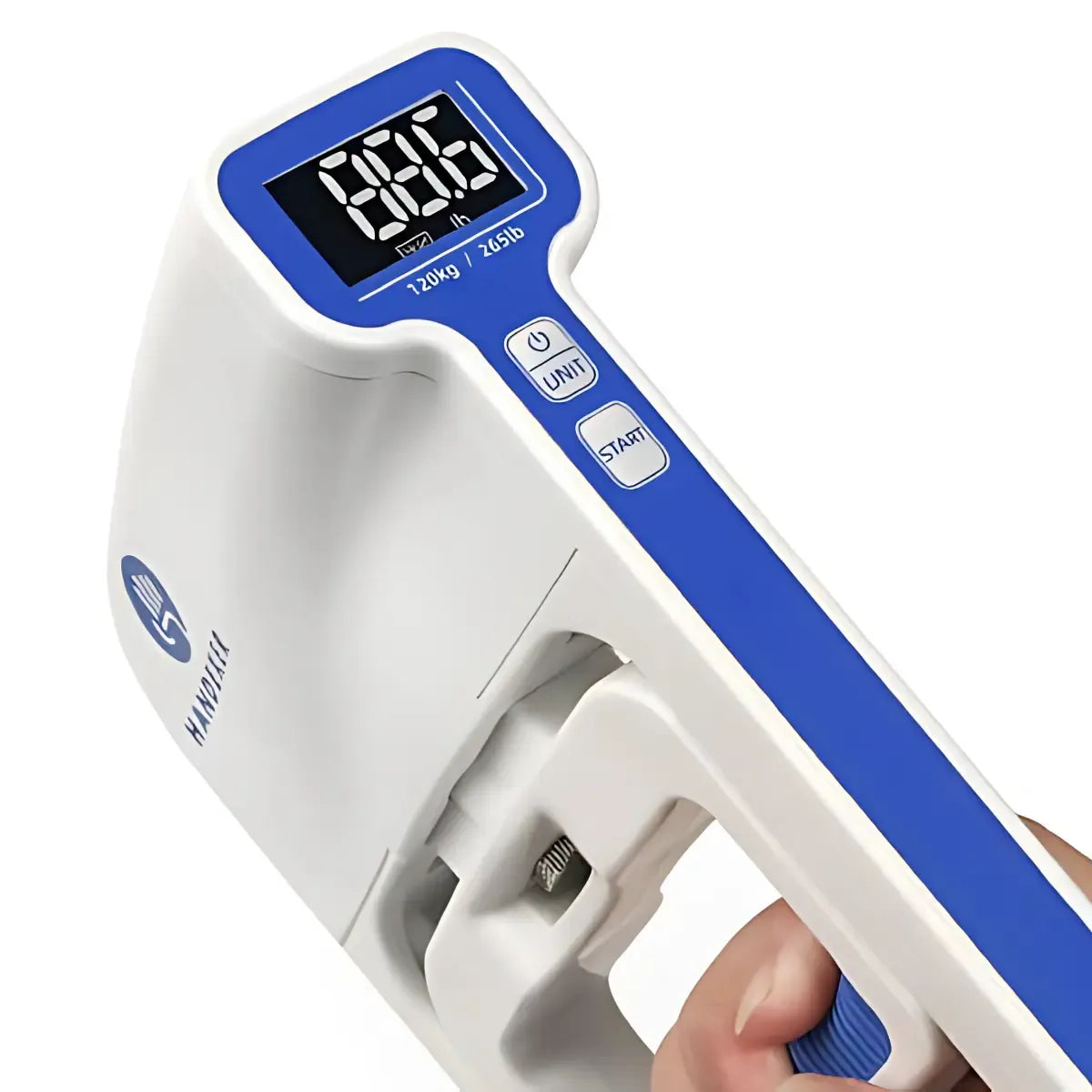
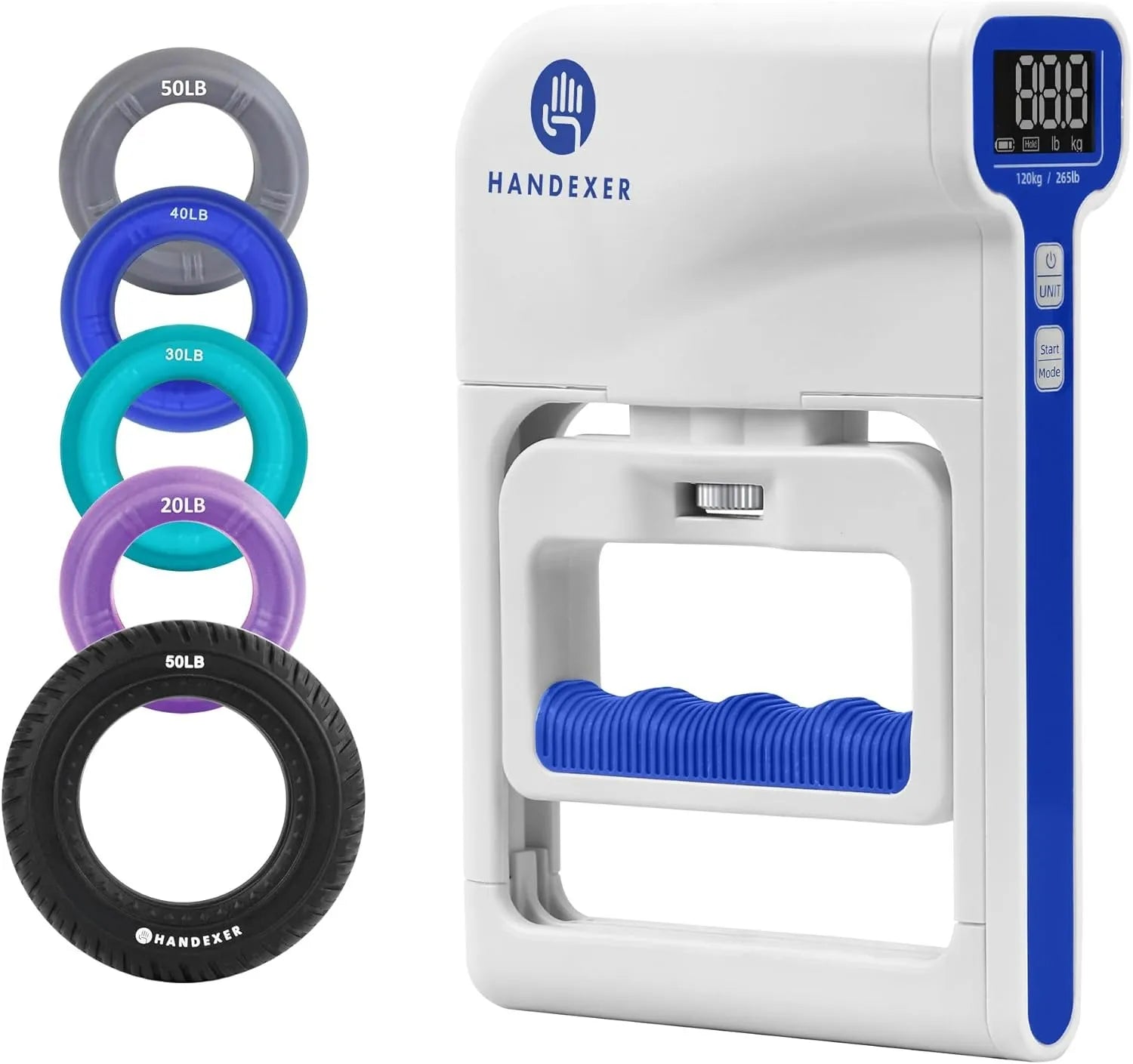
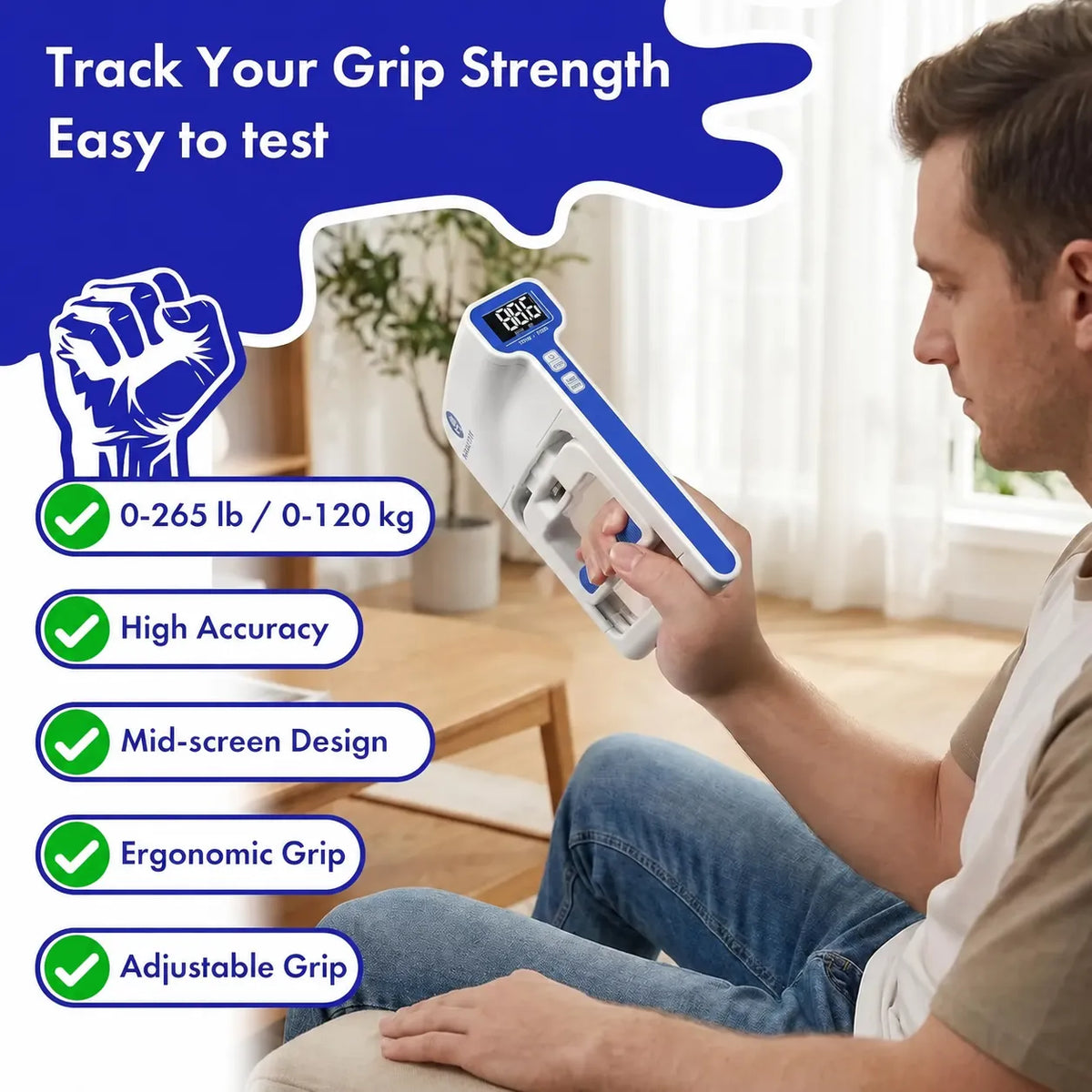
A digital hand dynamometer can help you establish a starting measurement and monitor your progress at home.
1. Use a Consistent Testing Position
For a simple home tracking routine:
- Sit in a sturdy chair with both feet flat on the floor.
- Keep your shoulder relaxed and your upper arm close to your body.
- Bend your elbow approximately 90 degrees.
- Keep your forearm in a neutral position and your wrist comfortably straight.
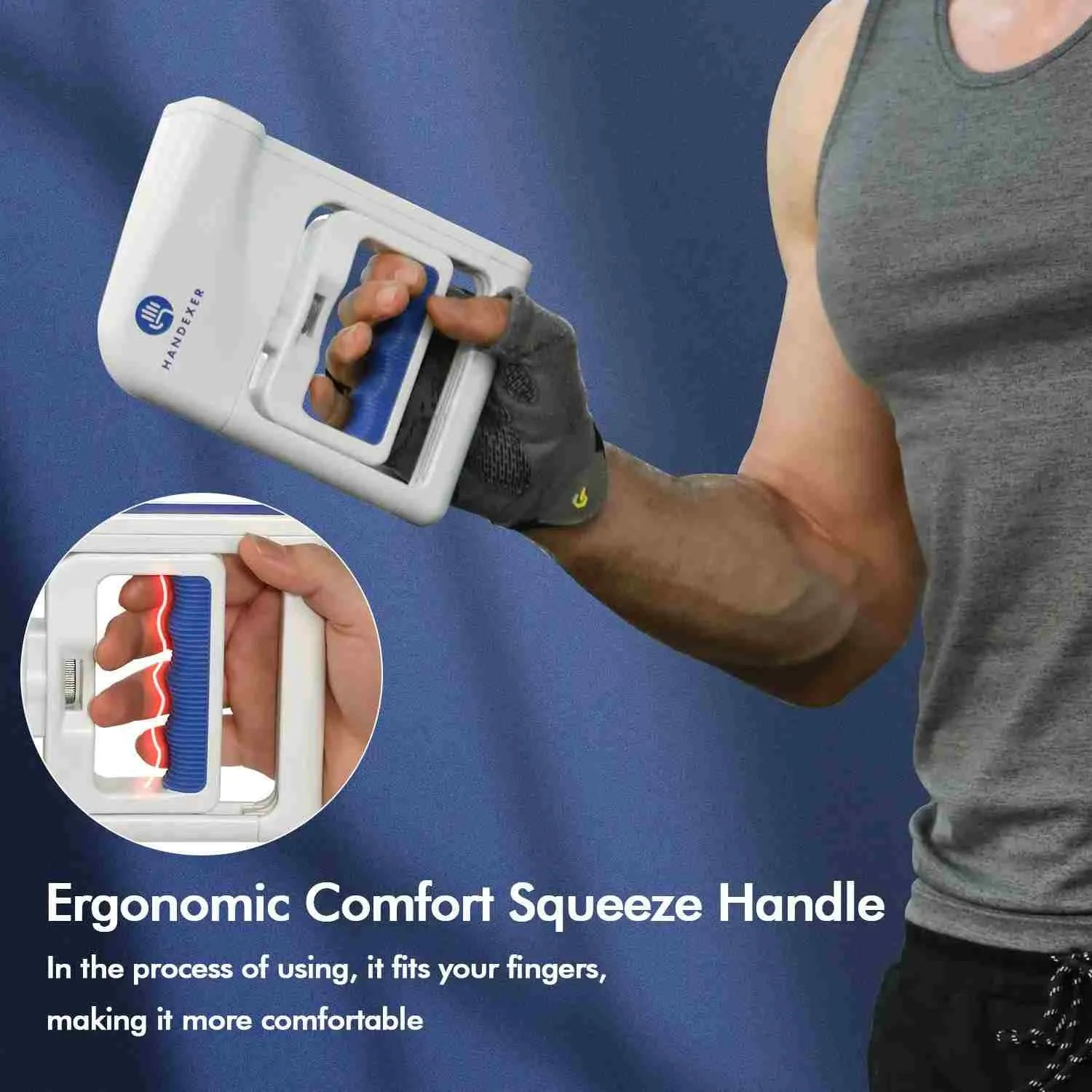
- Hold the dynamometer according to its instructions, without resting it on your leg.
2. Test Both Hands
Squeeze the handle firmly for approximately 3–5 seconds, without causing pain or straining beyond your comfortable ability.
Measure your left and right hands separately. If you are tracking your results, use the same testing position and method each time.
For a more consistent home comparison, take two or three comfortable readings per hand, allowing a short rest between attempts. Record the average of the readings.
3. Record Your Results Weekly
Choose one consistent day and time to check your grip strength. Record both hands in a simple tracking sheet.
For example:
| Week | Left Hand | Right Hand |
|---|---|---|
| Week 1 | 18 kg | 21 kg |
| Week 2 | 18 kg | 21.5 kg |
| Week 3 | 18.5 kg | 21.5 kg |
| Week 4 | 19 kg | 22 kg |
These are illustrative numbers, not expected training results.
4. Look at the Long-Term Trend
Small changes between individual readings are normal. Factors such as fatigue, hand position, and how firmly you squeeze can affect the result.
Focus on consistent measurements over several weeks rather than reacting to every small increase or decrease.
A digital hand dynamometer is a measurement tool, not a treatment device. It helps you understand and track your grip strength, while your exercise routine provides the physical practice.
You can also use our free Grip Assessment Tool to explore your results and learn more about how to measure grip strength.
Alongside hand exercises, regular physical activity and adequate protein intake from foods such as eggs, fish, yogurt, and beans can support overall muscle health as you age.
Frequently Asked Questions
How often should seniors do hand exercises?
Starting with two or three sessions per week is a practical approach for many people. Allow recovery time between sessions and adjust the routine according to your comfort and physical condition.
Can I improve my grip strength if I am over 70?
Age does not automatically prevent you from working on hand strength. Many older adults can benefit from appropriately selected strength and mobility exercises. Start gently and choose movements that match your current abilities.
Is it normal for one hand to be stronger than the other?
Yes. Your dominant hand is often somewhat stronger than your non-dominant hand. Record both hands separately and pay attention to changes over time rather than expecting identical readings.
When should I stop exercising and ask a doctor?
Stop if you experience sharp pain, sudden numbness or tingling, or noticeable swelling. If symptoms persist, or if you have significant arthritis, recent surgery, or a hand injury, consult a healthcare professional before continuing.
Give Your Hands a Stronger Start
Healthy, functional hands make everyday activities easier, from holding your morning coffee to carrying groceries and managing household tasks.
Start with gentle movements, build a consistent routine, and pay attention to how your hands feel over time.
Want to understand your grip strength more clearly?
A digital hand dynamometer can help you establish a baseline and track changes in both hands as part of your home routine.

For additional guidance, explore our Grip Strength Norms Guide and learn how to measure grip strength.
Clinical & Scientific References
- Cruz-Jentoft AJ, Bahat G, Bauer J, et al. (EWGSOP2). Sarcopenia: revised European consensus on definition and diagnosis. Age and Ageing. 2019;48(1):16–31. doi:10.1093/ageing/afy169.
- Mathiowetz V, Kashman N, Volland G, Weber K, Dowe M, Rogers S. Grip and pinch strength: normative data for adults. Archives of Physical Medicine and Rehabilitation. 1985;66(2):69–74.
- American Society of Hand Therapists (ASHT). Clinical guidance on standardized grip and pinch strength assessment.
- National Institute on Aging (NIA). Guidance on exercise, physical activity, and healthy aging.






共有する:
Grip Strength Test: 4 Surprising Things We Learned at Muscle Beach and Gold’s Gym