
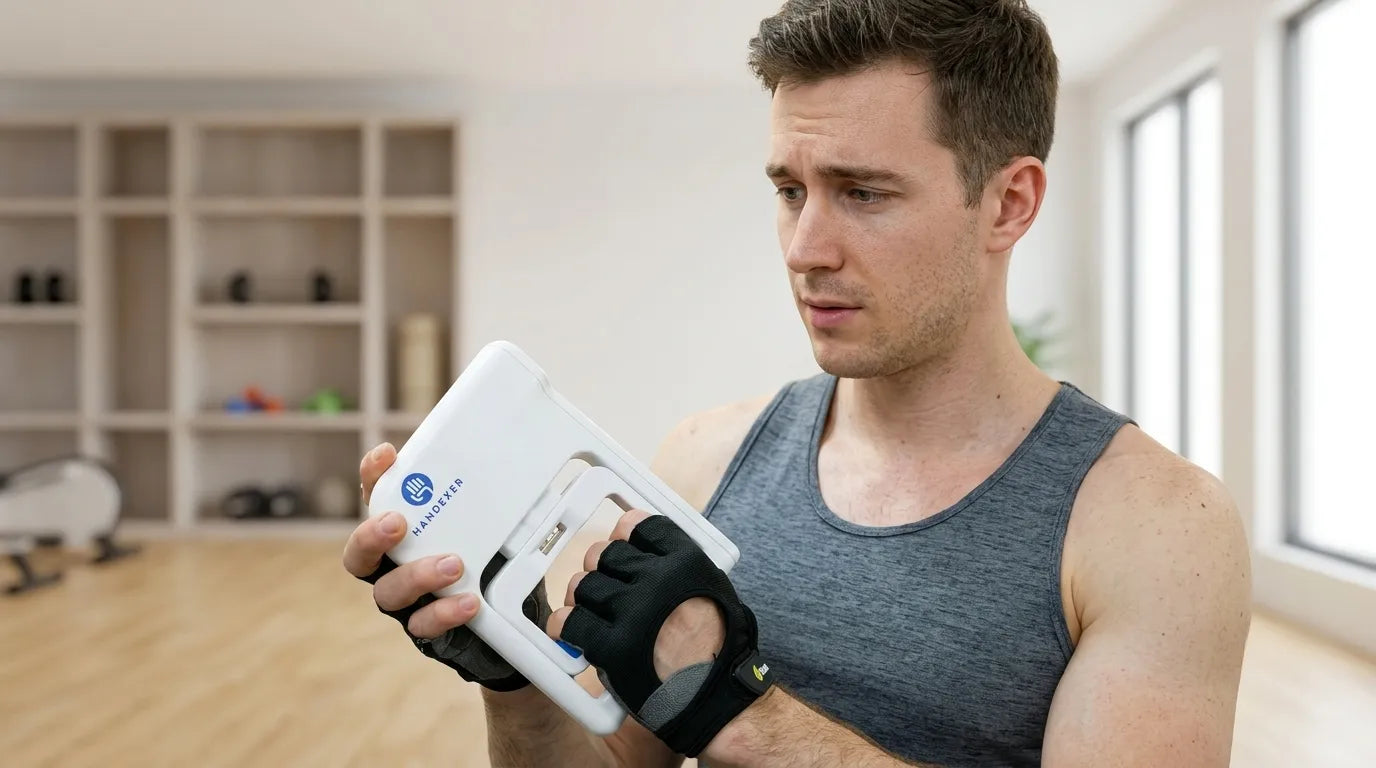
If you spend any time on fitness content, you’ve probably seen it: people squeezing hand grippers like their life depends on it—veins popping, reps flying, chasing bigger numbers.
It looks intense. It feels productive.But the real question is: Is grip strength training actually effective, or are most people just training it wrong?
The truth is simple: Grip training isn’t overrated — it’s just usually incomplete.
Grip Strength Is Not One Thing
Most people treat grip strength like a single number: the higher, the better.In reality, your hands are a system made of muscles, tendons, nerves, and coordination under fatigue.
Real-world grip performance usually breaks down into three components:
- Strength — how much force you can generate
- Endurance — how long you can sustain it
- Control — how precisely you can apply that force
Most training programs only develop the first one.That’s why someone can crush a hand gripper but still struggle with:
- carrying groceries for distance
- dead hangs
- barbell holds
- or sustained pulling exercises
Step One: Measure Before You Train
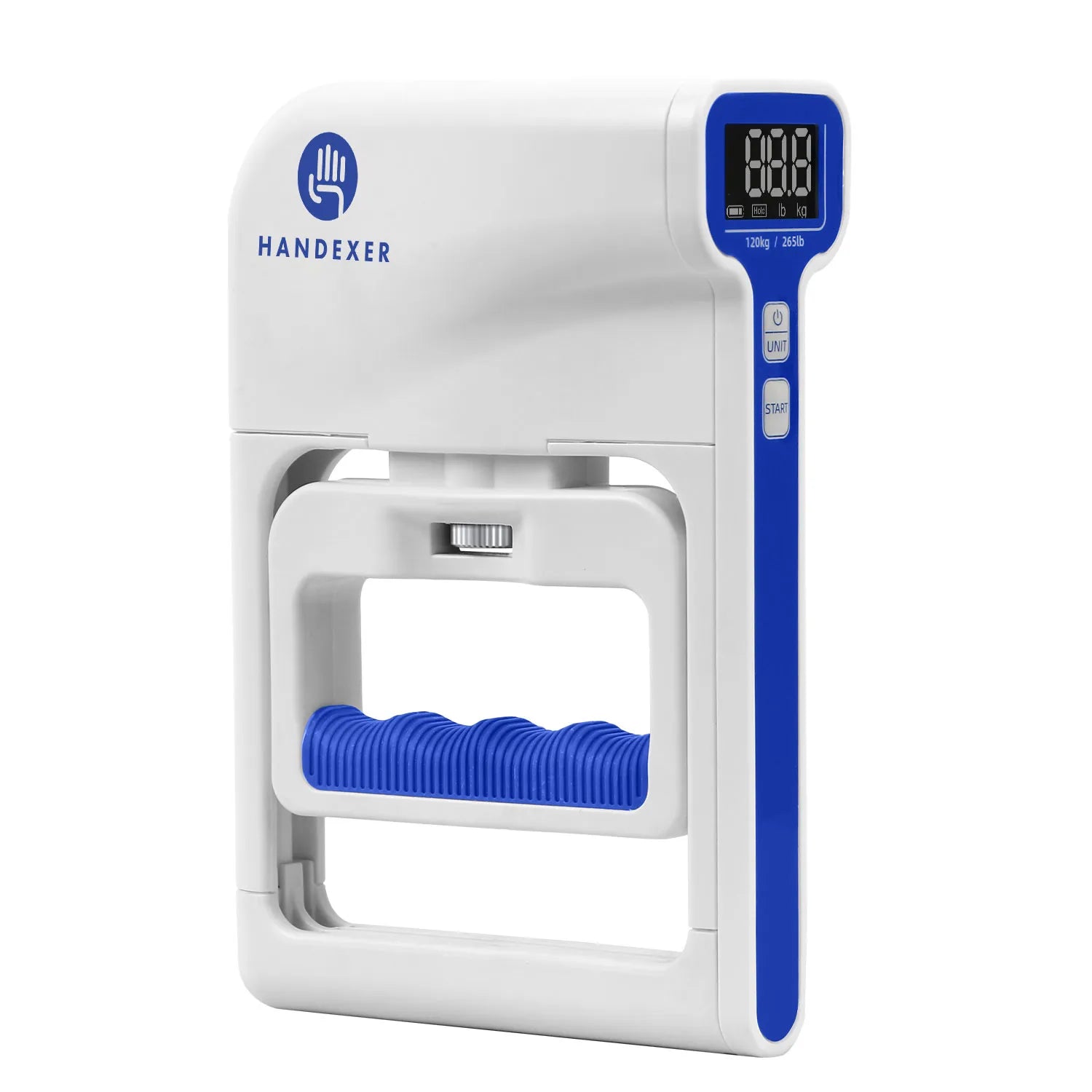
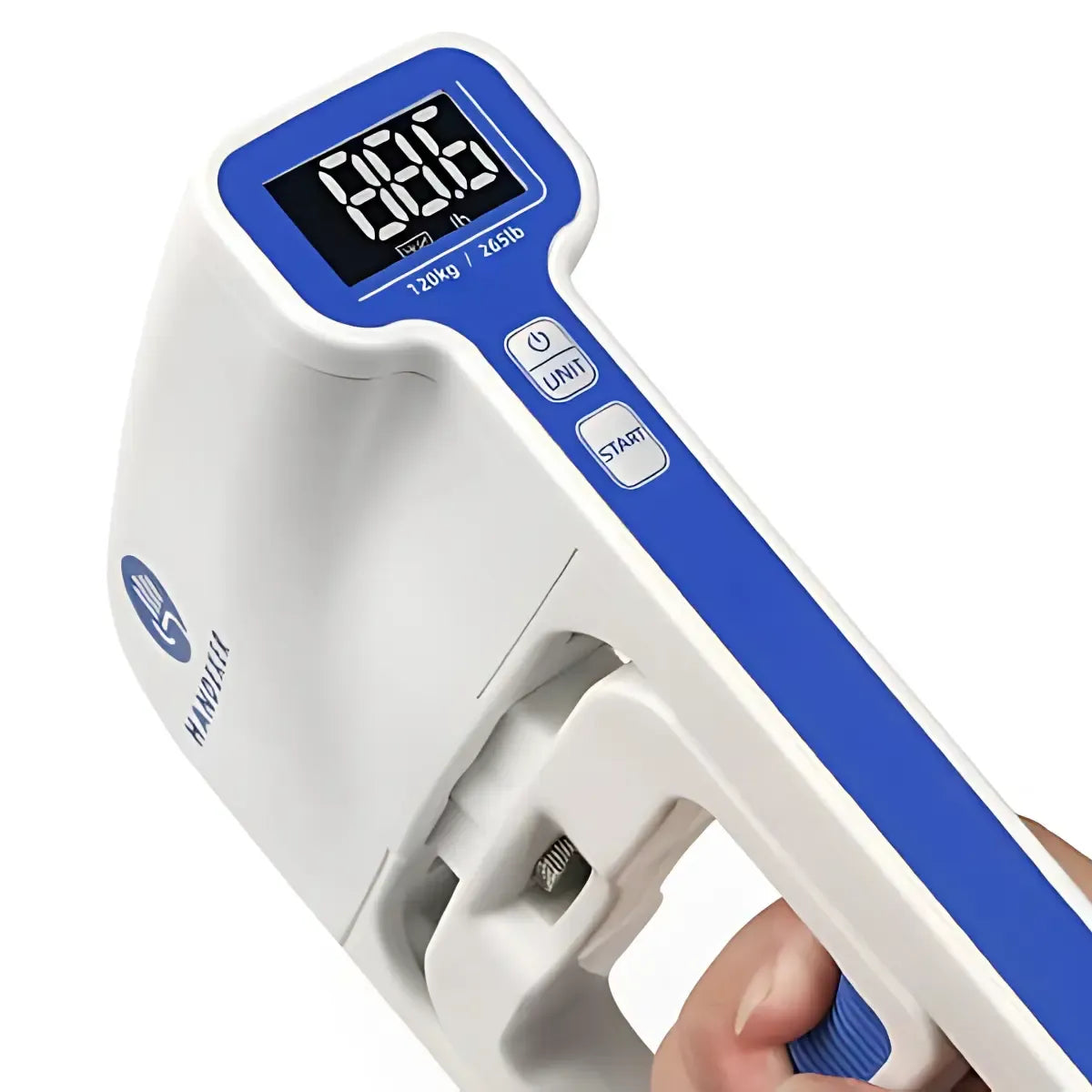
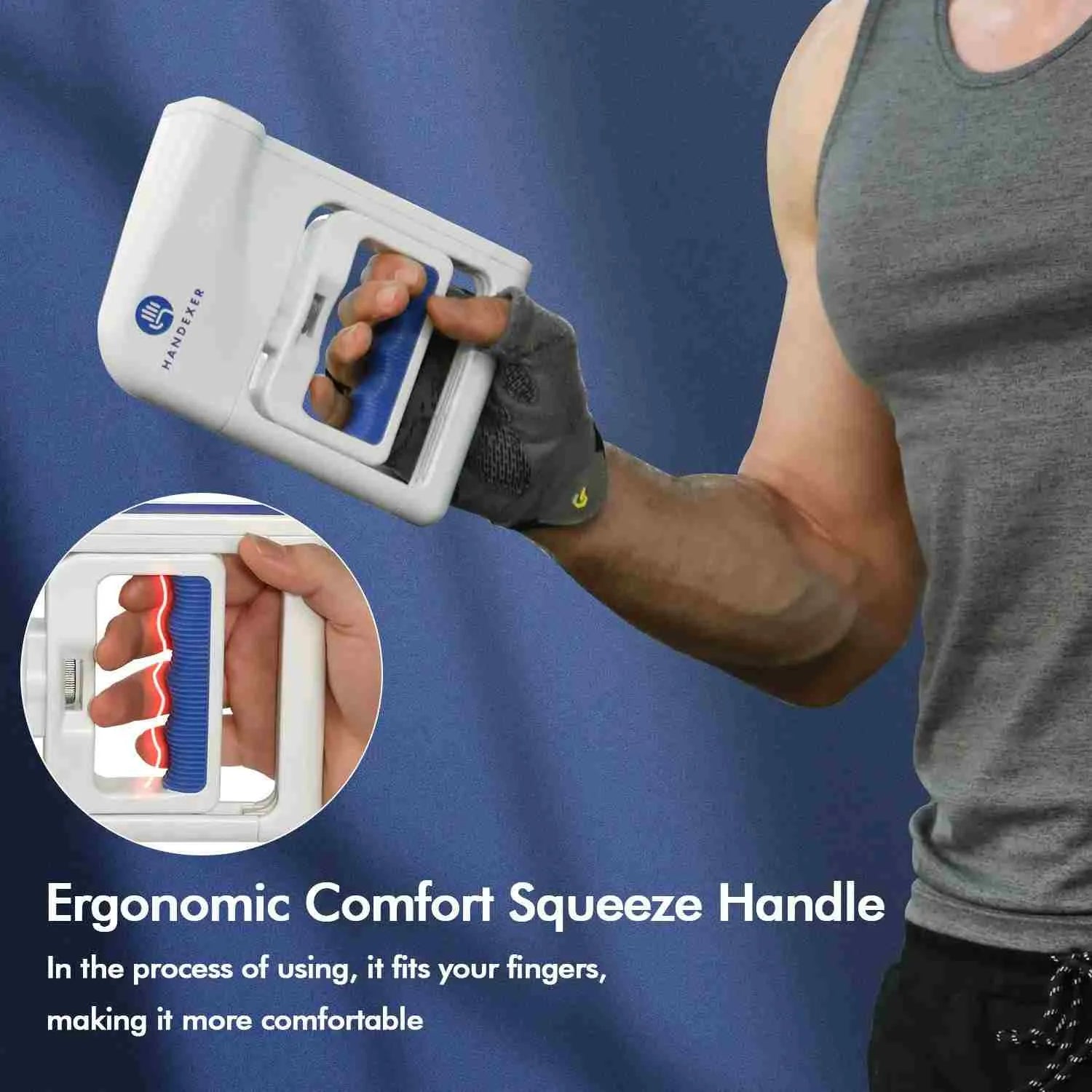
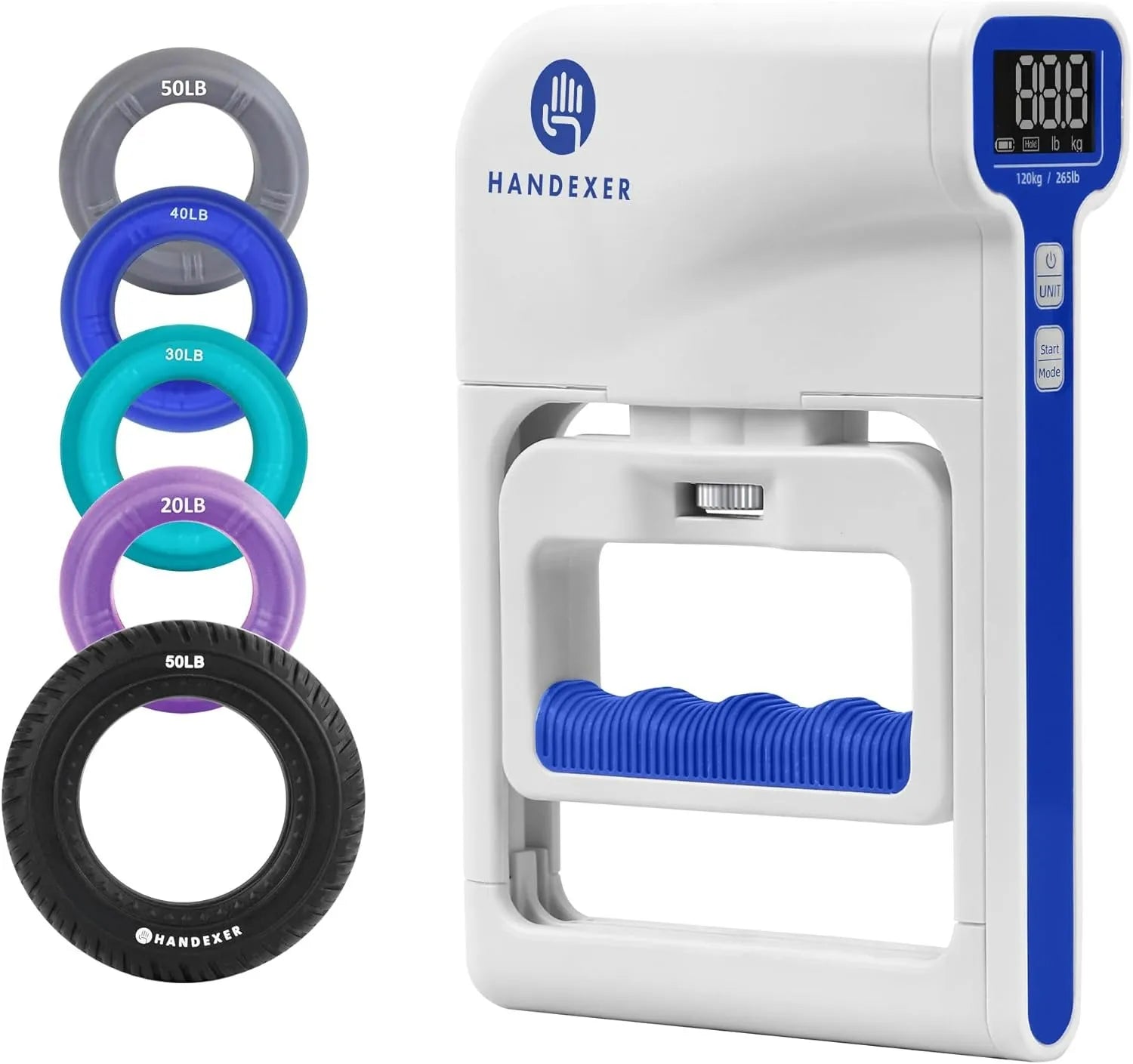
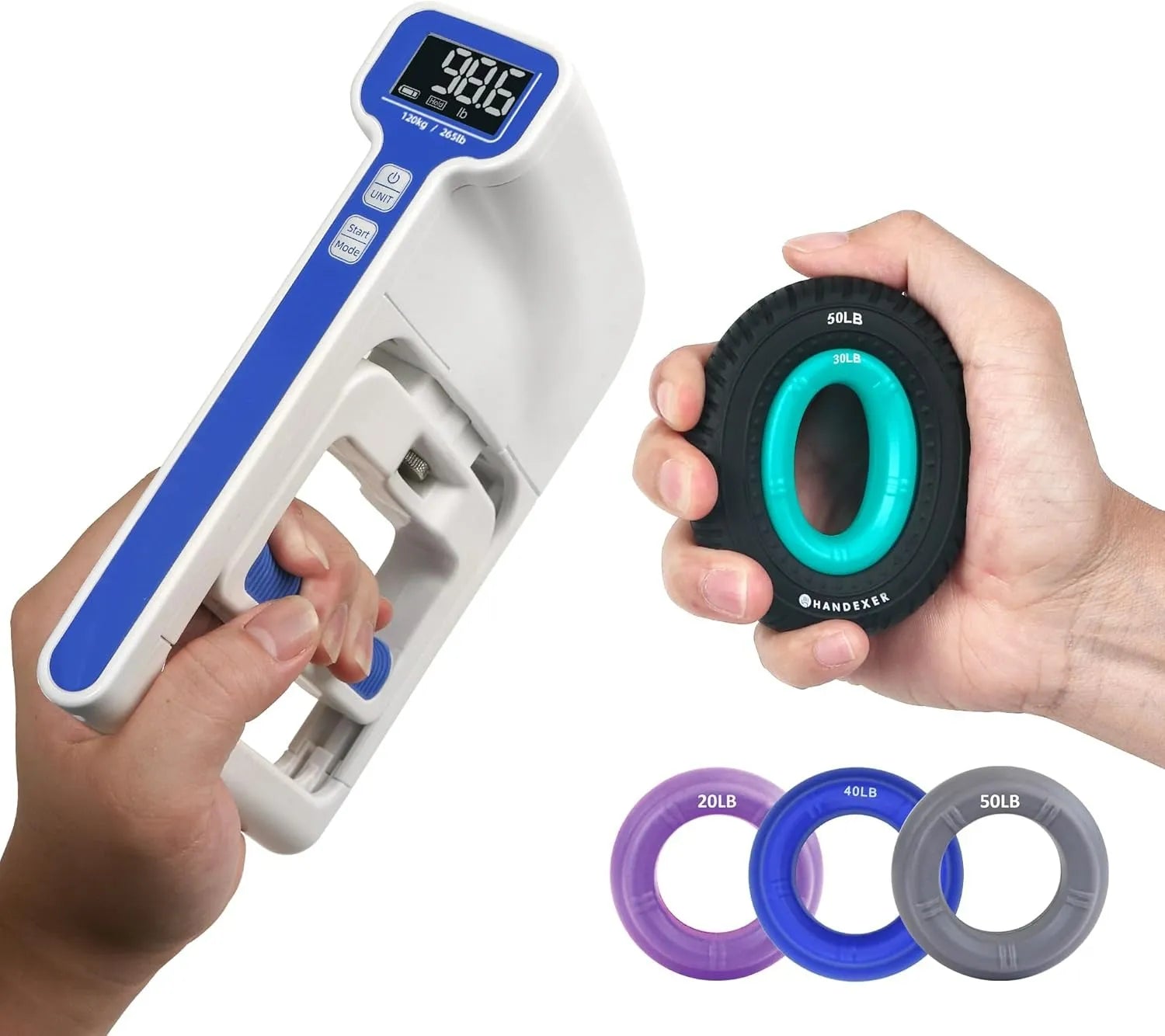
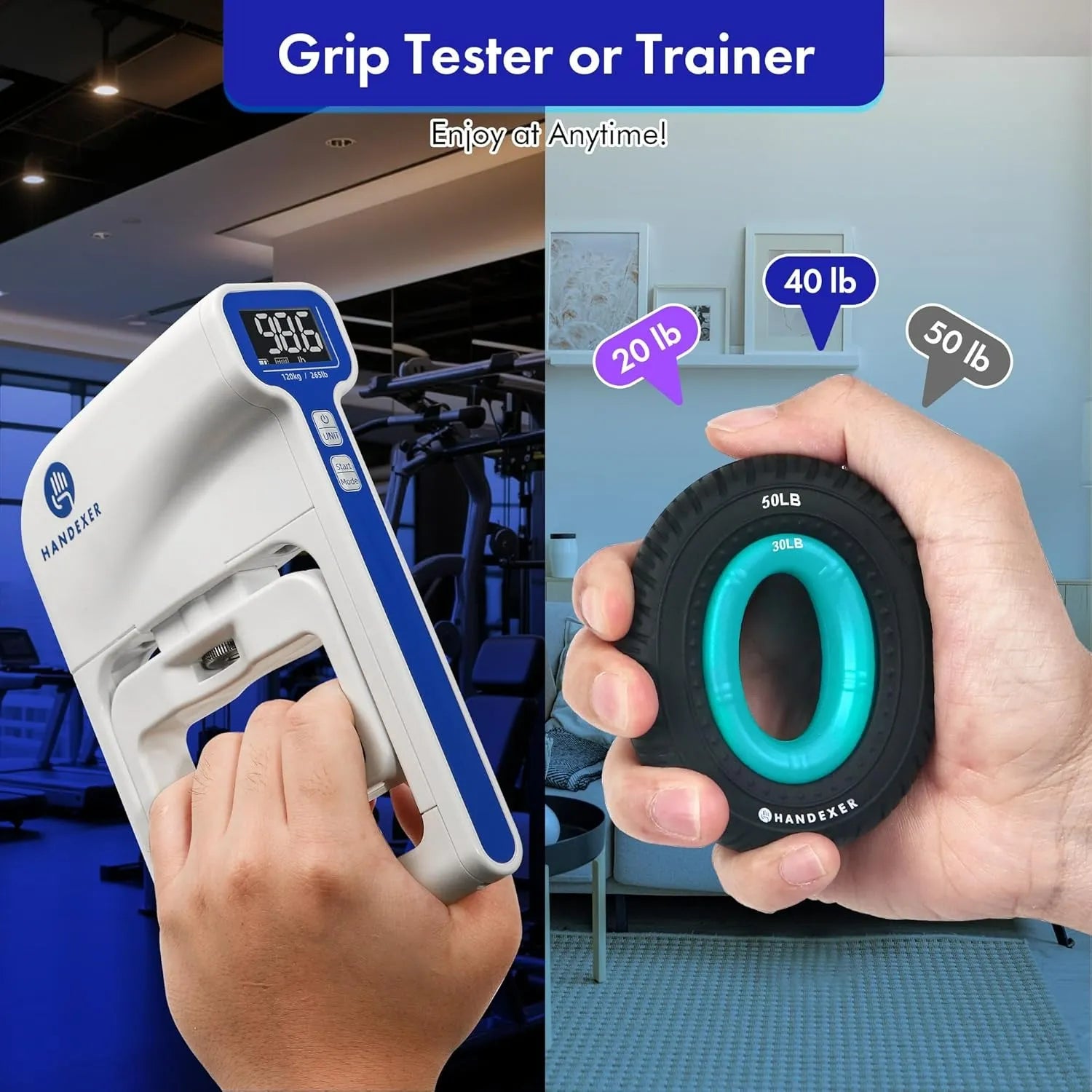
One of the most overlooked parts of grip training is not knowing your baseline.This is where a grip hand dynamometer becomes extremely useful.Instead of guessing whether you’re improving, it allows you to track:
- Left vs right hand imbalance
- Actual strength progression over time
- Whether your training is working or plateauing
Many people are surprised when they first test themselves—what felt like “strong grip” often turns out to be inconsistent or unbalanced.
👉 Without measurement, grip training becomes subjective. With it, it becomes trackable and progressive.
Why Hand Grippers Alone Fall Short
Hand grippers are not useless—but they are limited.They mainly train crushing strength in a single movement pattern.The problem is that real-life grip demands are rarely just squeezing.
Most tasks require:
- sustained holding
- fatigue resistance
- wrist stability
- and finger balance
So people often end up with a mismatch: Strong on grippers, but weak in real-world grip endurance.
A More Complete Way to Train Grip Strength
To actually improve grip strength, you need to train multiple systems—not just one tool or motion.
1. Controlled Strength Training
Hand grippers still have a place—but they should be used with structure:
- 3–5 sets
- 5–8 controlled reps
- brief pause at peak contraction
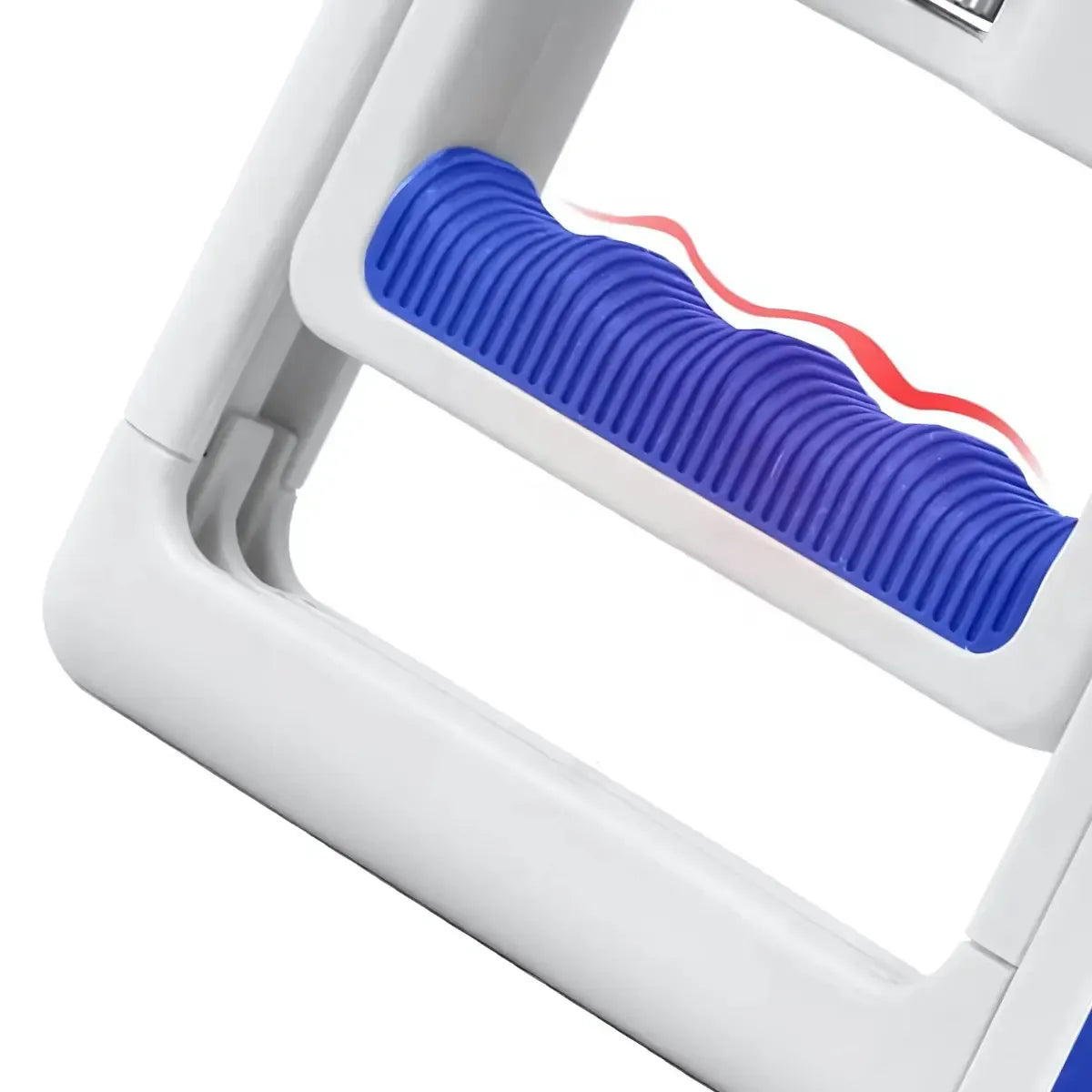
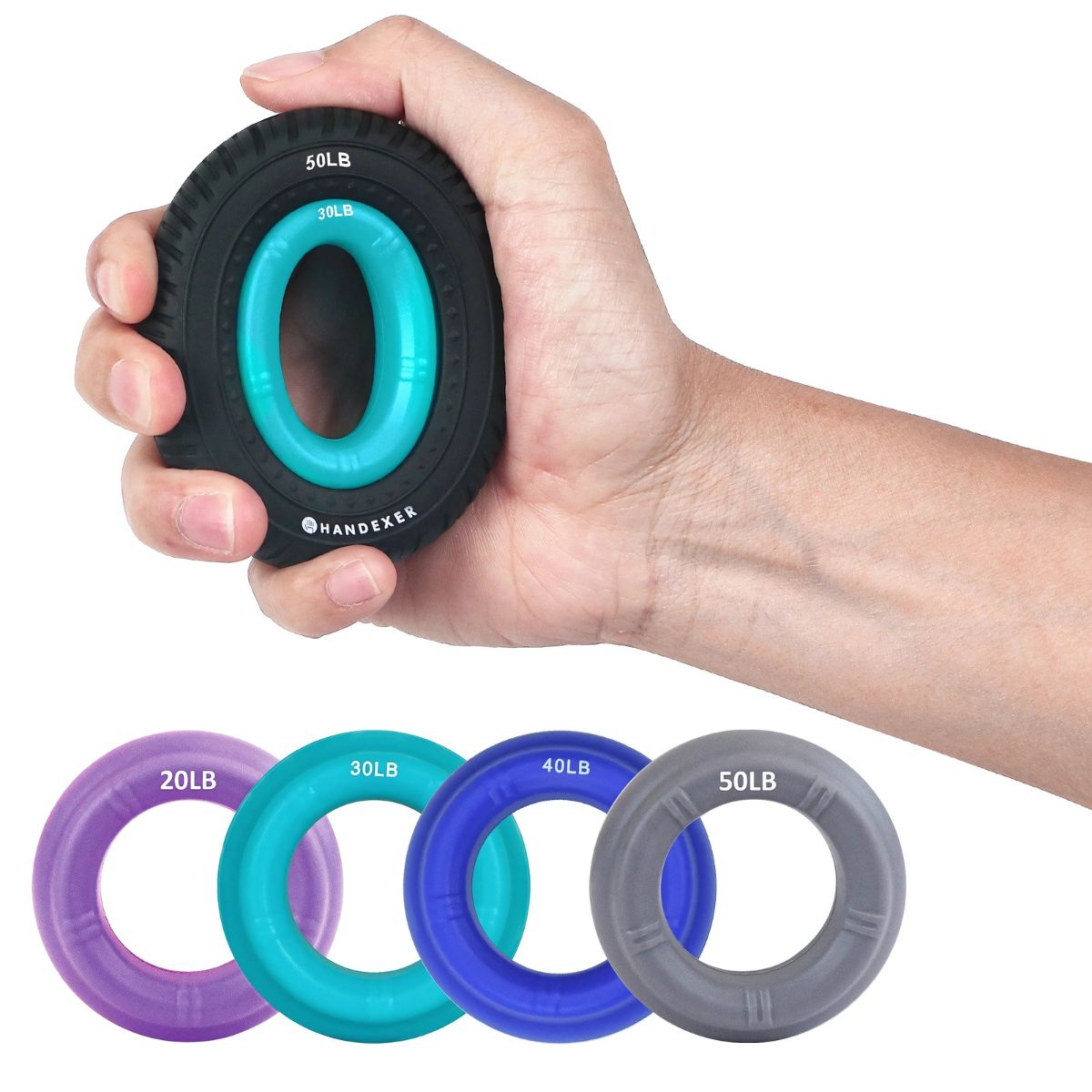
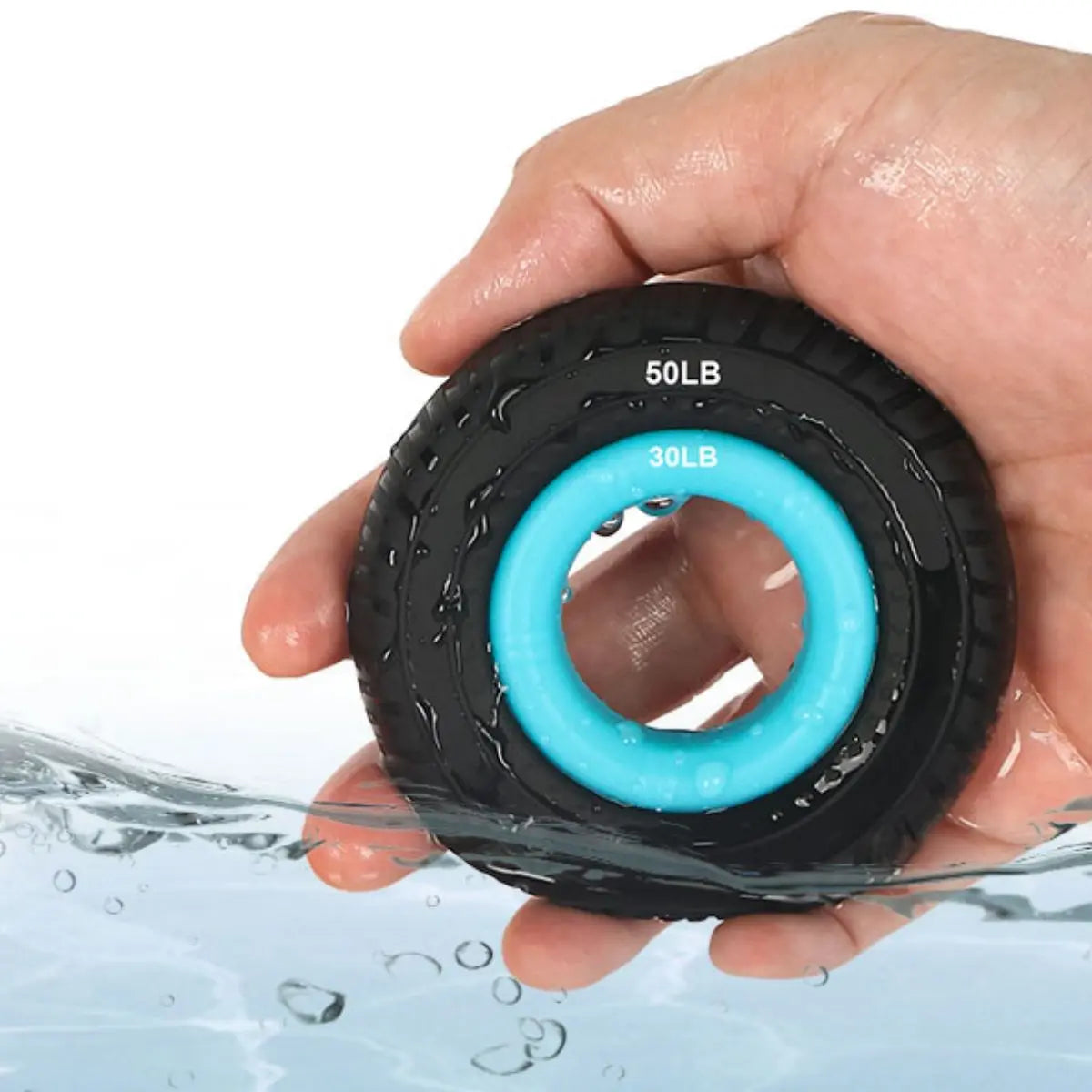
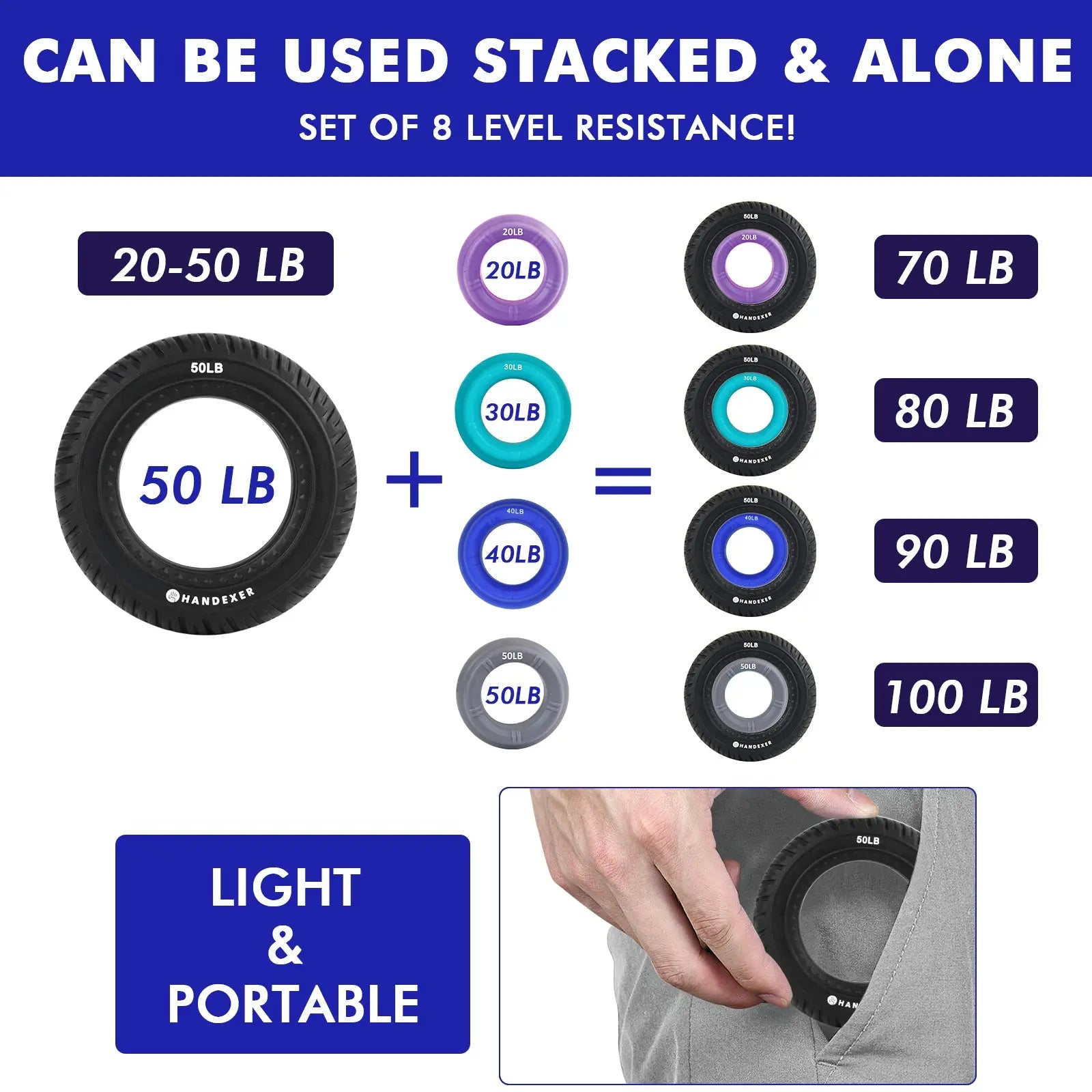
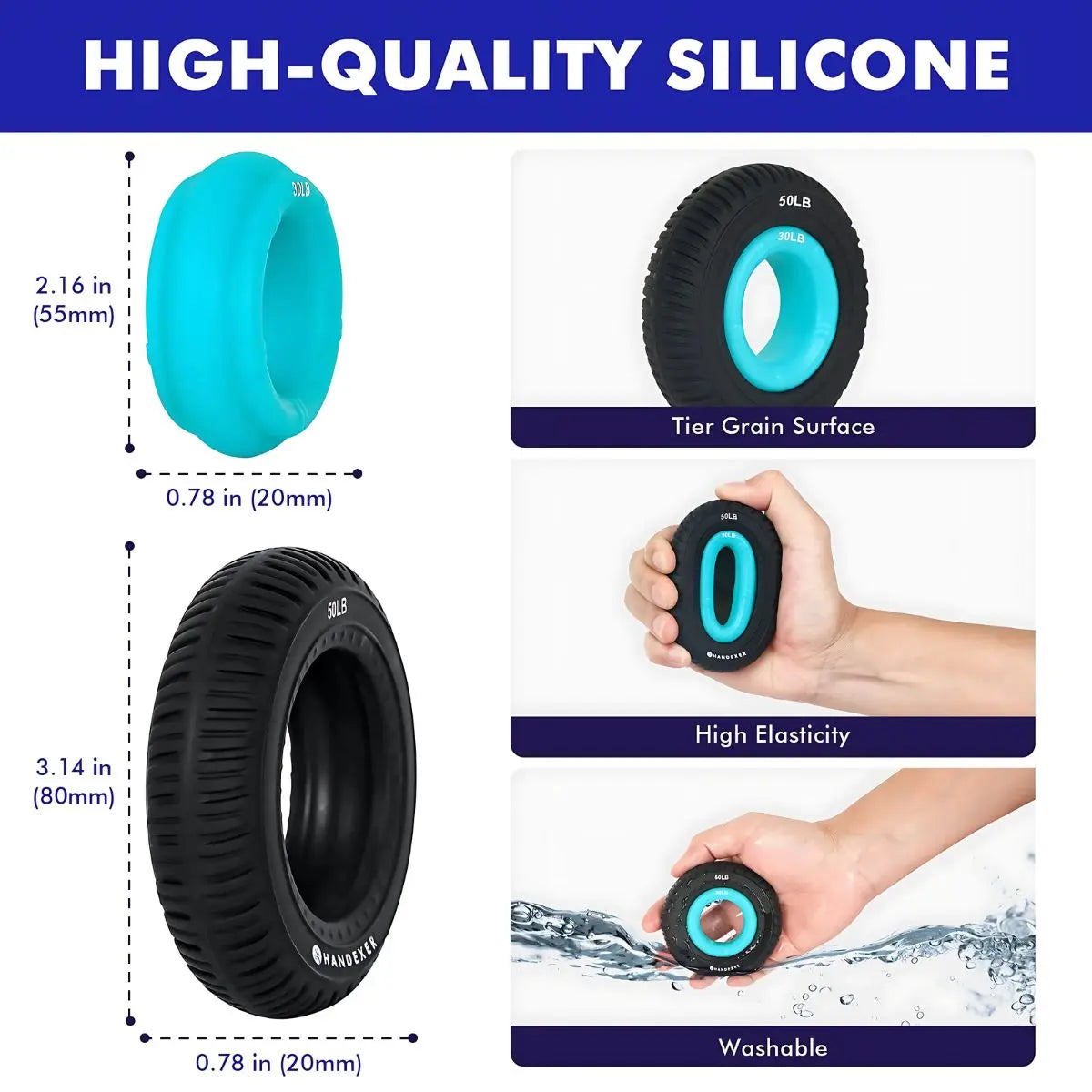
This is also where a grip ring can be extremely effective.Unlike traditional grippers, grip rings:
- train a more natural squeeze pattern
- involve more finger coordination
- create smoother resistance across the full range of motion
They’re especially useful for building “real-use” grip strength rather than isolated crushing power.
2. Grip Endurance (The Missing Piece)
This is where most people fail.
Best exercises include:
- farmer’s carries
- dead hangs
- timed static holds
These train your ability to maintain grip under fatigue—not just generate force once.
3. Finger Extensor Training
Most people over-train closing strength and completely ignore opening strength.
This imbalance leads to:
- forearm tightness
- faster fatigue
- higher injury risk
Simple solution:
- rubber band finger extensions
- light opening drills after grip work
4. Wrist Stability
Without stable wrists, grip strength cannot transfer effectively.
Include:
- wrist curls (moderate load)
- reverse wrist curls
- isometric bar holds
Turning Training Into a Feedback Loop
One of the most powerful ways to improve grip strength is to turn training into a measurable system.A simple structure:
- Use a grip strength meter to establish baseline strength
- Train with grip rings for strength development
- Add endurance and stability work
- Re-test with the grip strength meter
👉 This creates a closed loop: Measure → Train → Validate → Adjust
Without this loop, progress is often assumed rather than proven.
A Simple Weekly Structure
2–3 sessions per week is enough:Each session can include:
- Controlled grip ring / gripper training (strength)
- Farmer’s carries or hangs (endurance)
- Finger extensions (balance)
- Light wrist work (stability)
Plus: Grip strength meter testing once per week (tracking progress)
Keep sessions short—15–20 minutes is sufficient.
Recovery: The Hidden Factor
Grip muscles fatigue faster than most people expect.
If your forearms feel constantly:
- tight
- weak
- or underperforming
It’s often not lack of training—it’s lack of recovery.Helpful recovery methods:
- light forearm massage
- heat therapy
- reducing unnecessary daily gripping volume
- gentle mobility work
Final Verdict: Is Grip Training Overrated?
It depends entirely on how you train it.
- If it’s just endless squeezing → yes, it’s overrated
- If it’s a structured system → it’s one of the most underrated strength foundations
The real difference comes down to whether you’re training blindly or training with feedback.
Once you introduce:
- measurement (grip strength meter)
- varied tools (grip rings, carries, holds)
- and recovery awareness
Grip strength stops being a gimmick—and becomes a measurable performance skill.
FAQ (Grip Strength Training)
1.What is grip strength training and what does it actually improve?
Grip strength training refers to exercises that improve your ability to squeeze, hold, and control force with your hands and forearms. It improves not only raw strength, but also endurance, control, and functional hand performance in daily activities like carrying, lifting, and pulling.
2.How to improve grip strength fast?
The fastest way to improve grip strength is to combine heavy loaded carries, controlled grip holds, and wrist stability training. Most people see noticeable improvements within 3–6 weeks when training is consistent and recovery is properly managed.
3.Why is my grip strength weak even though I train regularly?
In most cases, weak grip despite training comes from imbalance rather than lack of effort. Many people over-train squeezing movements but neglect finger extensors, wrist stability, and endurance, which limits real-world grip performance.
4.How often should you do grip strength training?
For most people, 2 to 3 sessions per week is ideal. Grip muscles and tendons recover more slowly than larger muscle groups, so overtraining can actually slow progress instead of accelerating grip strength gains.
5.Can you improve grip strength without equipment?
Yes, grip strength can be improved without equipment using methods like towel hangs, static object holds, and carrying household items like bags or bottles. These movements still train endurance and control effectively when done consistently.
6.Does grip strength really matter for overall health?
Yes, grip strength is widely used in medical and aging research as a general indicator of physical health. Lower grip strength is often associated with reduced functional ability and higher risk of age-related decline, making it a useful marker beyond just fitness performance.
7.What muscles are involved in grip strength?
Grip strength involves multiple structures including forearm flexors, finger flexors, extensors, tendons, and neurological coordination. This is why improving grip strength requires more than just squeezing—it requires training the system as a whole.






Share:
What 90 Days of Grip Strength Training Actually Changes (Before & After Results)
Golf Grip Strength: The Overlooked Key to Longer Drives