
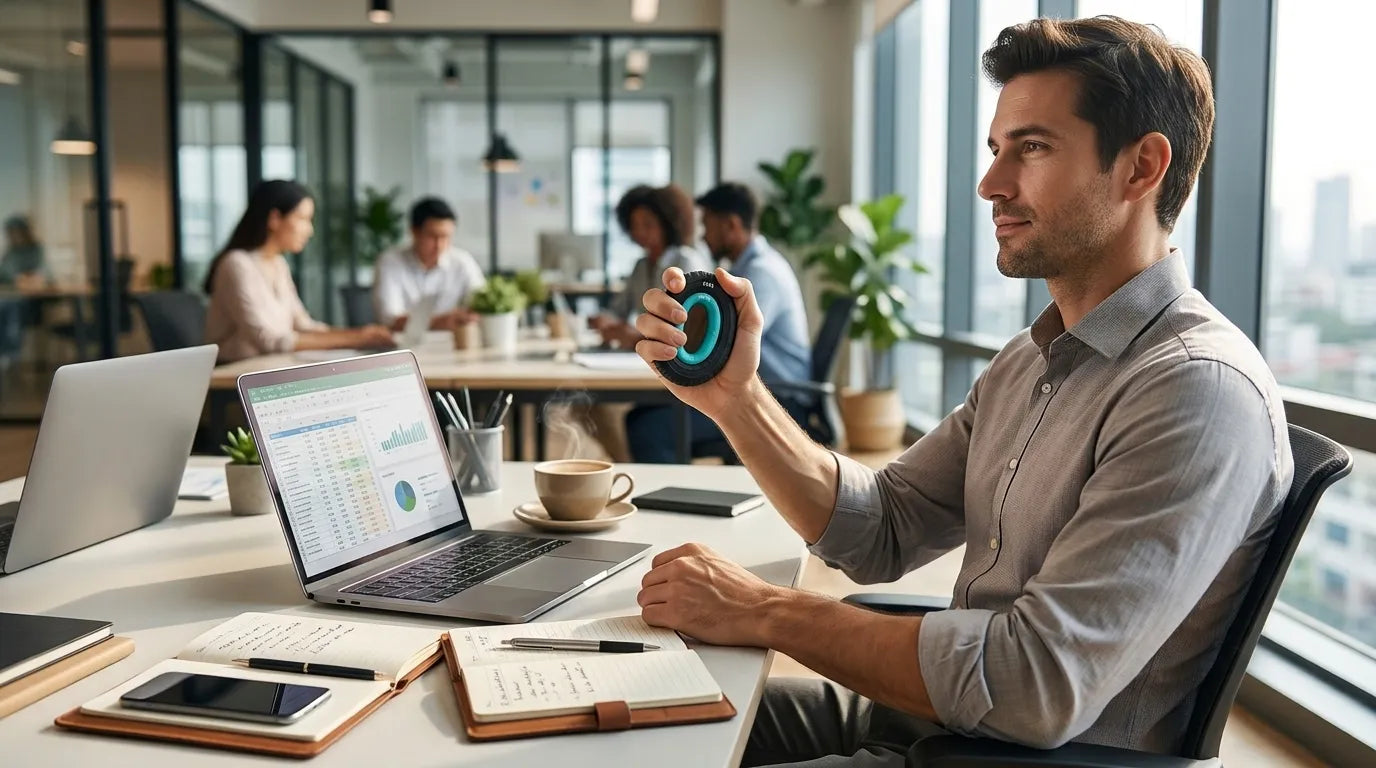
Have you ever looked at your schedule and thought, “I don’t have time to work out today”?
Between back-to-back meetings, long commutes, and endless screen time, finding 45 minutes for a dedicated workout can feel impossible. But building stronger hands and forearms doesn’t always require a gym session.
With simple grip strength exercises, you can train your hands during the small pockets of time that already exist in your day — while waiting for a meeting to start, sitting through a webinar, or standing in line.
These short hand grip training routines are designed to help improve crushing strength, muscular endurance, and overall hand performance with minimal equipment.
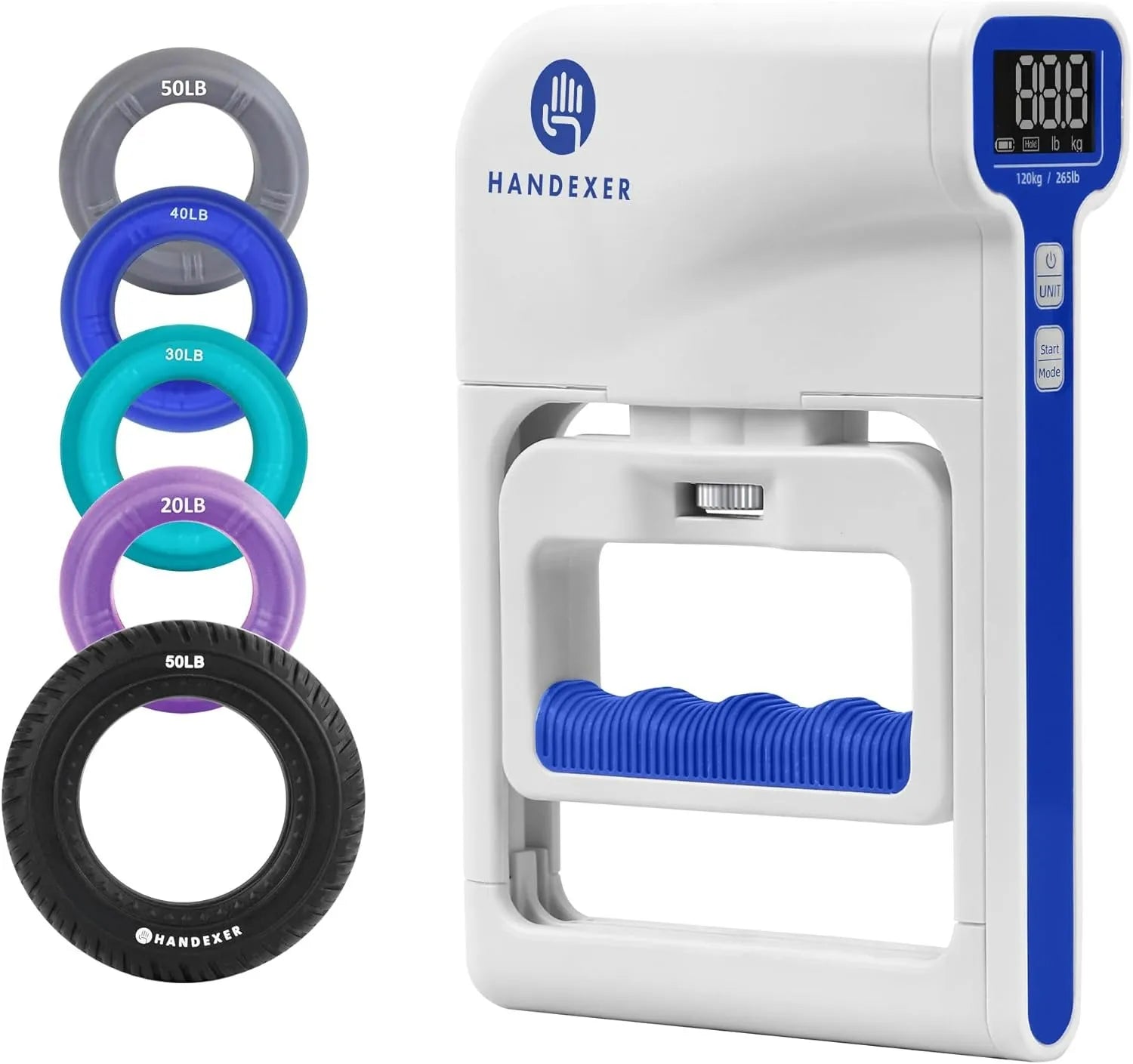
All you need are two portable tools:
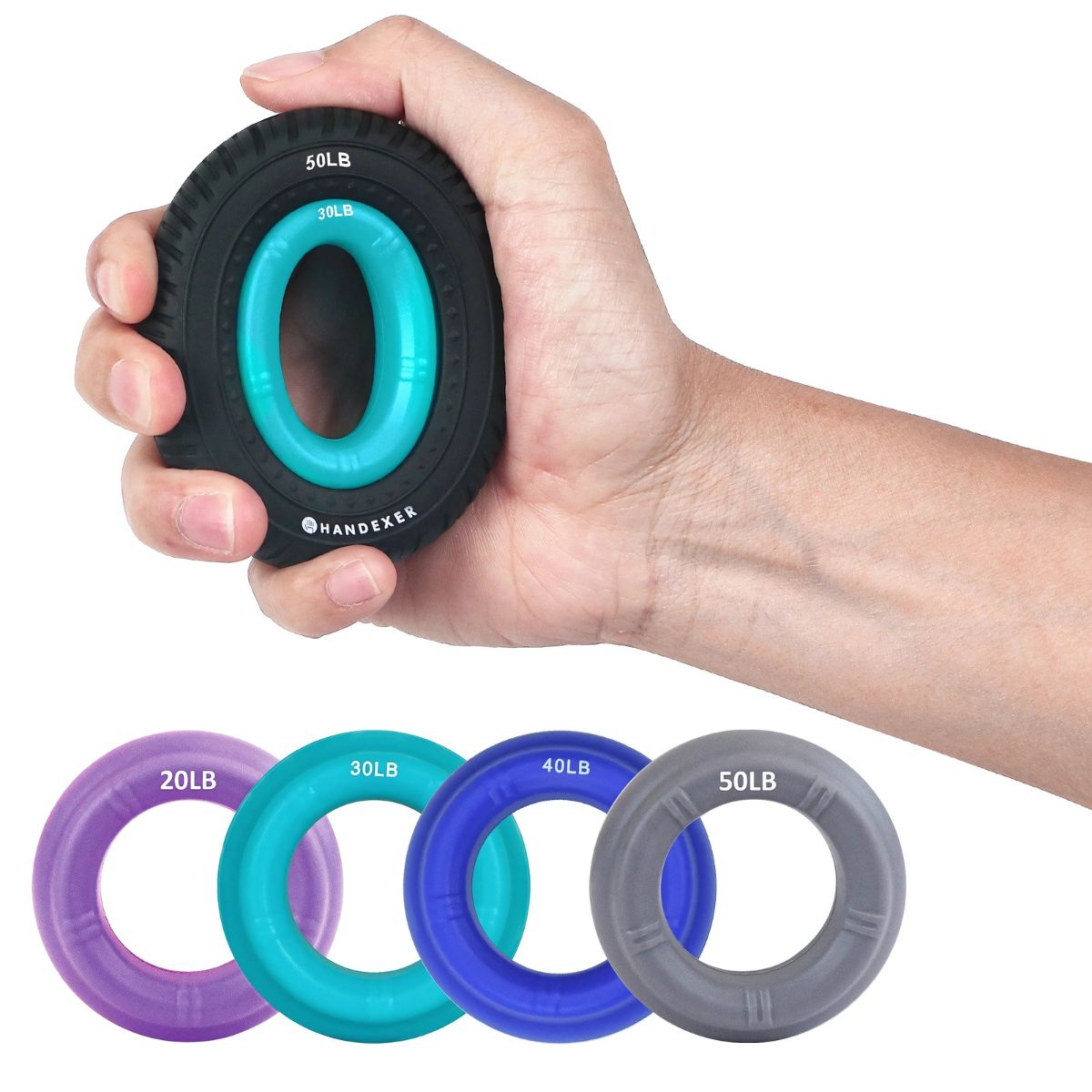
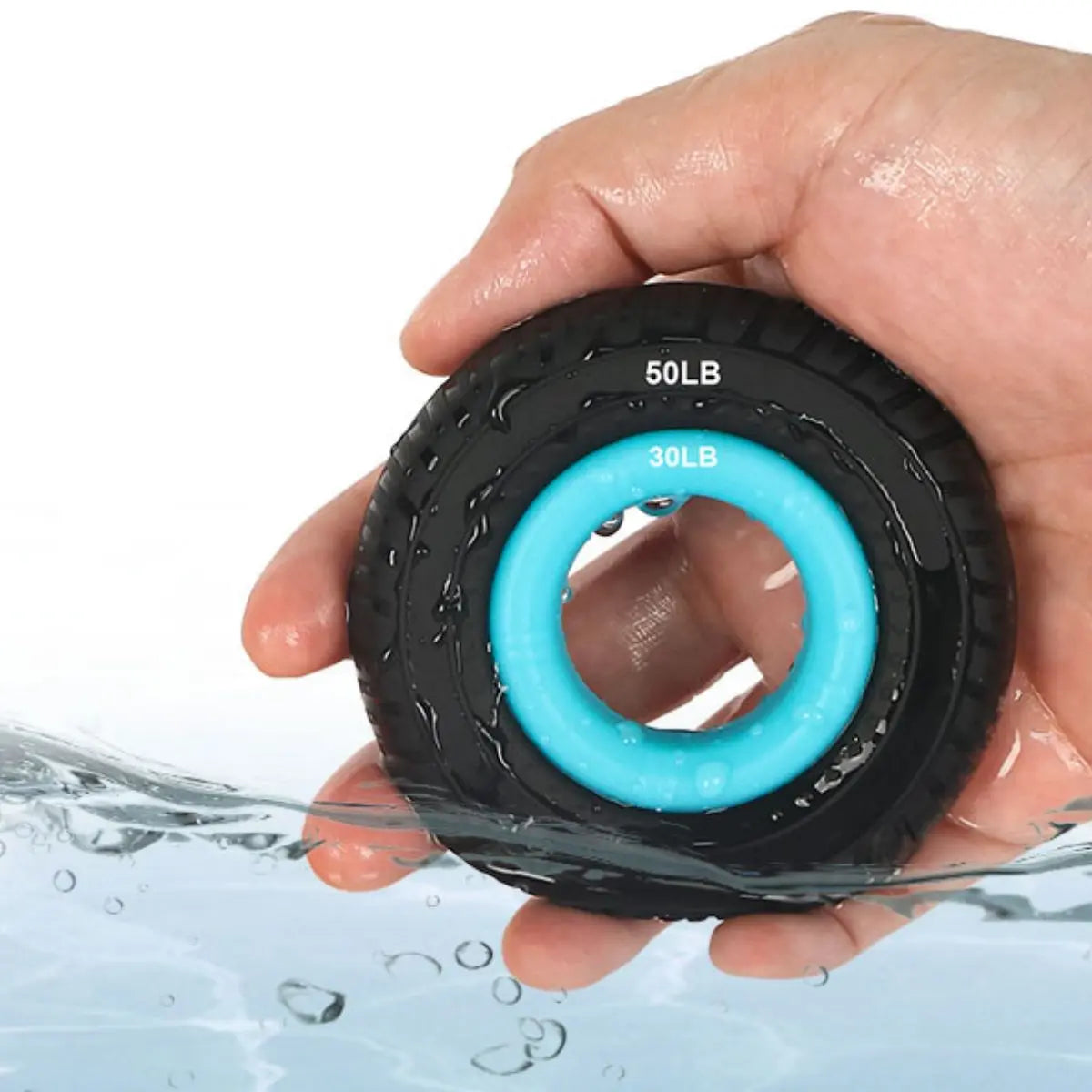
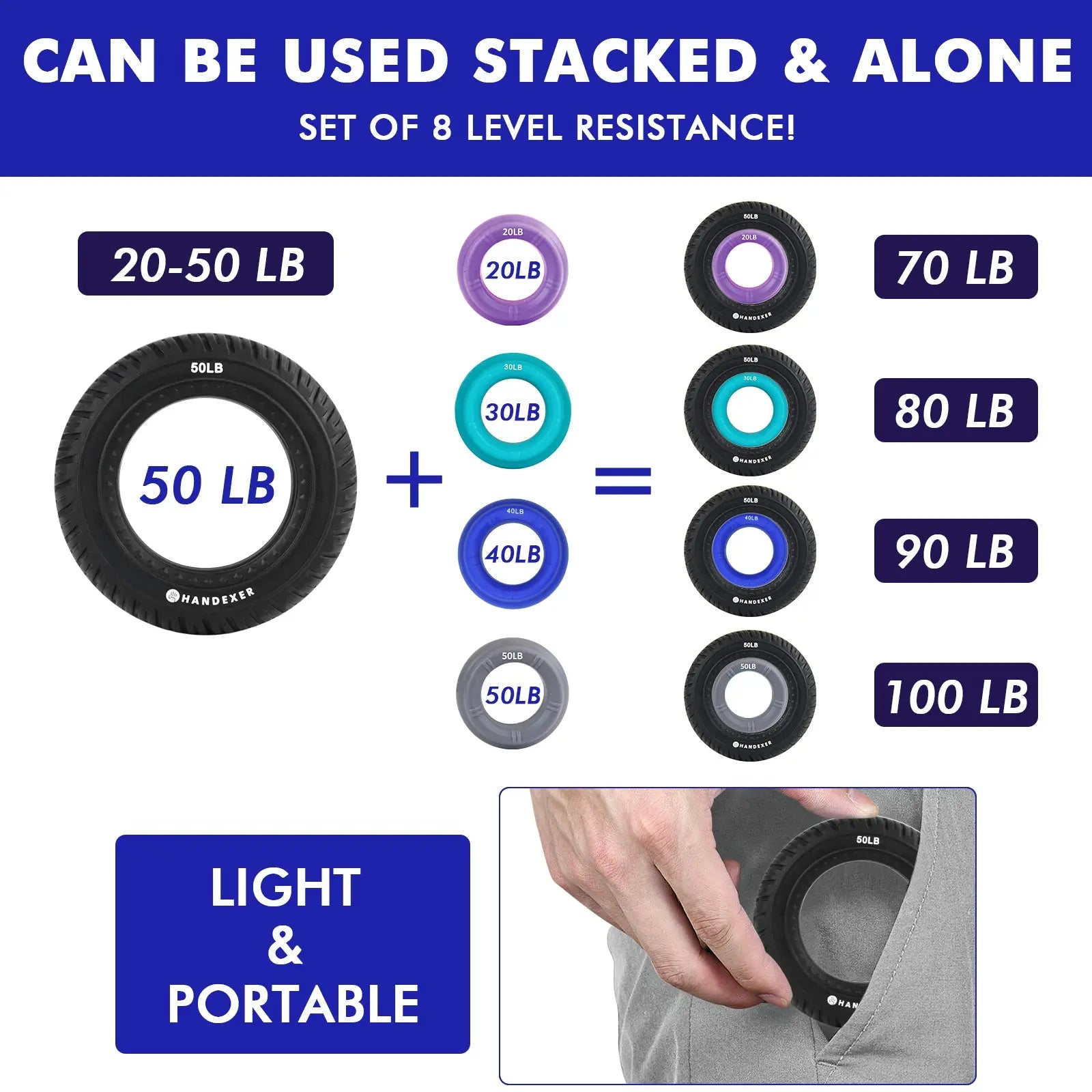
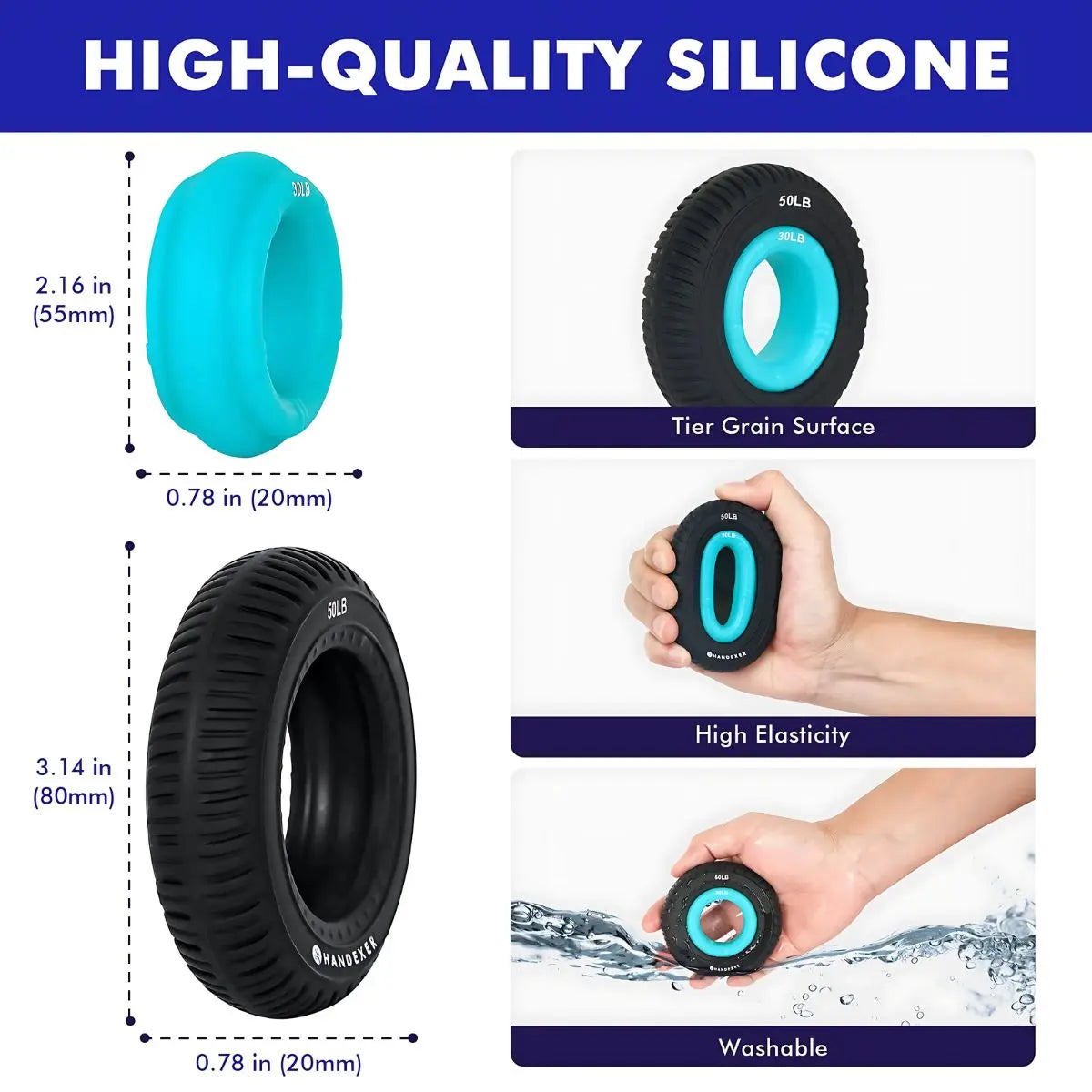
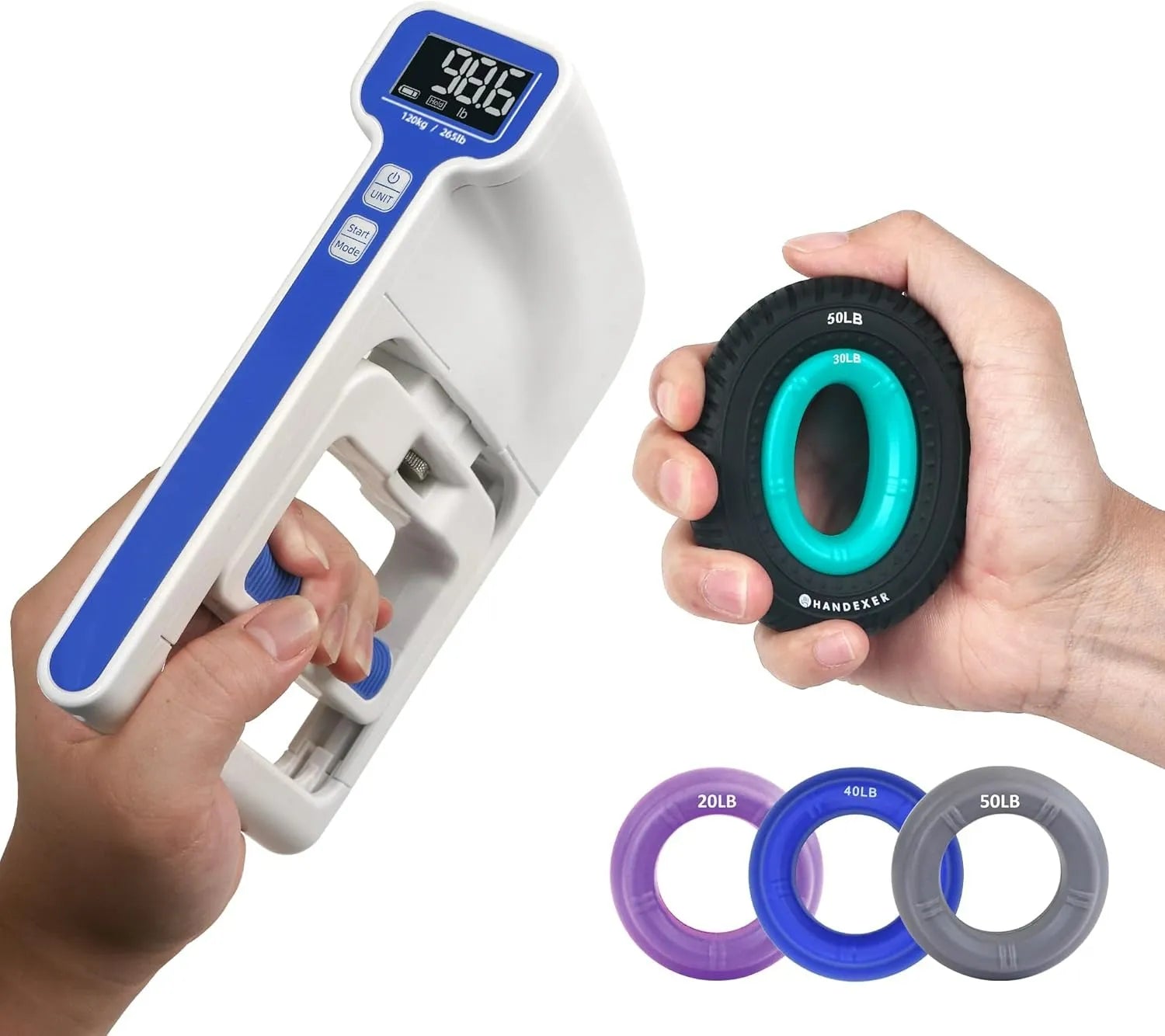
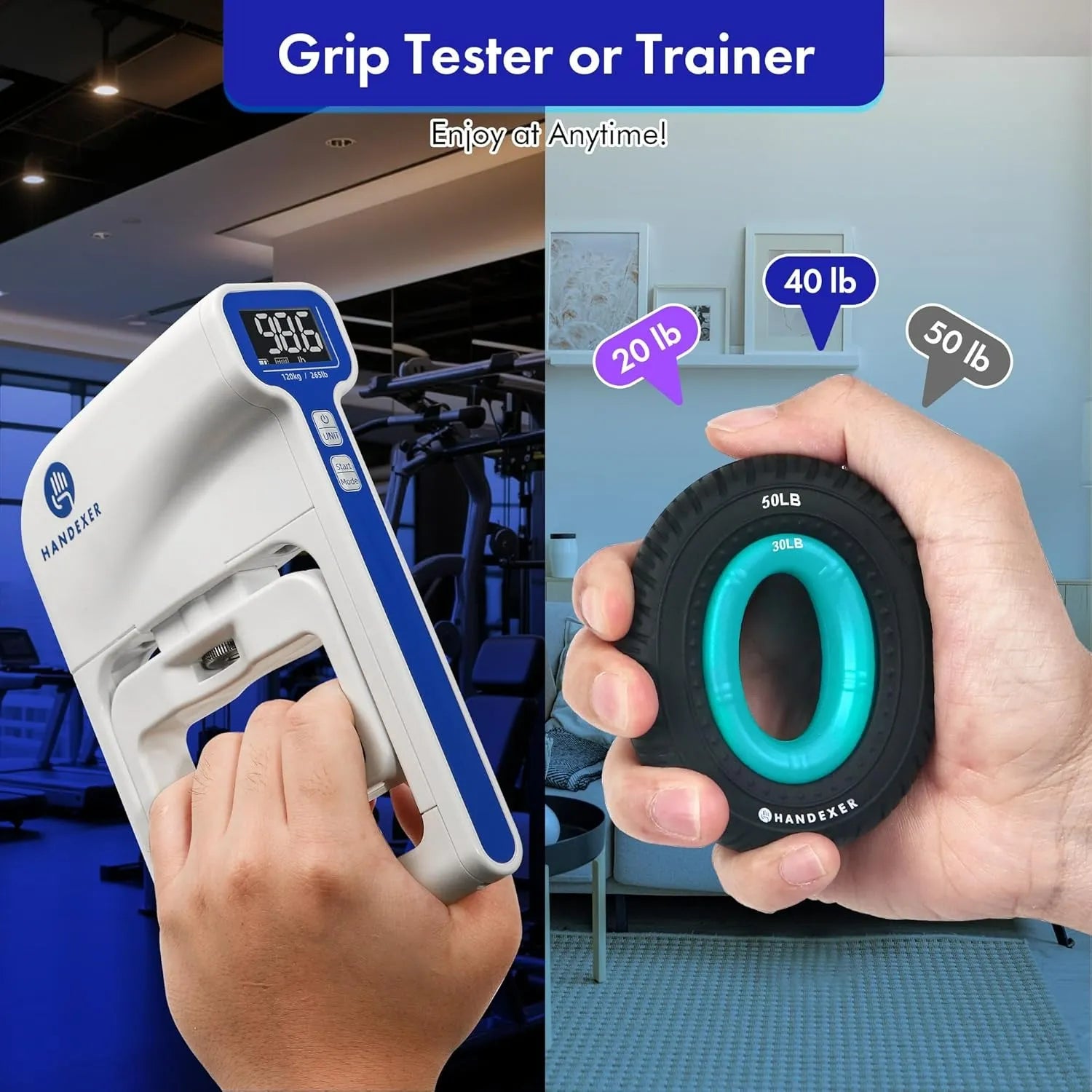
- A set of silicone grip rings for resistance training
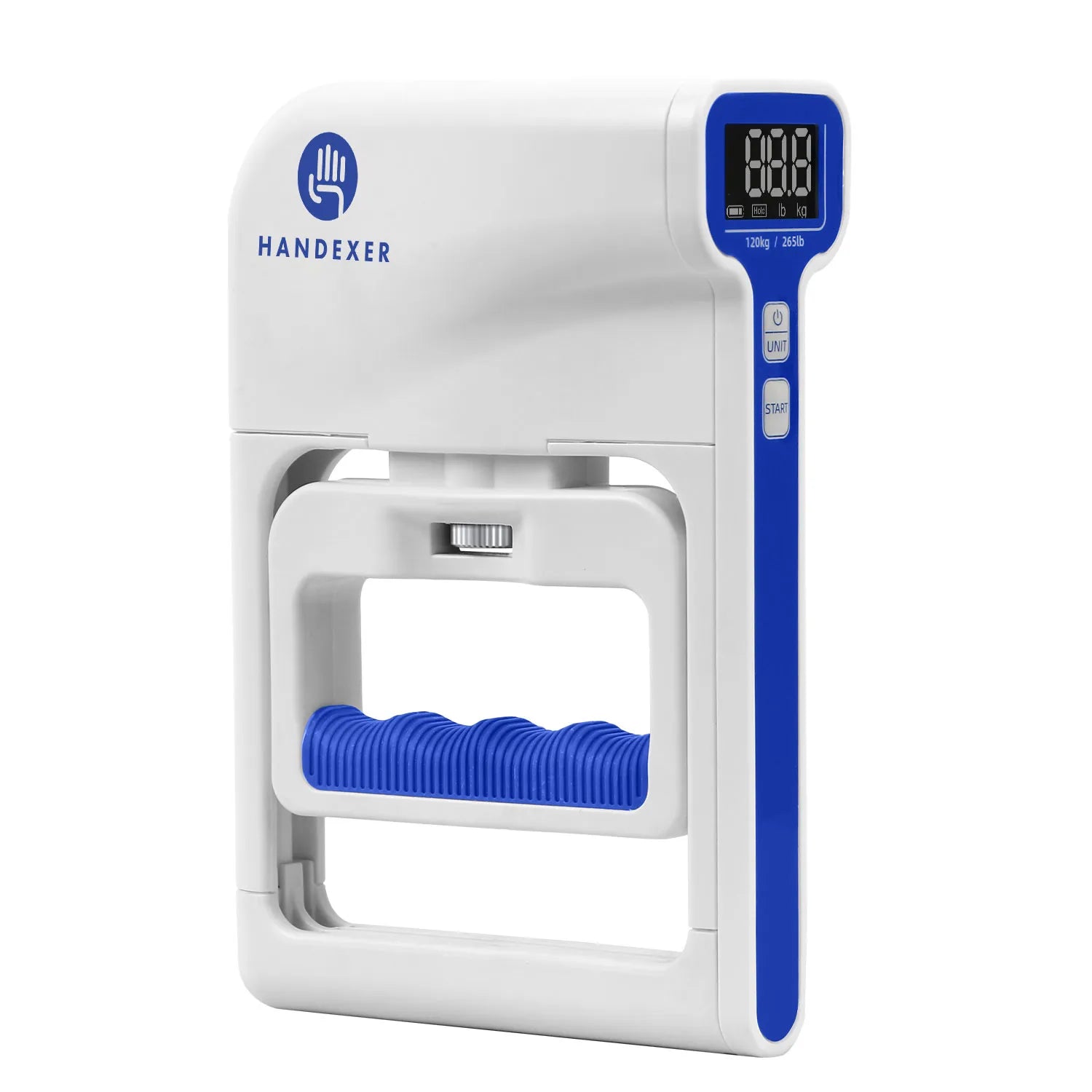
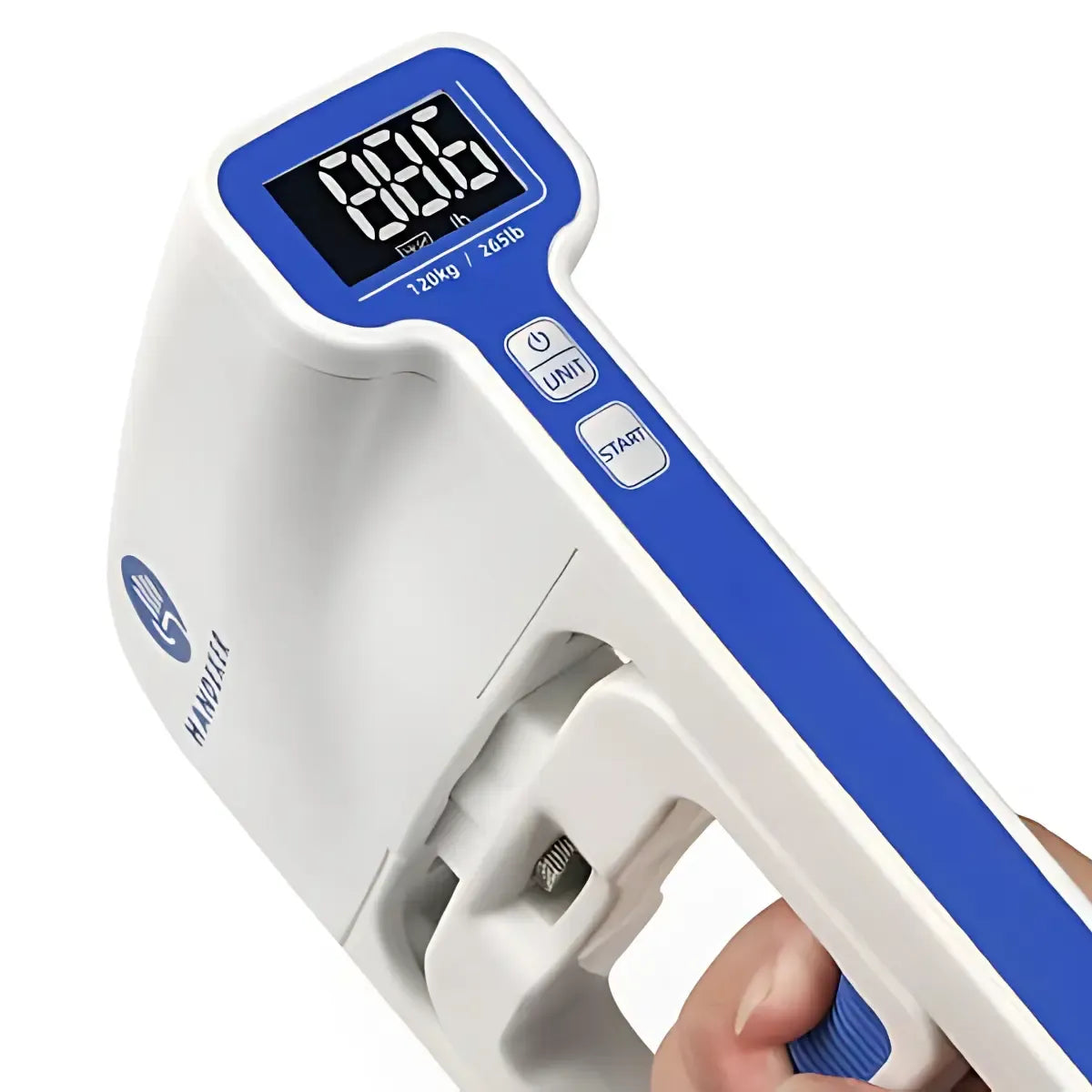
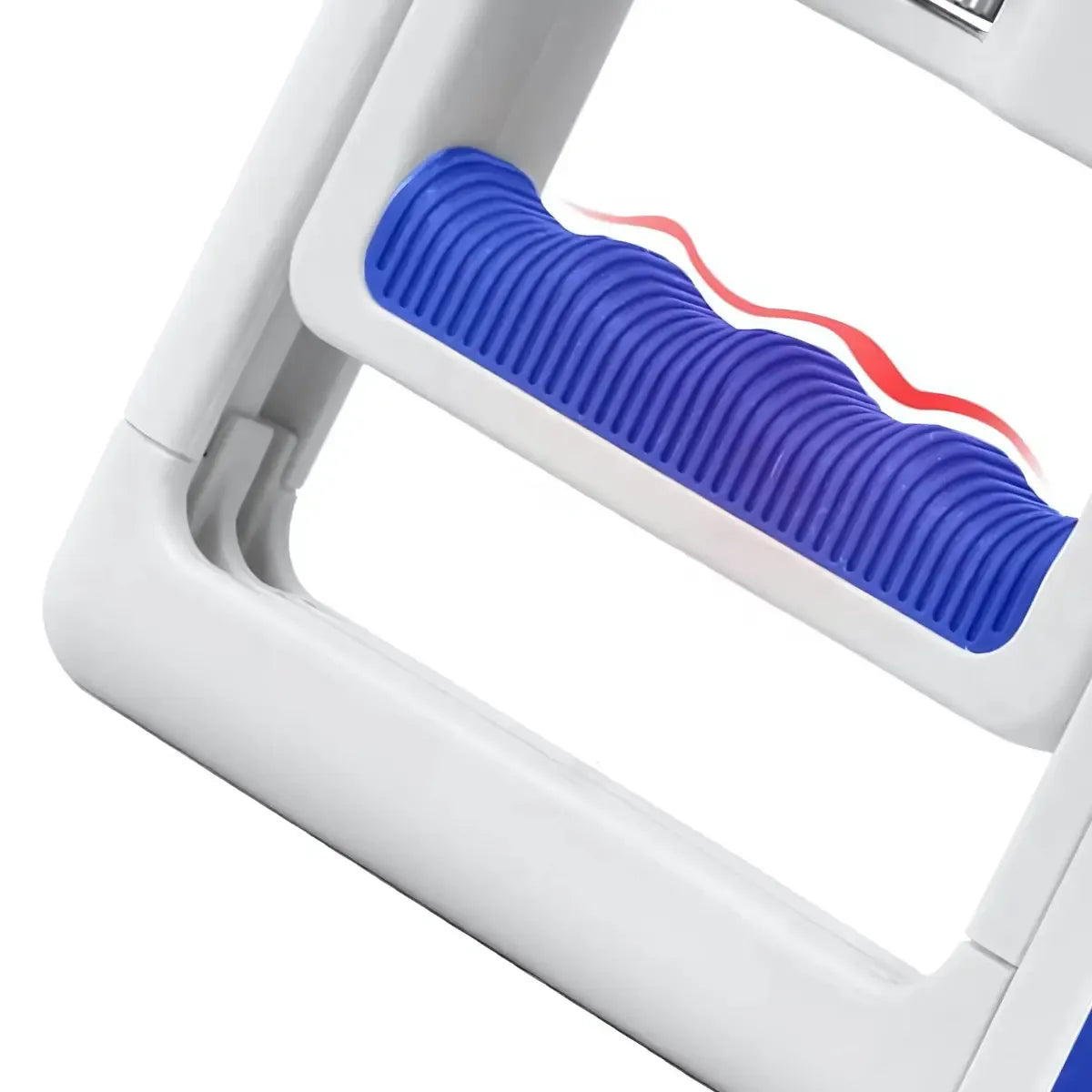
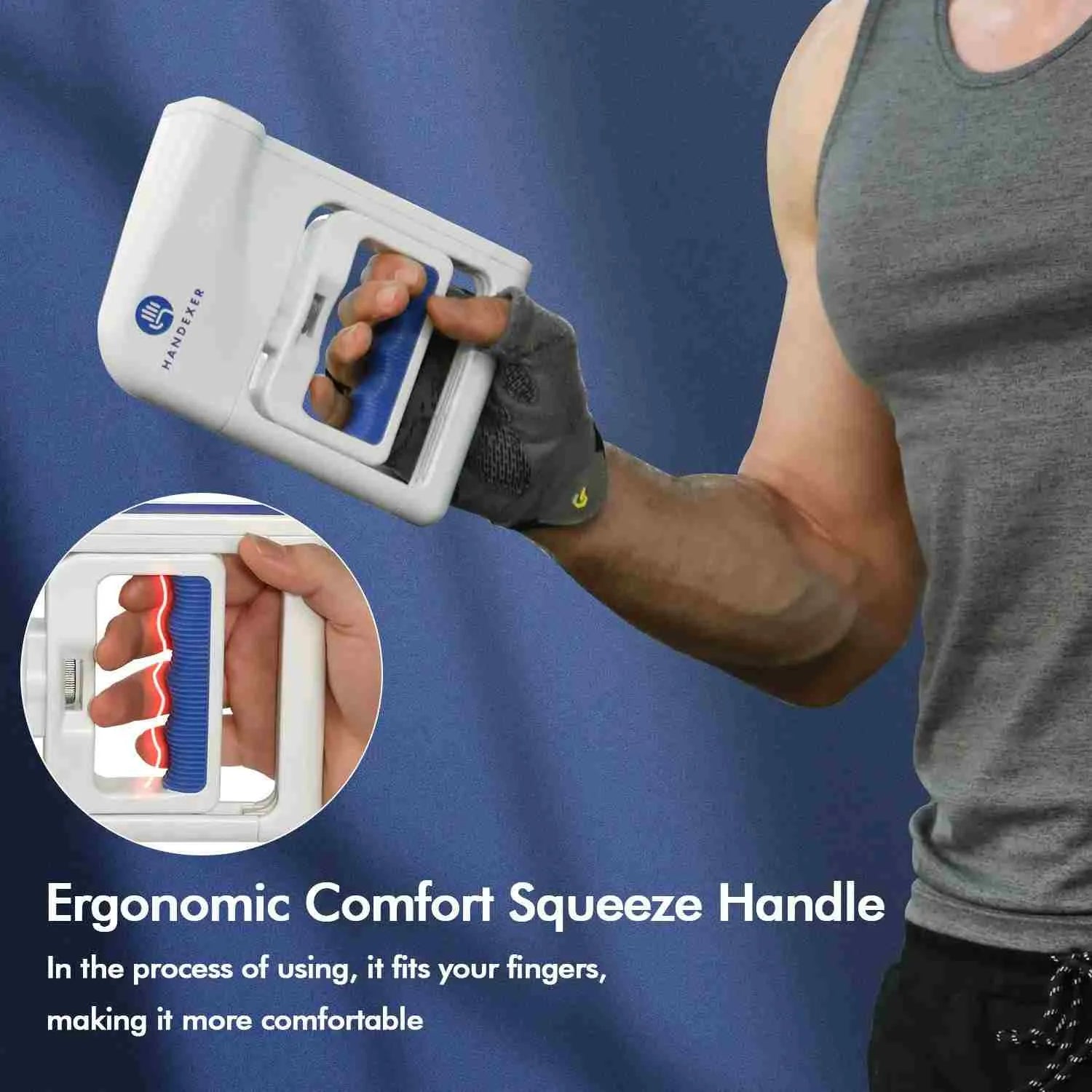
- A HANDEXER Digital Hand Dynamometer to measure your grip strength and track your progress over time
Why You Need to Improve Grip Strength (It’s Not Just About Muscles)
Before jumping into the routines, it’s crucial to understand why this training matters. Your grip is a fundamental pillar of daily physical capability and longevity:
- The Modern "Tech Hand" Strain: Spending hours typing on a keyboard, scrolling on a phone, or driving subjects your hands and forearms to constant, repetitive static strain. Regular hand grip training actively counteracts this muscle fatigue, restoring balance and joint mobility.
- The Athletic "Weakest Link": In the gym, your back, chest, or legs might be ready to lift heavier weights, but your hands often give out first during deadlifts, pull-ups, or rows. Stronger forearms ensure your grip is never the limiting factor in your athletic progress.
- A Biomarker of General Vitality: According to a landmark study published in The Lancet, grip strength is a highly reliable biomarker of overall muscular strength and physical health. Furthermore, research compiled by Harvard Health Publishing highlights that maintaining healthy hand strength is closely correlated with better functional mobility and active vitality as we age.
The HANDEXER Approach: Test, Train, Track, and Improve
To get real results, you need more than just random squeezing. True progress requires a simple, data-driven training loop that combines targeted grip ring exercises with the high-precision tracking of the HANDEXER Hand Dynamometer.
- TEST: Measure your baseline with the HANDEXER device
- TRAIN: Execute targeted, quiet grip ring exercises
- TRACK: Monitor daily fluctuations & muscular fatigue
- IMPROVE: Gradually increase resistance & set new PRs
Here are two highly discreet, practical routines designed to fit seamlessly into your daily schedule.
Routine 1: The "Muted Mic" Meeting Workout (At Your Desk)
- Best for: Video conferences, webinars, or long phone calls.
- The Goal: Build muscular endurance and relieve typing tension without making a sound.
When you’re on a call and don’t need to speak, hold and grip a 20-30lb resistance ring into your palm. Because these rings are completely silent, they’re perfect for multitasking in the office.
-
Exercise A: The Stealth Squeeze (Isometric Hold)
- How to do it: Squeeze the ring as tightly as you can and hold for 10 to 15 seconds. Release slowly under control.
- Volume: Do 5 reps per hand.
- Why it works: This is incredibly effective for building static endurance, training your muscles to maintain force over extended periods.
-
Exercise B: The Pulse
- How to do it: Rapidly squeeze and release the ring at a steady pace for 30 seconds.
- Volume: 3 sets per hand.
- Why it works: It pumps fresh, oxygenated blood into the fingers and wrists, actively flushing out stiffness caused by hours of typing.
Routine 2: The "Red Light" Commute Challenge (On the Go)
- Best for: Traffic stops, waiting for the subway, or standing in line.
- The Goal: Develop rapid, explosive crushing power.
-
Exercise: The Explosive Crush
- How to do it: Using a higher-resistance grip ring, squeeze the ring shut as fast and hard as possible. Hold for just 1 second, then let it spring back under control.
- Volume: Perform 8 to 10 explosive squeezes per hand before the light turns green.
- Why it works: This fast-paced training targets the fast-twitch muscle fibers in your forearms, helping you build raw crushing strength.
How to Track and Gamify Your Progress
The secret to staying consistent is keeping an honest eye on your data.
The HANDEXER Hand Dynamometer acts as the command center for your training. It is not a medical device; rather, it is a high-precision, digital fitness tracker designed to give you an objective, clear look at your daily physical performance.
| Weekly Plan | Activity | Goal |
|---|---|---|
| Monday Baseline | 1 Max Squeeze test | Establish your fresh physical baseline |
| Mid-Week Squeezes | Micro-workouts with grip rings | Build muscular endurance & active recovery |
| Friday Check-in | 1 Max Squeeze test | Monitor performance trends & weekly fatigue |
Setting Up Your Tracking Loop:
- Establish Your Baseline: Every Monday morning, before starting your work week, squeeze your digital hand dynamometer to record your maximum grip strength in pounds or kilograms.
- Monitor Weekly Fatigue: A study published in the Journal of Clinical Medicine notes that grip strength is a sensitive proxy for central nervous system (CNS) fatigue. If you notice your mid-week numbers drop by more than 10-15%, your body or nervous system may be fatigued from heavy workouts or poor sleep. Switch to lighter, high-rep pulsing exercises to encourage blood flow and recovery.
- Gamify Your Consistency: Invite a friend or coworker to join. Compare your baseline measurements weekly and track who makes the most consistent progress over 30 days. Friendly competition makes building a healthy habit effortless!
FAQ
Ready to Measure Your Grip Strength?
Before you start any hand grip training, knowing your baseline gives you a clear and honest starting point. Real progress requires accurate tracking, and you can’t manage what you don’t measure.
The HANDEXER Digital Hand Dynamometer helps you measure your maximum squeeze force, track your progress, and accurately monitor how your performance changes over time. Whether your goal is building stronger hands for fitness, improving grip endurance for sports, or simply turning your daily office downtime into productive training time, your first step is exactly the same.
Take your baseline measurement today, discover your true starting numbers, and start tracking your path toward a stronger grip!






Share:
From Visceral Fat to Insulin Sensitivity: How the Number in Your Palm Reveals Your Metabolic Age
Why is One Hand Stronger Than the Other? How to Fix Grip Strength Imbalance Safely