
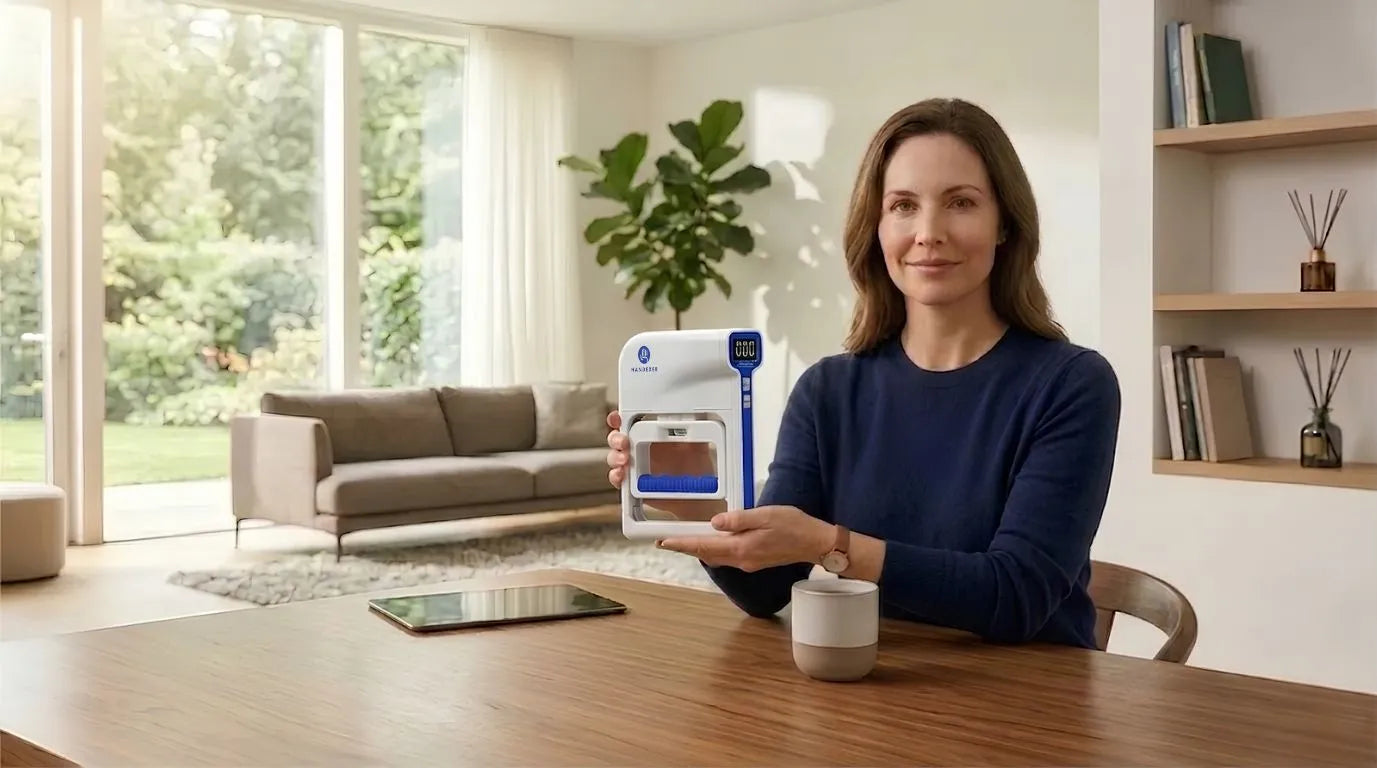
When you pick up a hand dynamometer for the first time, the first question is almost always: “Is this score good?”
You likely head to Google or Reddit, find a color-coded chart, and see where you land. But if you look closely, you’ll notice a problem. One chart tells you 40kg is “Elite” for a 60-year-old, while another suggests it’s merely “Average.”
At Handexer, we believe that assessment is the first step toward improvement. To measure clearly, you need to understand what the numbers actually represent. Let’s look at the truth behind grip strength norms, why the statistics often conflict, and how your score may reflect far more than hand strength alone.
Why Do Grip Strength Statistics Keep Changing?
If you feel like grip strength “norms” are moving targets, you are not imagining it. Most standardized grip strength charts are based on different population studies conducted across different decades, occupations, and testing protocols.
The Decade Gap
Many widely referenced grip strength charts still rely on data collected in the 1980s and 1990s. However, researchers have observed a measurable decline in average muscular strength over time, likely influenced by:
- More sedentary lifestyles
- Reduced manual labor
- Increased screen-based work
- Lower daily hand loading demands
A healthy 25-year-old today may demonstrate significantly lower hand strength than someone of the same age forty years ago.
According to multiple aging and sarcopenia studies, grip strength naturally declines after age 40, with the rate of decline accelerating in later decades.
Average Grip Strength by Age
While no chart is universally perfect, modern clinical ranges provide a more realistic benchmark for healthy adults.
Approximate Average Grip Strength Ranges
| Age Range | Men | Women |
|---|---|---|
| 20–29 | 46–52 kg | 29–34 kg |
| 30–39 | 45–50 kg | 27–32 kg |
| 40–49 | 40–47 kg | 24–30 kg |
| 50–59 | 37–43 kg | 22–27 kg |
| 60–69 | 32–39 kg | 18–24 kg |
| 70+ | 25–33 kg | 15–20 kg |
These values vary depending on:
- Body size
- Occupation
- Physical activity
- Injury history
- Testing protocol
The key takeaway is not whether your score is “elite,” but whether your strength is stable, improving, or declining over time.
At Handexer, we encourage users to focus on longitudinal tracking rather than single-score comparison.
Beyond the Gym: Grip Strength as a Health Marker
At Handexer, we view grip strength not simply as a fitness stat, but as a measurable hand health indicator.
Medical researchers often refer to grip strength as a “prognostic vital sign.”
Large-scale studies have linked low grip strength with:
- Reduced mobility
- Higher fall risk
- Lower bone density
- Cardiovascular health concerns
- Increased all-cause mortality risk
A major international study published in The Lancet found that grip strength was a stronger predictor of premature mortality than systolic blood pressure in some populations.
This is why grip assessment matters beyond sports performance. Your hands often reflect broader neuromuscular health, recovery capacity, and aging resilience.
Why Left and Right Hand Differences Matter
Many people notice that one hand consistently scores higher than the other.
A small imbalance is normal:
- Your dominant hand is typically 5–10% stronger.
However, a larger asymmetry may indicate:
- Previous injury
- Reduced nerve function
- Compensation patterns
- Early functional decline
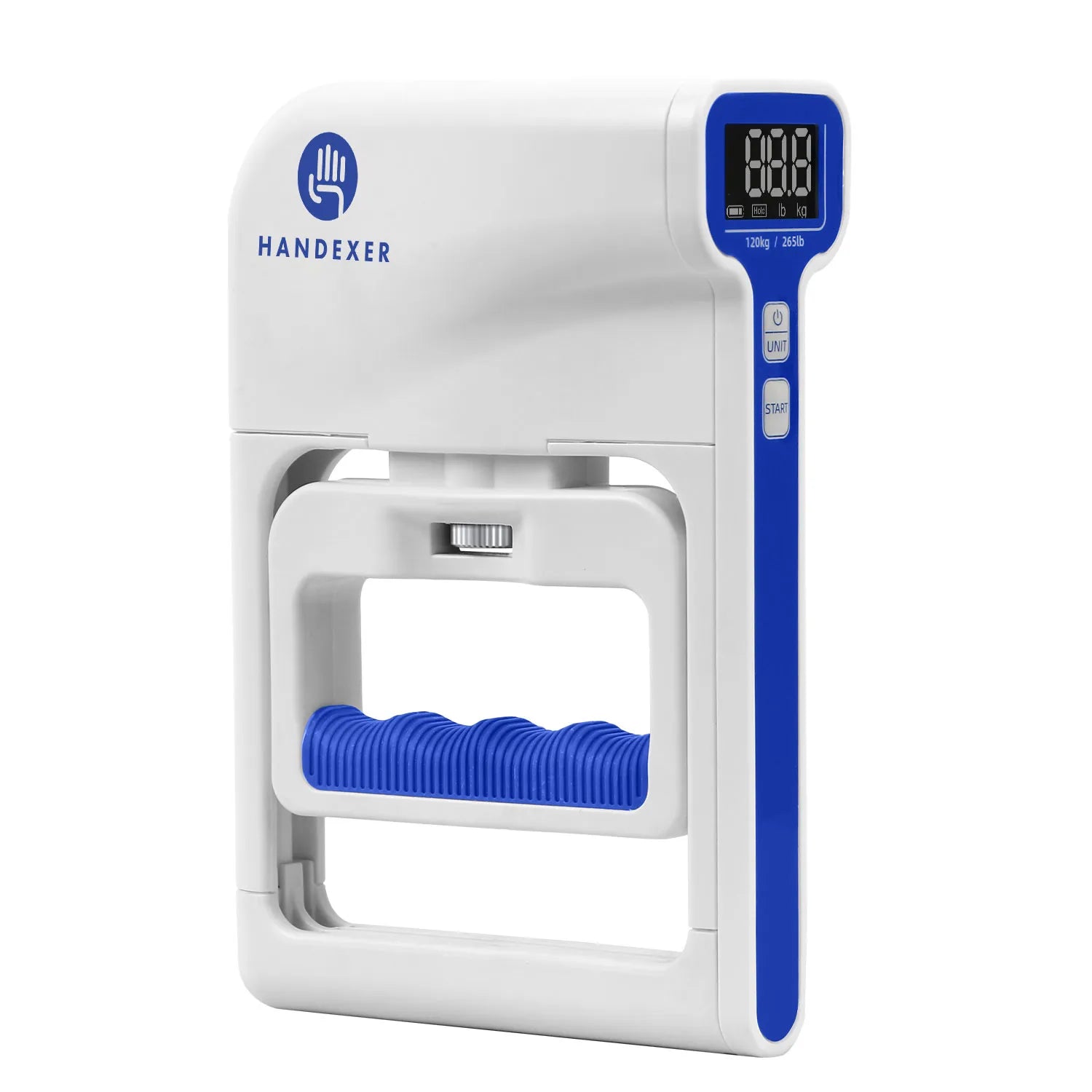
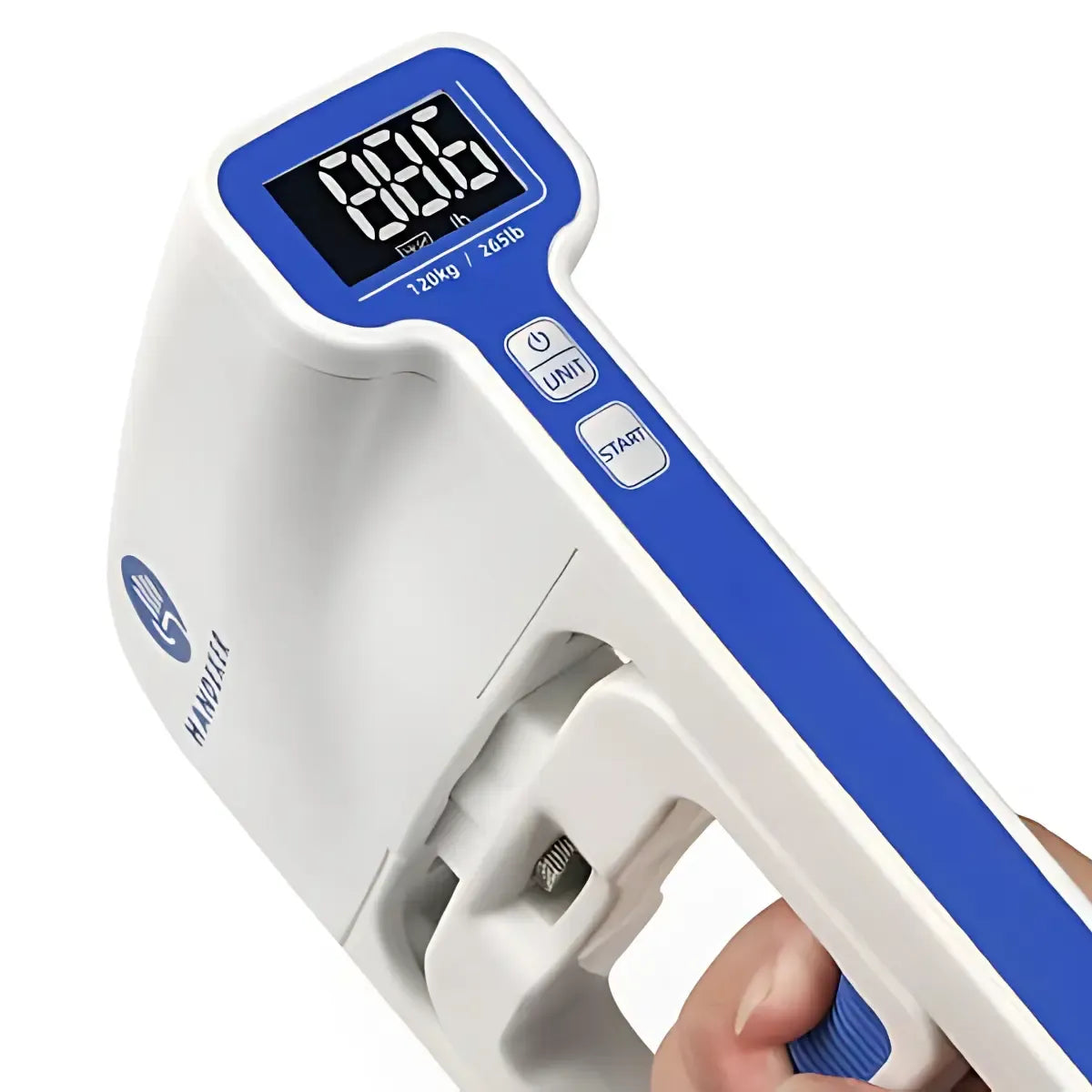
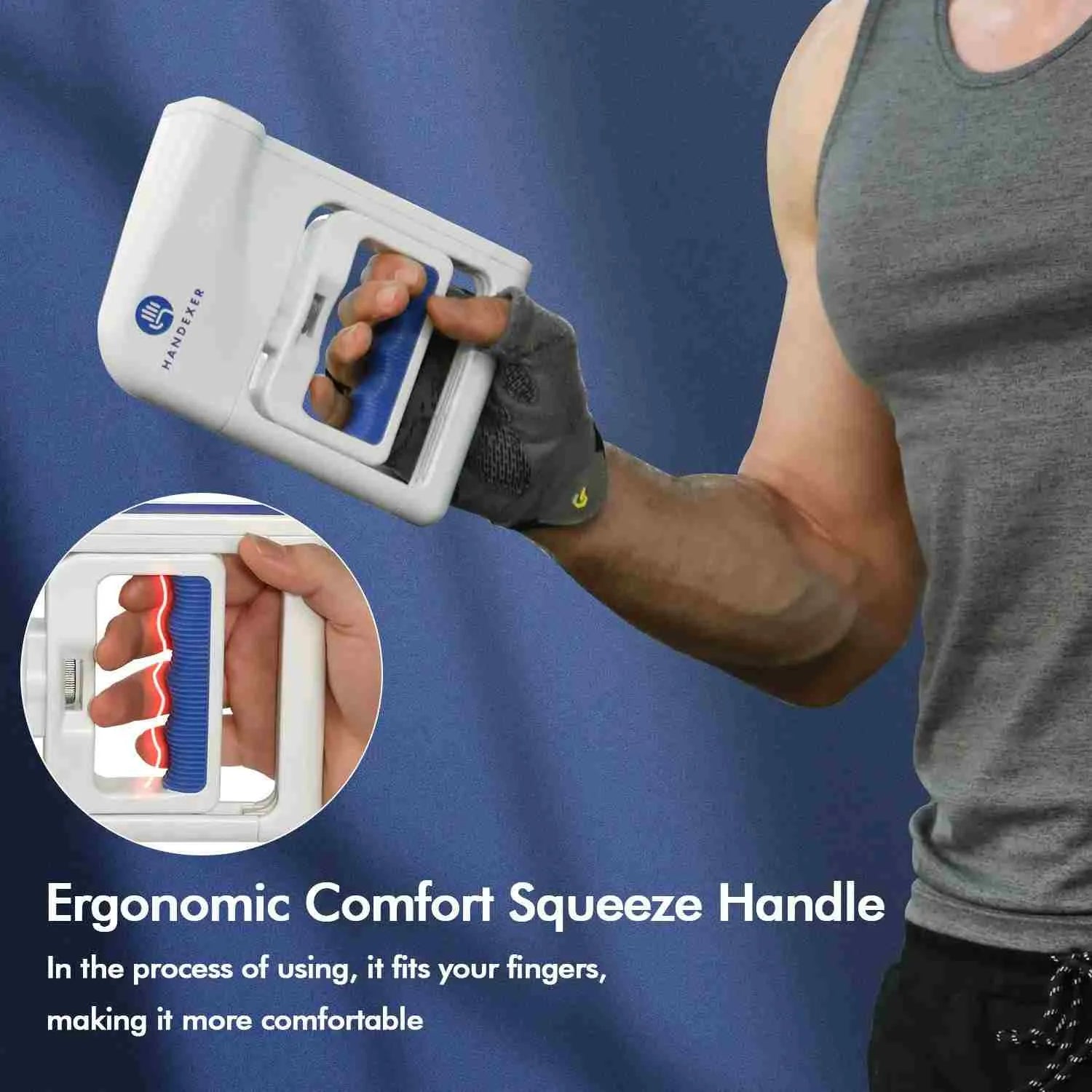
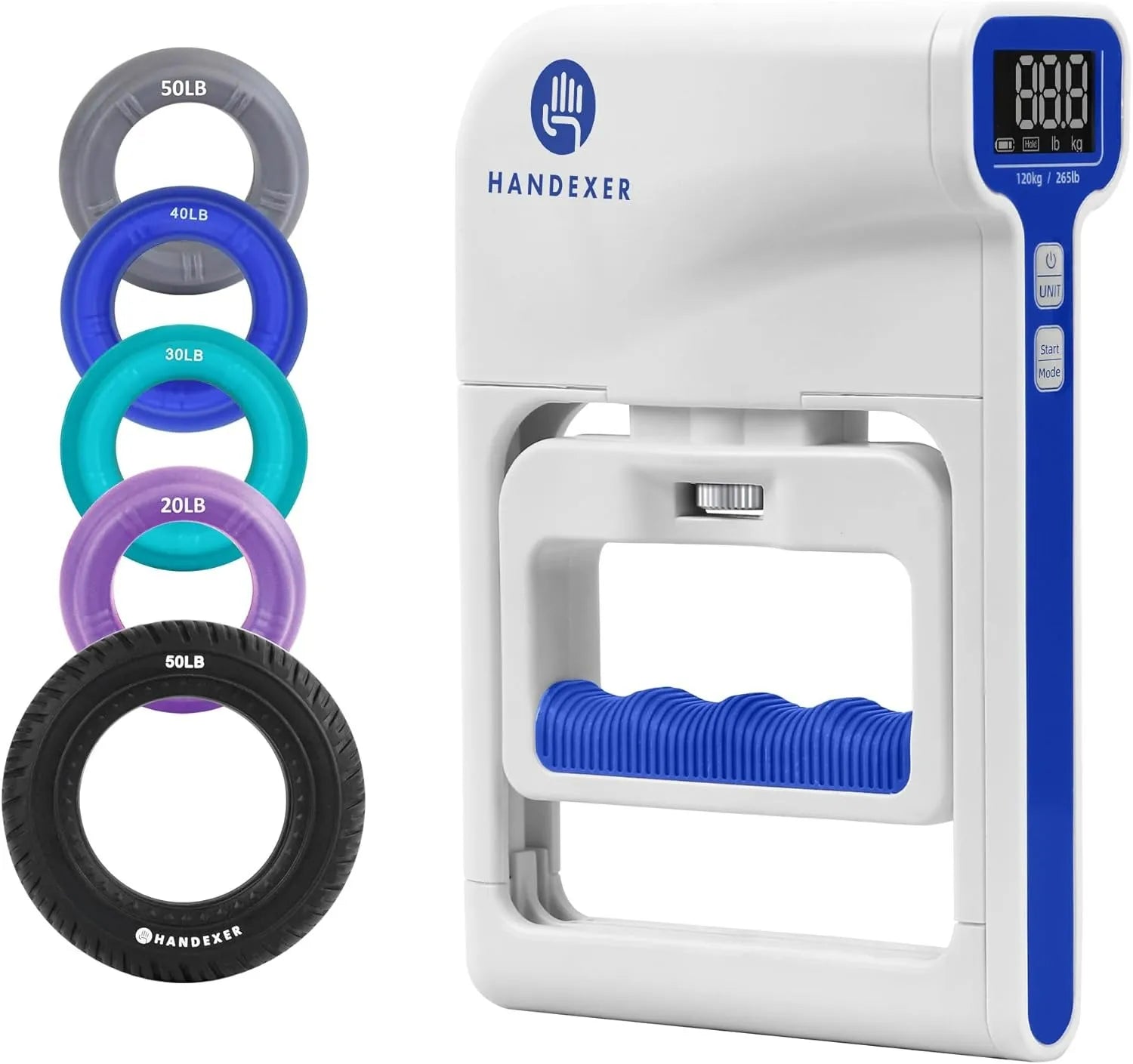
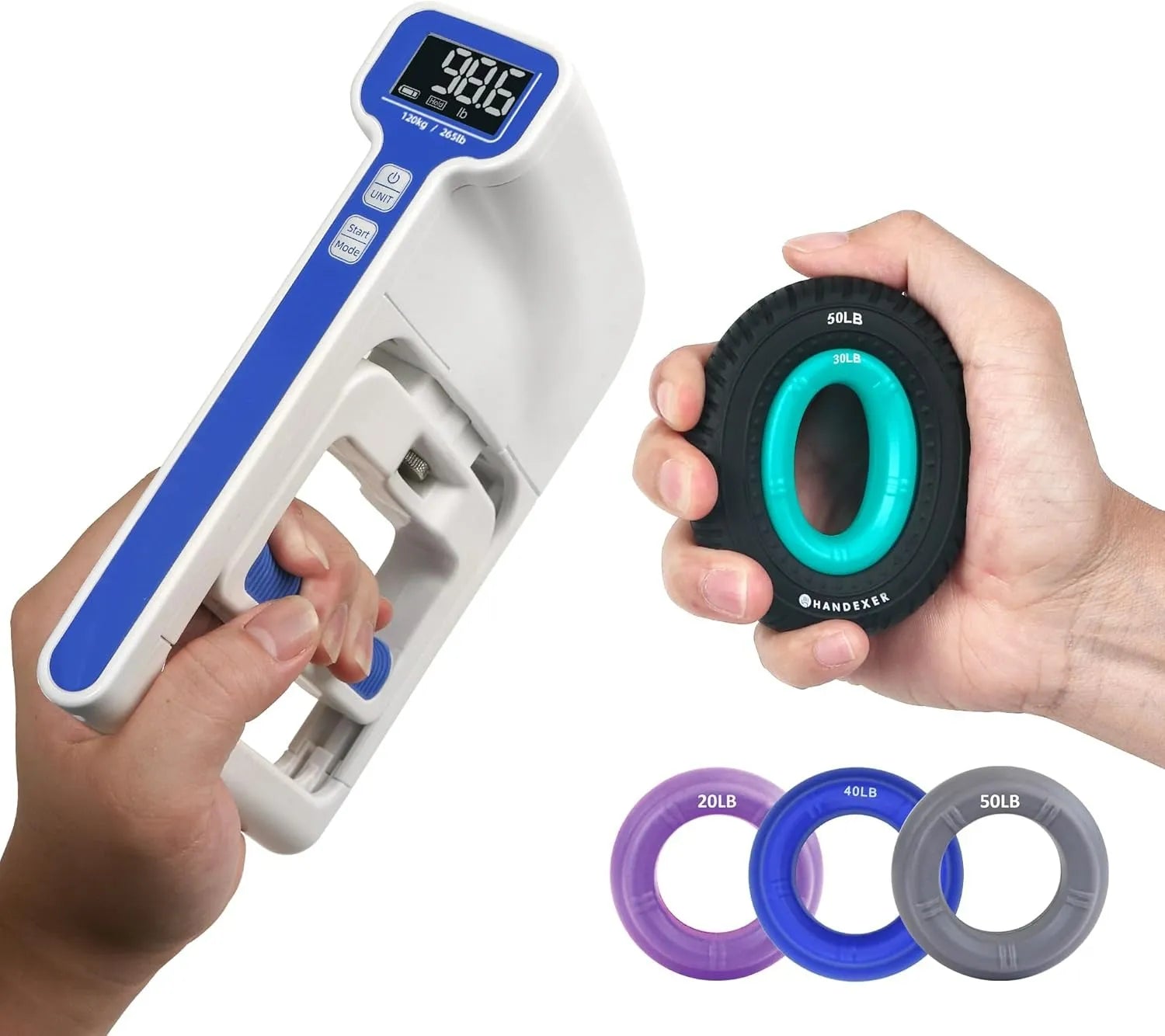
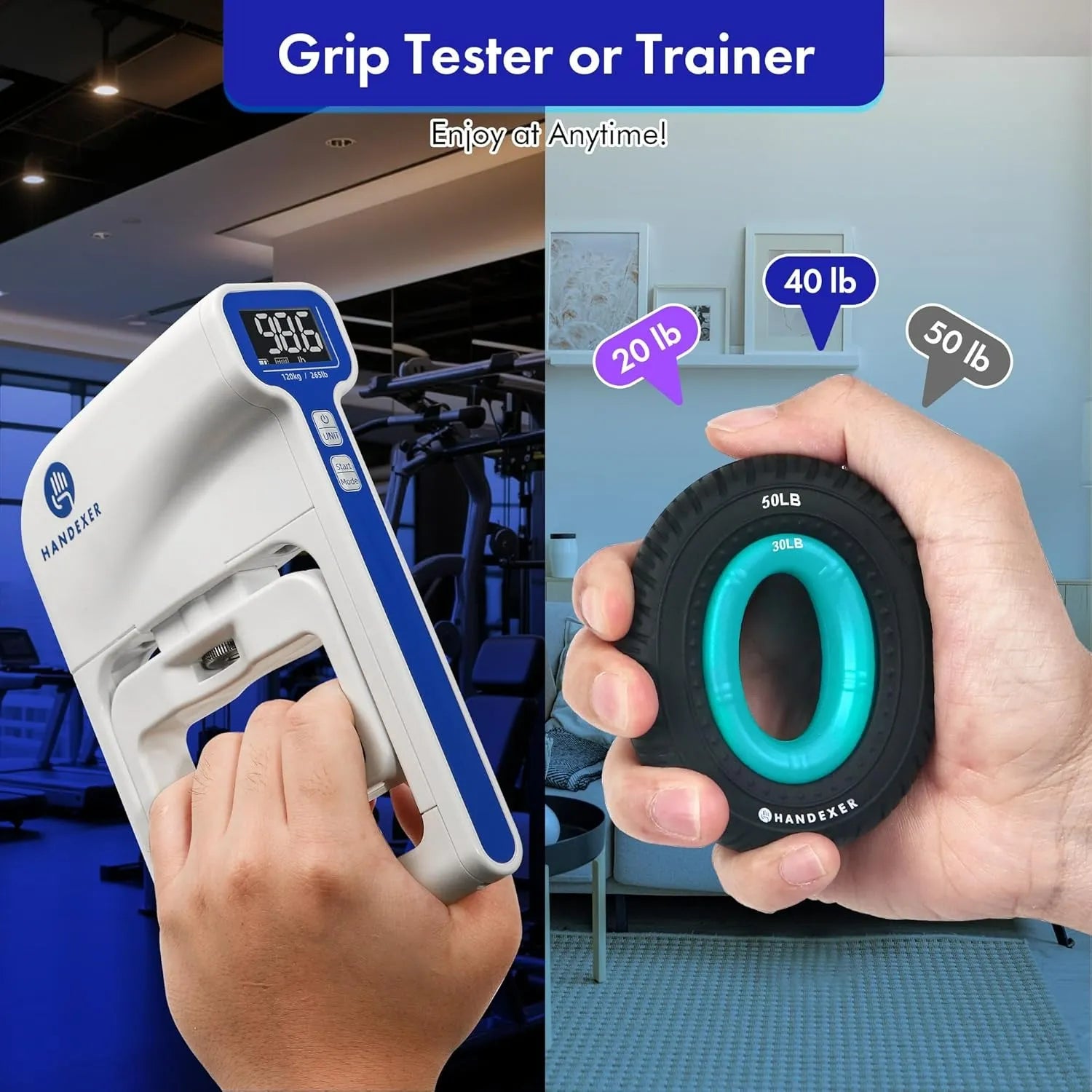
Using a professional digital hand dynamometer, you can monitor:
- Dominant vs non-dominant strength
- Fatigue trends
- Recovery progression
- Monthly performance changes
Tracking asymmetry over time is often more valuable than comparing yourself to internet charts.
Assessment, Not Just Competition
The goal of knowing the “norms” should not be to win a competition online.Instead, use grip strength data to:
Assess
Identify whether your hand function is below expected ranges for your age.
Track
Monitor changes in strength across months or years.
Recover
Use age-adjusted benchmarks to guide rehabilitation after injury or surgery.
Improve
Build stronger long-term hand function through consistent training and recovery work.
If your score today is lower than expected, that is not a verdict — it is simply a starting baseline.
How to Get an Accurate Grip Strength Assessment at Home
To understand your true grip strength level, consistency matters more than maximum effort alone.
Using a professional digital hand dynamometer, follow this testing protocol:
1. Standardize Your Position
- Sit comfortably
- Keep your elbow at a 90-degree angle
- Avoid swinging or compensating with your shoulder
2. Test at the Same Time of Day
Grip strength fluctuates due to fatigue, hydration, sleep, and nervous system readiness.Consistent timing improves data reliability.
3. Use Multiple Trials
Perform three squeezes per hand and record the average.Single attempts are often misleading.
4. Track Trends Over Time
A single score matters less than the direction of change.
At Handexer, we recommend:
- Weekly testing for recovery monitoring
- Monthly testing for general health tracking
- Quarterly benchmarking for long-term performance assessment
Grip Strength and Longevity
Grip strength has become one of the most discussed markers in longevity and healthy aging conversations.
Why?
Because strength loss is often one of the earliest signs of declining physical resilience.
Lower grip strength is commonly associated with:
- Frailty
- Reduced independence
- Slower recovery capacity
- Lower overall muscular function
This is why grip training is increasingly included in:
- Healthy aging programs
- Physical therapy protocols
- Functional fitness systems
- Recovery-focused exercise plans
If you are interested in long-term hand function and resilience, you may also explore:
Together, these create a more complete picture of functional hand health.
Hand Health FAQ
Q1: Why do my left and right hands have different scores?
A: It is normal for your dominant hand to be slightly stronger. However, a gap larger than 15–20% may suggest weakness, compensation, or recovery limitations that deserve attention.
Q2: Can I improve my grip strength at any age?
A: Yes. Research consistently shows that grip strength responds well to progressive training, even in older adults. With regular assessment and structured exercise, many people improve measurable hand function within weeks.
Q3: Is a digital dynamometer better than a manual one?
A: Digital dynamometers offer:
- Higher precision
- Easier progress tracking
- Better repeatability
- Clearer trend visualization
This makes them especially useful for long-term hand health monitoring.
Start With a Baseline — Then Track the Trend
Instead of worrying whether you are “above average,” ask a more important question: “Is my hand strength improving, stable, or declining?”
That answer tells you far more about your long-term functional health.Ready to test your baseline?
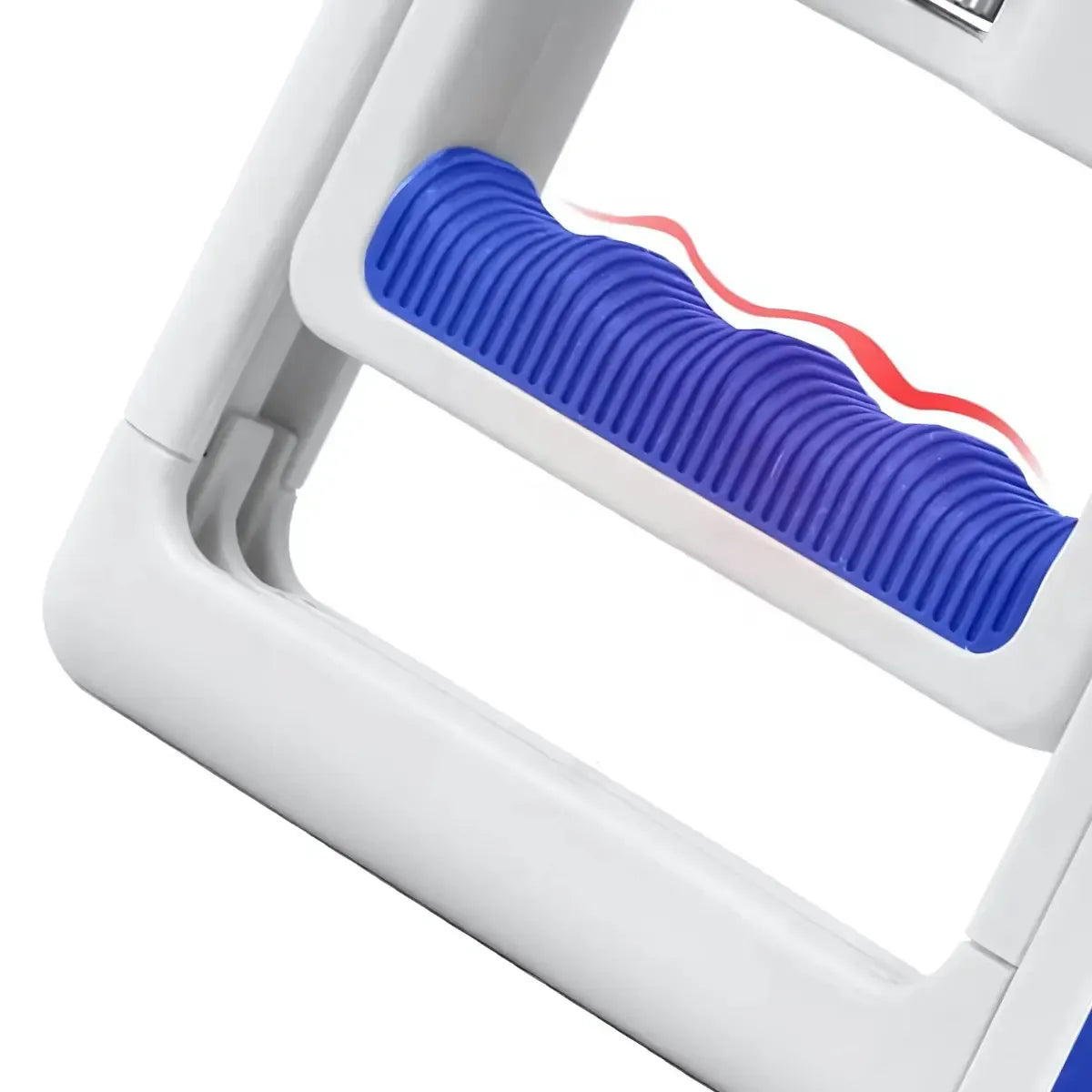
Explore the Handexer Professional Assessment Series and begin tracking your grip strength, recovery, and hand health progress with confidence over the next 30 days.






Share:
Starting Grip Strength Training at 45: Why Longevity Begins in Your Hands
Assessment Starts with Precision: How to Choose the Right Grip Strength Tester (Hand Dynamometer Guide)