
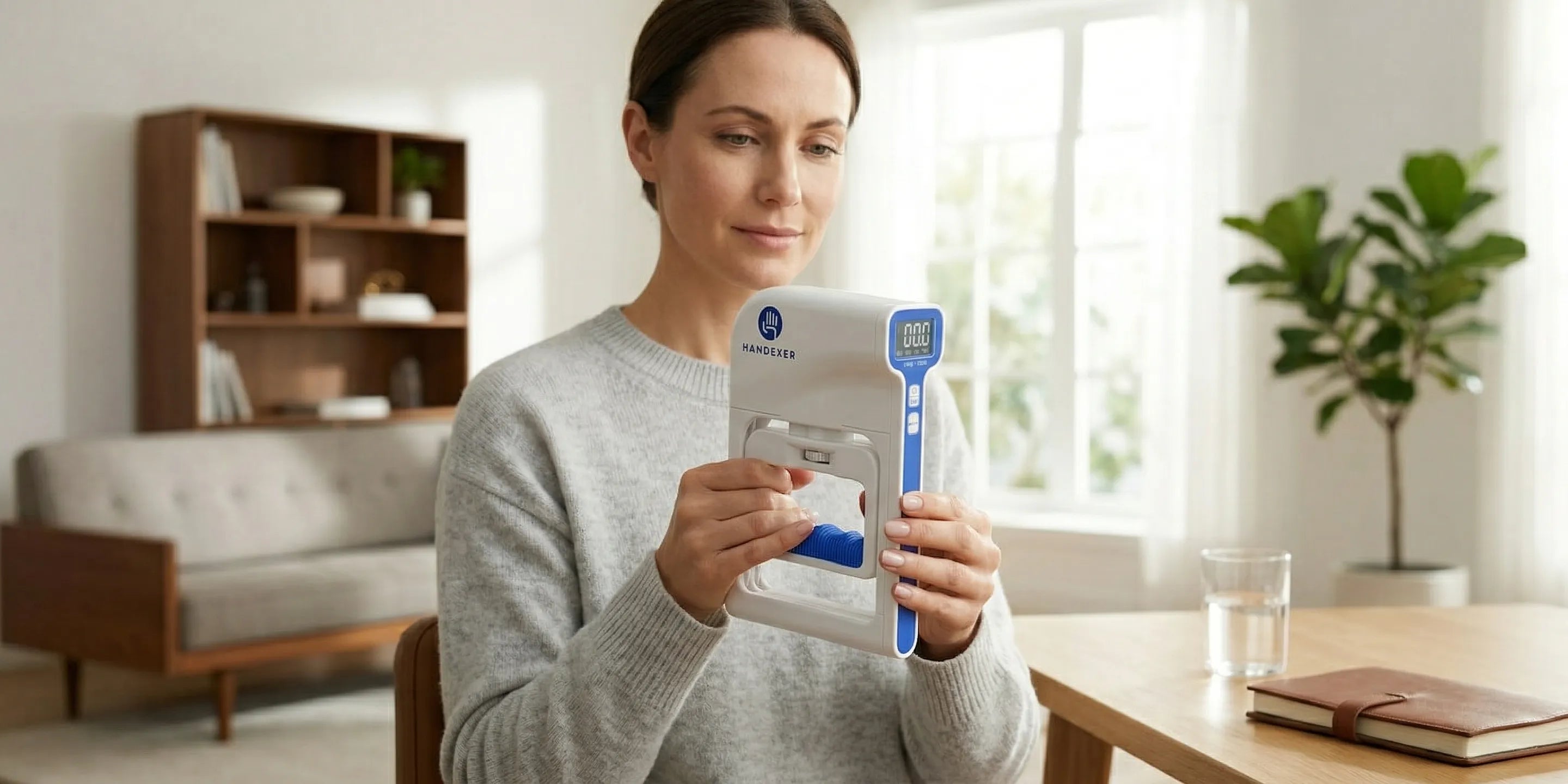
Grip strength is one of the easiest physical metrics to test at home, but it is also one of the most useful. Researchers continue to use handgrip strength as a practical indicator of upper-limb function, neuromuscular status, and broader health risk, and large international normative datasets are now available to help interpret results by age and sex.
For athletes, grip strength helps quantify performance. For rehab users, it offers a simple way to monitor progress. For older adults and data-driven users, it provides a repeatable baseline that can be tracked over time. The key is not just squeezing hard once. The key is using a consistent method and measuring under similar conditions each time.
Why should you test grip strength at home?
Testing grip strength at home gives you a fast, repeatable way to measure hand function, training progress, and recovery. When the same protocol is used each time, home grip testing can provide practical trend data for athletes, rehab users, and older adults.
A lot of people guess whether their hands are getting stronger. That is usually unreliable. Daily perception changes with fatigue, soreness, stress, and even temperature.
A dynamometer turns that guesswork into numbers. That matters because you cannot improve what you do not measure. Whether you are rebuilding hand strength after time away from training or simply trying to check your baseline grip strength, objective data is more useful than vague impressions.
Who benefits most from home grip testing?
- Athletes: climbers, lifters, martial artists, racket sport players
- Rehab users: people tracking recovery after wrist, hand, or forearm issues
- Bio-hackers: users who like measurable physical benchmarks
- Families and seniors: anyone monitoring age-related strength trends
What do you need to test grip strength at home?
To test grip strength at home accurately, you need a hand dynamometer, a consistent body position, and a simple repeatable testing routine. The device matters, but consistency of setup matters just as much for getting useful numbers.
The most important tool is a digital hand dynamometer. A digital model makes it easier to read results, switch units, and track performance across sessions.
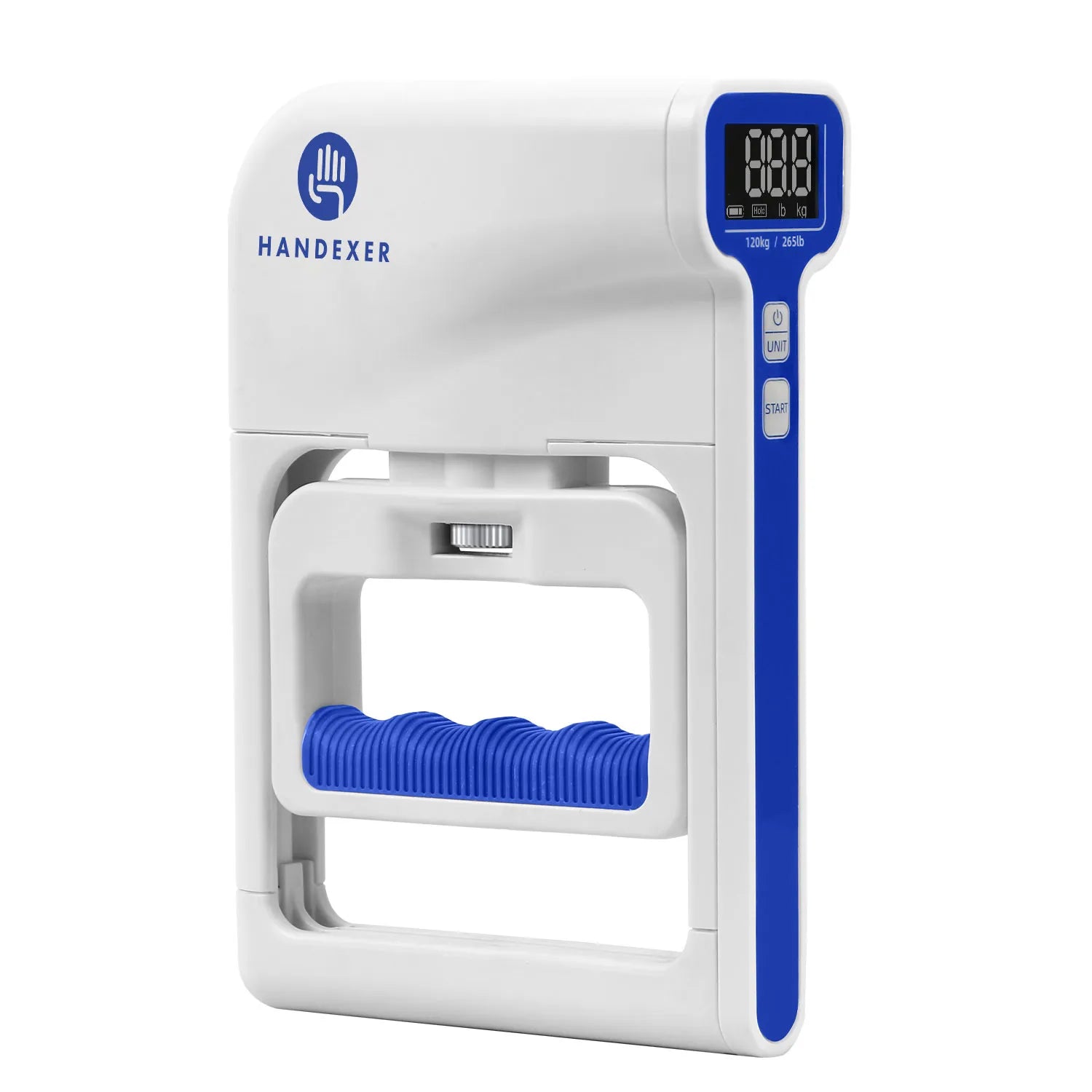
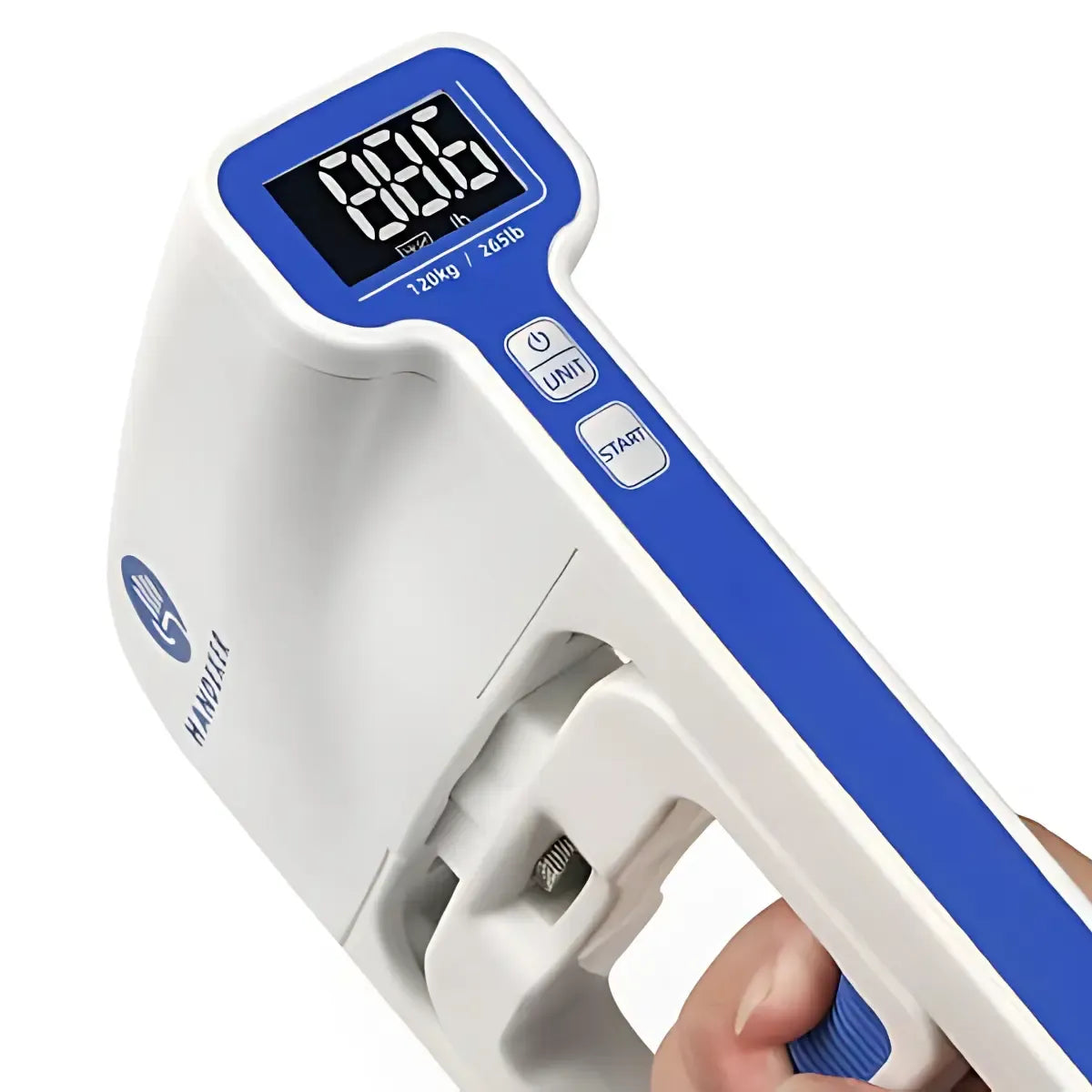
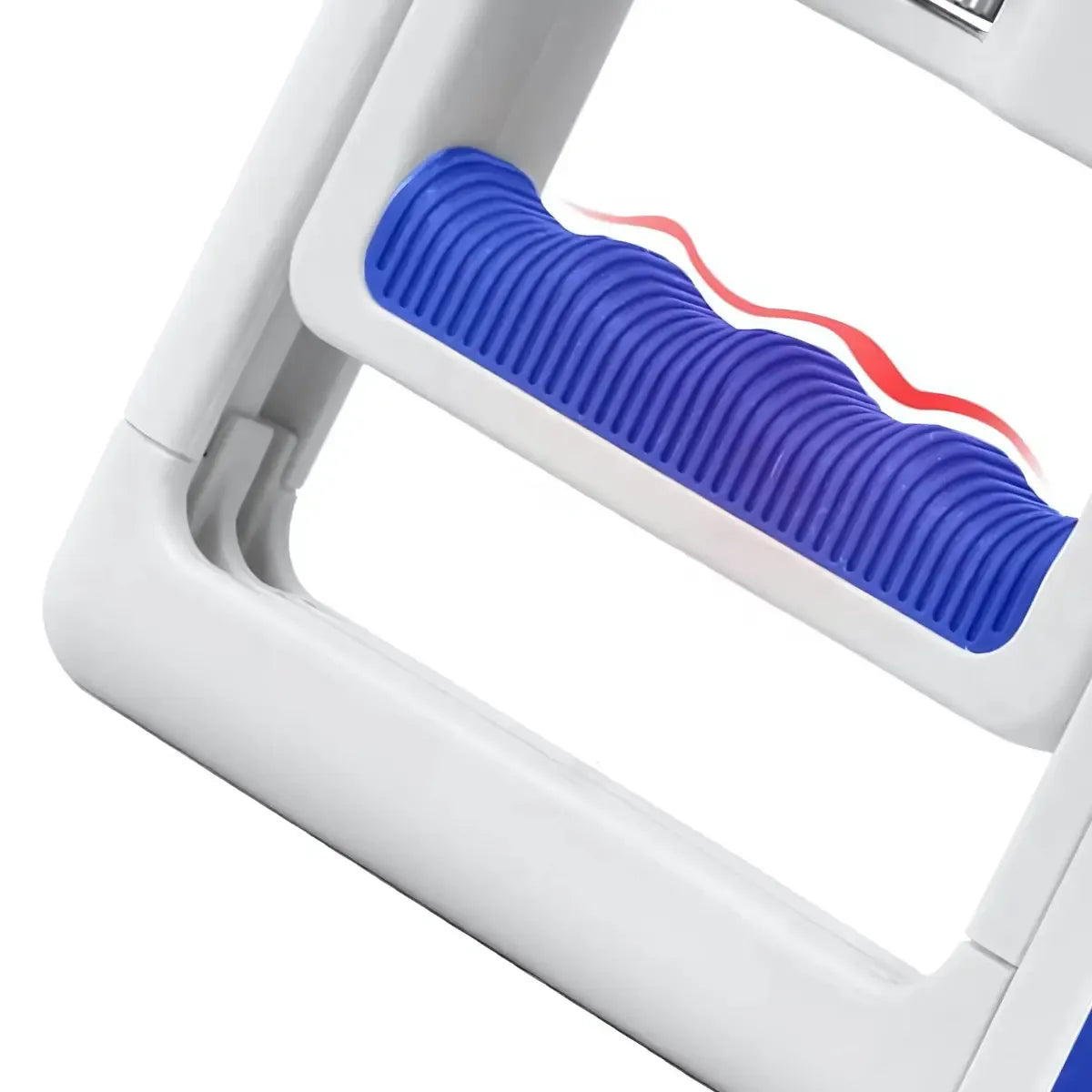
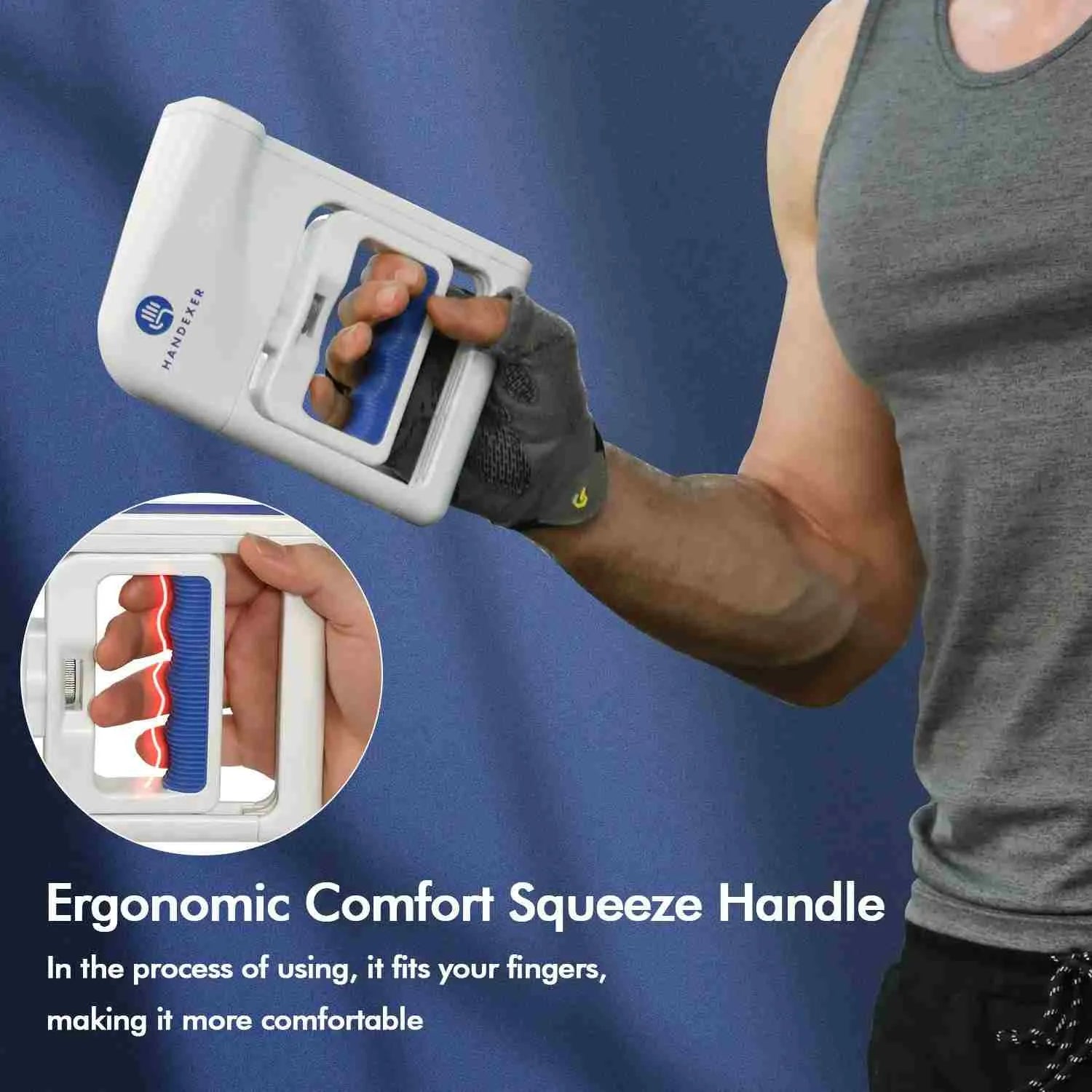
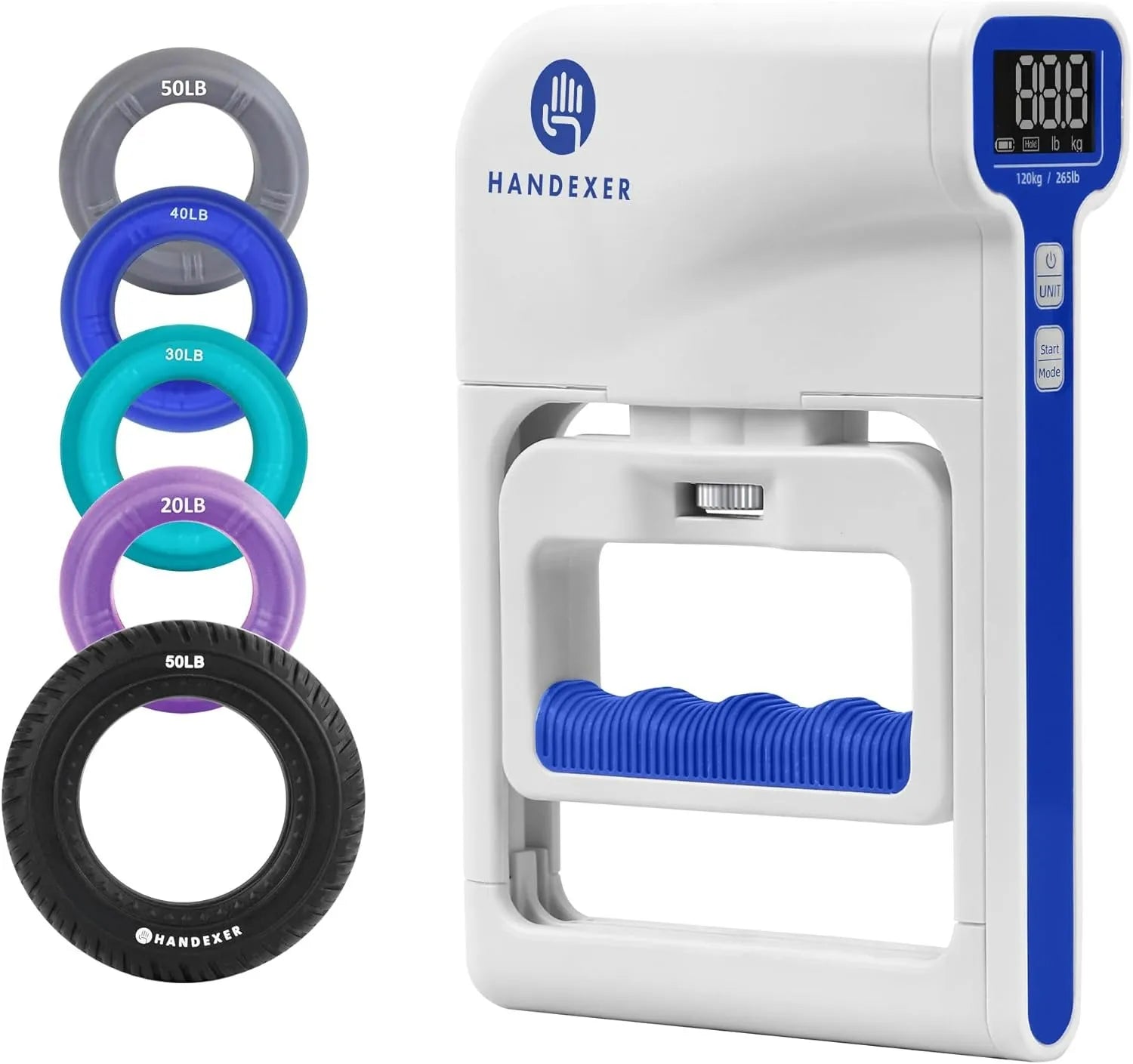
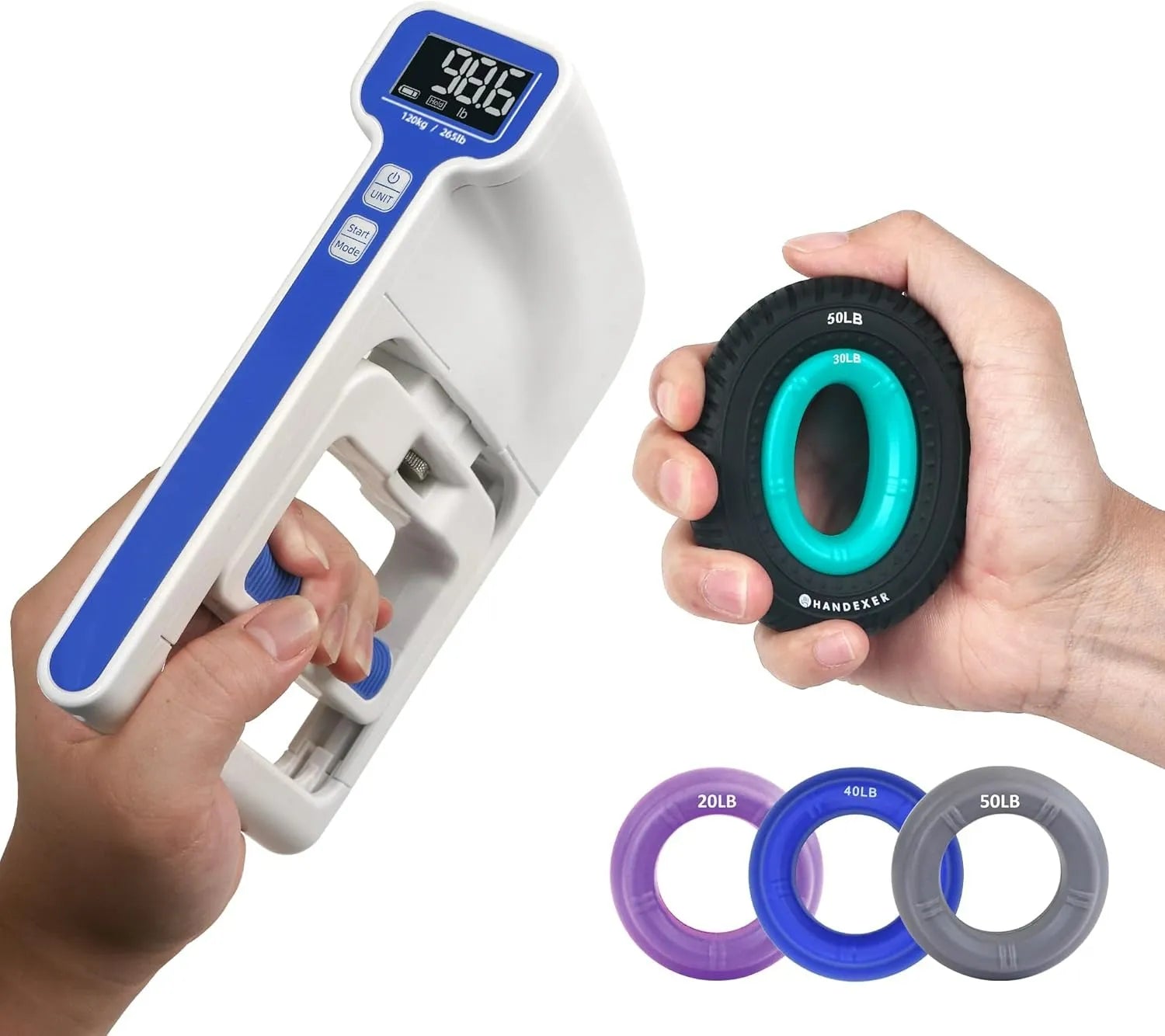
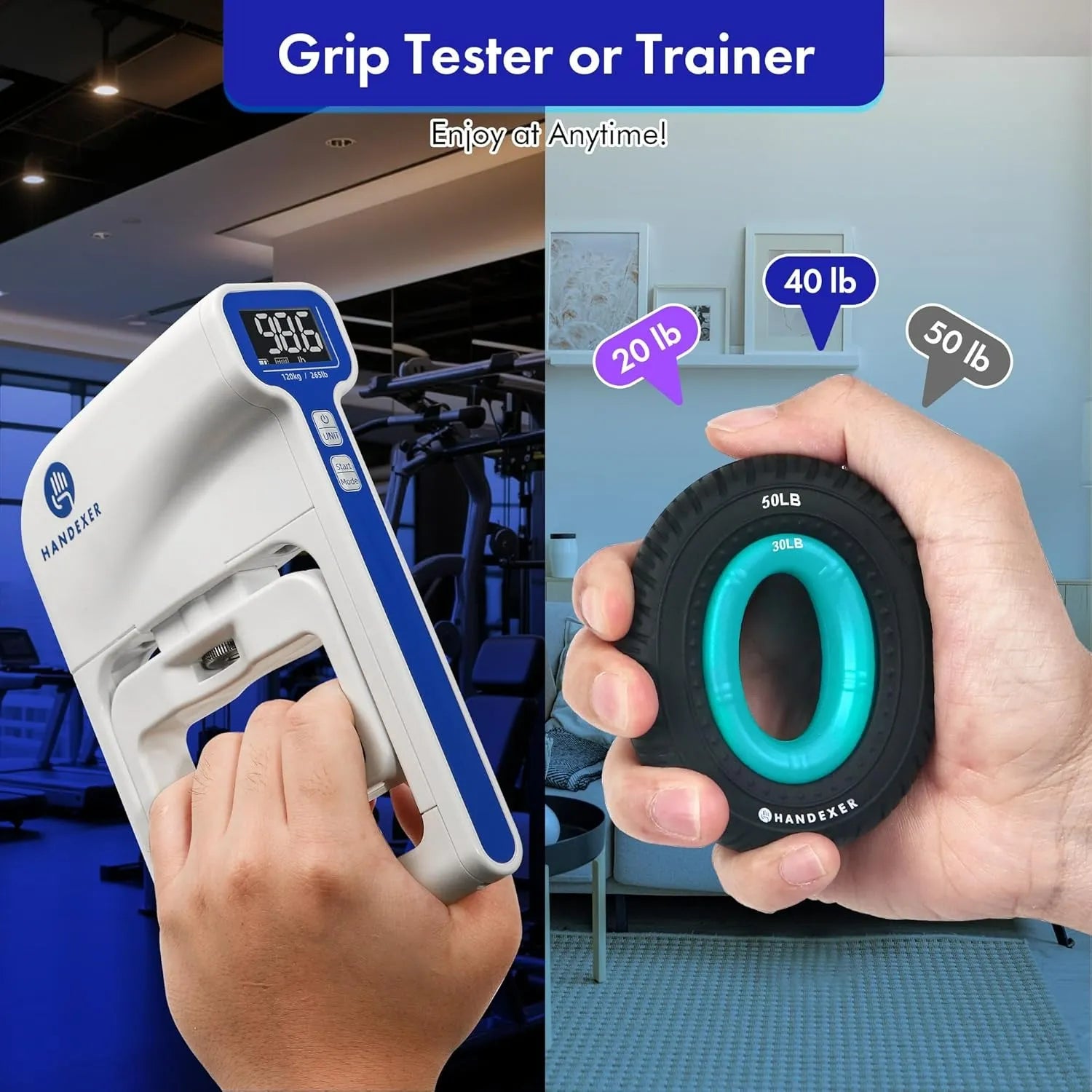
A device like the Handexer dynamometer is particularly practical for home users because it combines:
- high-capacity measurement up to 265 lb / 120 kg
- clear digital readout
- ergonomic grip design
- user-profile support for more organized tracking
That makes it easier to build a real testing habit instead of treating grip checks as random one-off attempts.
How to test grip strength at home correctly
The standard grip strength setup is usually performed seated, with the shoulder close to the body, elbow bent to 90 degrees, forearm neutral, and the wrist in a comfortable neutral position. Using a consistent position reduces variation between tests.
Here is the simplest home protocol.
Step 1: Adjust the grip
Make sure the handle feels secure in your hand. Your fingers should wrap comfortably without overreaching or feeling cramped.
If the grip setting is too wide or too narrow, the reading may not reflect your true force output.
Step 2: Get into a repeatable position
Use this setup each time:
- Sit upright in a chair
- Keep your shoulder relaxed and close to your torso
- Bend your elbow to about 90 degrees
- Keep your forearm in a neutral position
- Hold your wrist straight, not heavily bent
This matters more than many people realize. Grip strength values can shift when testing position changes, which is why consistency is critical.
Step 3: Squeeze hard, but smoothly
Do not jerk the device. Instead, squeeze as hard as possible in one controlled effort for about 3 to 5 seconds.
A smooth maximal effort is generally better than a sudden explosive snap, especially for home testing and recovery tracking.
Step 4: Test both hands
Measure your dominant and non-dominant hands separately. In many people, the dominant hand is stronger, but the difference should still be interpreted in context.
This is especially useful for athletes with unilateral training patterns and for rehab users monitoring one side after injury or surgery.
Step 5: Do 3 trials per hand
Complete 3 attempts on each hand with short rest periods between tries, then record the best result or your average, depending on how you want to track progress. Many standard protocols use 3 trials because a single attempt can underrepresent actual strength.
What is a good grip strength score?
A good grip strength score depends on age, sex, body size, and testing method. The most useful comparison is not a random internet number, but your own trend over time measured with the same device and protocol.
This is where many users make mistakes. They search for one “normal” number and assume that is the target. In reality, grip strength changes across the lifespan, differs between men and women, and varies by population. Recent international norms show clear age- and sex-specific percentiles rather than one universal benchmark.
So instead of asking only, “Is my score good?” ask:
- Is it improving?
- Is it stable?
- Is one hand dropping unexpectedly?
- Does it match my training or recovery phase?
That approach is much more useful.
Common mistakes that make home grip tests inaccurate
The biggest home testing errors are inconsistent positioning, testing at random times, comparing results from different devices, and failing to track repeated trials. Reliable grip data depends on standardized testing conditions.
1. Changing your body position every time
Standing one day and sitting the next can change your numbers. Pick one method and keep it fixed.
2. Testing when fatigued after workouts
If you test right after deadlifts, climbing, or pull-ups, your score may drop for reasons unrelated to long-term strength.
3. Squeezing too quickly
A jerky, rushed squeeze can reduce control and consistency.
4. Recording only your strongest ever result
One hero number is not a trend. Track repeated tests over time.
5. Switching between different devices
Different dynamometers are not always interchangeable, so stay with the same device for cleaner data.
How often should you test grip strength?
For most home users, testing grip strength 1 to 2 times per week is enough to monitor trends without creating noise from daily fluctuations. More frequent testing is usually only useful in structured rehab or performance monitoring. This is an evidence-based practical recommendation derived from the known effect of fatigue, protocol variation, and short-term fluctuation on handgrip measurements.
Athletes may test weekly. Rehab users may test according to their therapist’s guidance. General wellness users can even test every two weeks and still gather meaningful trend data.
The point is regularity, not obsession.
Why a digital dynamometer is better than guessing
A digital dynamometer gives you objective numbers instead of subjective impressions. That makes it easier to detect progress, identify plateaus, and track left-right differences that would otherwise be missed.
This is exactly why home grip testing works so well for Handexer’s audience. The process is simple, but the value compounds over time.
You can use it to:
- monitor your recovery progress
- compare dominant vs non-dominant hand performance
- build a measurable strength routine
- identify gradual decline before it becomes obvious in daily tasks
For users who want a dependable home metric, a digital device is not a luxury. It is the measurement tool that makes the whole habit useful. If you want to monitor your recovery progress or create a repeatable baseline for training, a high-capacity digital dynamometer is the most practical starting point.
Final takeaway
Home grip testing is simple, but it only becomes valuable when the method is consistent. Use the same position, the same device, and the same routine every time.
That is how a quick hand squeeze becomes meaningful data.
And once you have data, you can actually use it, whether your goal is stronger performance, better recovery tracking, or long-term hand health monitoring.
FAQ
1. How do I test grip strength at home without going to a clinic?
You can test grip strength at home with a hand dynamometer. Sit upright, keep your elbow at 90 degrees, hold the device in a neutral position, and squeeze as hard as possible for 3 to 5 seconds. Repeat 3 times per hand and record the result.
2. Is a digital hand dynamometer accurate for home use?
Yes, a digital hand dynamometer is a practical and accurate option for home users when used consistently. The most important factor is following the same testing setup each time so your numbers remain comparable.
3. How often should I measure grip strength?
Most people only need to test 1 to 2 times per week. That is frequent enough to spot trends without letting fatigue or daily variation distort the results.
4. What affects grip strength test results?
Grip strength can be influenced by age, sex, body size, hand dominance, fatigue, injury status, and testing position. That is why consistent protocol matters as much as effort.






Share:
Grip Strength After Stroke: Safe Recovery Guide
Grip Strength Test at Home: A Simple and Accurate Guide